If you’ve walked down a UK high street lately and thought, “Did there used to be more restaurants here?” — you’re not imagining it. At the same time, your phone is probably buzzing with delivery offers, discount codes, and “20 minutes to your door” promises.
Something has clearly shifted in how Britain eats.
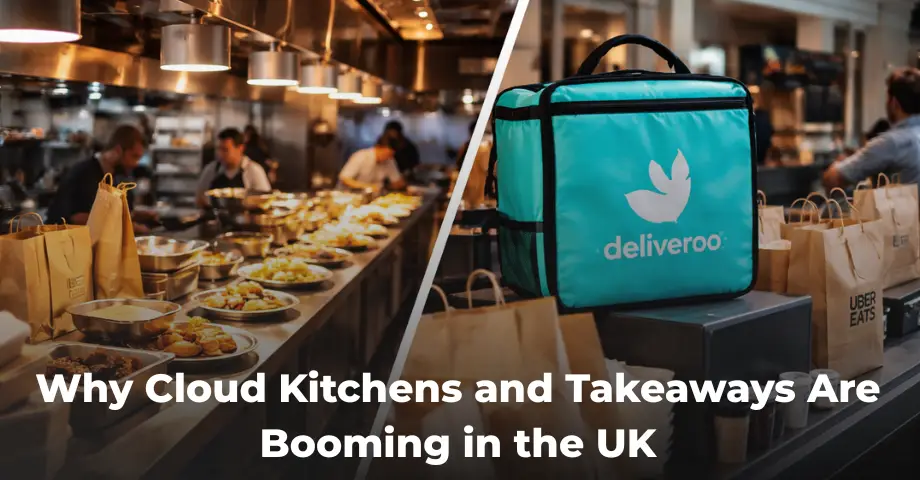
Cloud kitchens and takeaways across the UK are booming, and not because someone suddenly decided this was the fashionable thing to do. This growth is happening because the food industry has been squeezed from all sides — by costs, by staffing, by changing habits — and these models happen to fit the moment rather well.
This article looks at why cloud kitchens and takeaways in the UK are growing so fast, what’s really driving the trend, and why it feels less like a craze and more like a structural change.
The UK Food Industry Is Under Pressure (And Has Been for a While)
Let’s start with a truth most operators won’t argue with: running a food business in the UK has become harder, not easier.
Rents haven’t politely waited for profits to catch up. Energy bills shot up. Business rates remain stubborn. And margins, which were already tight, now feel like they’re being squeezed through a letterbox.
Traditional dine-in restaurants rely on a lot of moving parts working perfectly at the same time — footfall, staffing, service, ambience, weather, and timing. When one piece slips, the whole thing wobbles.
Cloud kitchens and takeaways didn’t rise because they’re glamorous. They rose because they remove some of that pressure.
Delivery Platforms Changed the Rules of the Game
It’s impossible to talk about takeaway industry growth in the UK without talking about delivery platforms.
Before apps took over, takeaways relied on location, reputation, and a loyal local customer base. Today, a new operator can appear on a phone screen next to established names almost overnight.
That visibility is powerful.
Delivery platforms effectively became the new high street — except the footfall is digital, and it never closes. For many small operators, this lowered the barrier to entry. You no longer needed the perfect shopfront on a busy road; you needed a kitchen, a menu that travels well, and a solid handle on timing.
Of course, commissions are part of the trade-off. But for many businesses, access to customers beats waiting for walk-ins that may never come.
Ordering Food Is No Longer a Treat — It’s a Routine
Once upon a time, getting a takeaway felt like a small event. Now it’s Tuesday.
One of the biggest drivers behind the growth of cloud kitchens and takeaways in the UK is how often people order food. It’s no longer reserved for weekends or celebrations. It’s what happens when work runs late, the fridge looks depressing, or cooking just feels like too much effort.
People aren’t necessarily spending more per order — they’re ordering more frequently. This shift doesn’t mean the end for classic takeaways — as seen in the Top 5 Briton Ferry Chinese Takeaways, local favourites still play a key role in how Brits order food today. But that shift suits delivery-first businesses perfectly. They’re built for volume, consistency, and speed, not table turnover and atmosphere.
Work From Home Quietly Changed Everything
Working from home didn’t just change commuting — it changed eating habits.
When people stopped travelling into city centres every day, demand moved with them. Lunchtime orders increased in residential areas. Early evening deliveries became more common. The classic “after work restaurant” moment faded for many households.
Cloud kitchens and local takeaways adapted faster than dine-in restaurants tied to specific locations. They followed demand rather than waiting for it to return.
And let’s be honest — when you’re finishing a video call at half six, ordering food feels a lot more appealing than putting a pan on.
Convenience Is No Longer a Bonus — It’s Expected
British consumers are patient in queues but impatient with inconvenience.
Fast delivery, clear pricing, simple ordering, and predictable results matter more than ever. People want food that arrives hot, on time, and without drama. Cloud kitchens and takeaways are designed around that expectation.
They don’t need to worry about décor, playlists, or whether the loos are up to scratch. Their entire focus is the food and how it travels.
In a convenience-driven culture, that focus counts.
Rising Rents Are Pushing Businesses to Rethink Space
One of the least glamorous but most important drivers of this boom is property cost.
High street rents in many parts of the UK no longer make sense for food businesses operating on thin margins. Add refurbishment, maintenance, and long leases into the mix, and the risk becomes clear.
Cloud kitchens offer flexibility. Smaller spaces. Less visibility pressure. Often shorter commitments. For operators trying to control costs, that difference matters.
This doesn’t mean takeaways disappear — it means they adapt. Some downsize. Some move. Some operate hybrid models. The common thread is reducing fixed costs.
Labour Shortages Are Forcing Simpler Operations
Ask anyone in hospitality about staffing, and you’ll get the same tired smile.
Recruitment has been difficult. Retention even harder. Running a full front-of-house team, especially in quieter periods, is expensive and stressful.
Delivery-first models require fewer staff and simpler roles. No waiting tables. No split shifts between service and prep. Fewer late nights managing customer-facing issues.
For many operators, this isn’t about cutting corners — it’s about survival.
What This Means for UK High Streets
There’s a fear that cloud kitchens are “killing” high streets. The reality is more nuanced.
What we’re seeing is a shift, not a collapse. Some dine-in restaurants are closing, yes. Others are adapting — offering takeaway-only hours, running virtual brands, or focusing on fewer, better trading days.
High streets aren’t dying; they’re changing. And food businesses that adapt tend to last longer than those waiting for things to “go back to normal”.
Why Cloud Kitchens and Takeaways Fit This Moment
Put all of this together and the picture becomes clear.
- Delivery platforms bring customers
- Consumer habits favour convenience
- Costs push businesses to simplify
- Labour shortages reward lean operations
Cloud kitchens and takeaways in the UK didn’t rise by accident. They fit the economic and cultural reality of how people live, work, and eat right now.
That doesn’t mean they’re easy. Margins are still tight. Competition is fierce. But structurally, these models make sense in today’s market.
Is This a Long-Term Shift or Just a Phase?
Every boom raises the same question: Is this sustainable?
The answer is: not automatically.
Some cloud kitchens will fail. Some takeaways will struggle. Saturation is real, and delivery platforms are not forgiving. Businesses that rely purely on volume without differentiation often feel the pinch first.
What lasts isn’t the format — it’s adaptability. Operators who understand their costs, their customers, and their positioning tend to survive regardless of model.
What This Means for Food Businesses Going Forward
For anyone involved in the UK food industry, the takeaway (no pun intended) is simple: flexibility matters more than tradition.
Whether choosing between a cloud kitchen and a takeaway, or blending the two, the decision should be driven by real conditions, not nostalgia.
Understanding why these models are booming helps operators make better choices — not just jump on trends. For many operators, the next question is deciding between the two models — and understanding the real differences in a cloud kitchen vs takeaway in the UK helps avoid costly mistakes.
Final Thoughts: A Shift Driven by Reality, Not Hype
Cloud kitchens and takeaways are booming in the UK because they reflect how people live now — busy, budget-conscious, and convenience-driven.
This isn’t about replacing restaurants or killing the high street. It’s about adapting to pressure, changing habits, and a food industry that’s had to learn how to bend without breaking.
In the end, food still matters. People still love a good meal. They just want it to fit into modern life — preferably without washing up afterwards.
Frequently Asked Questions (FAQ)
Why are cloud kitchens growing so fast in the UK?
Cloud kitchens are growing in the UK because they have lower running costs, rely on delivery rather than footfall, and suit modern eating habits shaped by convenience and food delivery apps.
Why is the takeaway industry booming in the UK?
The takeaway industry is booming due to rising living costs, busier lifestyles, and increased use of delivery platforms. More people now order food regularly rather than cooking or dining out.
How have delivery apps affected takeaways in the UK?
Delivery apps have increased visibility for takeaways, making it easier for customers to order food quickly. They’ve also allowed new food businesses to operate without a traditional shopfront.
Is the rise of cloud kitchens bad for high street restaurants?
Not necessarily. While some dine-in restaurants struggle, many adapt by offering delivery, running virtual brands, or switching to hybrid models. The change reflects shifting demand rather than decline alone.
Has working from home increased food delivery in the UK?
Yes. Working from home has changed eating patterns, increasing weekday and lunchtime food delivery, especially in residential areas rather than city centres.
Are cloud kitchens cheaper to run than traditional restaurants?
Cloud kitchens usually have lower overheads because they don’t need front-of-house staff or prime locations. However, delivery commissions and competition still affect profitability.
Is this growth in cloud kitchens and takeaways sustainable?
The growth is likely to continue, but not every business will succeed. Sustainability depends on managing costs, standing out in crowded markets, and adapting to customer demand.