



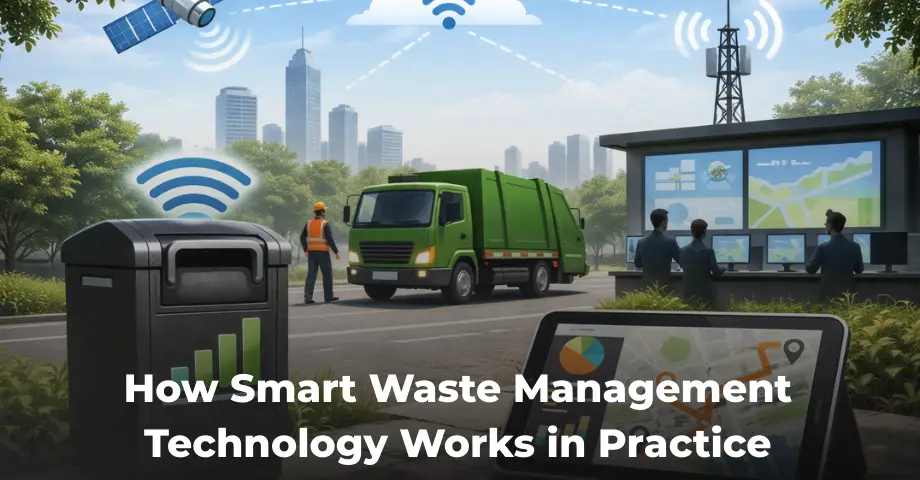
Once people understand what smart waste management technology is, the next natural question is usually, “But how does it actually work?” What happens behind the scenes when a bin becomes “smart”? How does information move from a street bin to a waste collection team? And how does all of this make waste collection more efficient in real life?
This article explains how smart waste management technology works in practice, step by step, using everyday language and real-world examples. There’s no need for technical knowledge here — just a clear look at how data, monitoring, and people work together to manage waste more effectively. If you’re new to the topic, it helps to first understand what smart waste management technology is before looking at how these systems work in practice.
From Traditional Waste Collection to Smarter Systems
In traditional waste management, collection often follows a fixed routine. Bins are emptied on scheduled days, whether they are full or not. This approach is simple, but it doesn’t always reflect what’s actually happening on the ground.
Busy areas can overflow before collection day, while quieter areas may be emptied unnecessarily. Over time, this leads to inefficiency, frustration, and avoidable environmental impact.
Smart waste management introduces a key change: awareness. Instead of guessing or relying purely on schedules, waste services can respond to real conditions. This shift doesn’t replace existing systems — it improves them by adding better information.
The Role of Sensors in Smart Waste Management
At the heart of smart waste management is sensor-based waste monitoring. Sensors are small tools placed inside or near bins to track basic information, most commonly how full a bin is.
These sensors don’t analyse the contents of the bin or collect personal information. Their role is simple: to monitor usage patterns and changes over time.
For example, a bin in a busy high street may fill much faster on weekends or during events. Sensors help detect these changes early, allowing waste services to respond before problems appear.
This approach reduces guesswork and helps focus attention where it’s actually needed.
How Smart Bins Collect and Share Information
Smart bins are designed to look and function like ordinary bins from the outside. The difference lies in how they communicate information.
When a bin reaches a certain fill level, the system records this change. That information is then shared with a central waste monitoring system. This doesn’t happen constantly or noisily — it’s a quiet background process.
The key idea behind smart bins technology is communication. Instead of waiting to be checked manually, bins can signal when attention is needed. This makes waste management more responsive without increasing workload.
The Role of Connectivity Explained Simply
One term that often comes up in discussions about smart waste management is “connectivity”, sometimes linked to the Internet of Things. In simple terms, this just means that different parts of the system can share information.
Think of it like sending a message. A bin notices it’s getting full, sends that information to a central system, and that system helps decide what to do next.
This connection allows waste services to:
- Monitor multiple locations at once
- Spot patterns across different areas
- Adjust plans quickly when needed
Importantly, connectivity doesn’t mean constant surveillance. It’s about practical communication, not complexity.
What Happens to the Data After It’s Collected?
Once information is collected from bins, it doesn’t just sit unused. This is where data analytics in waste management comes into play.
Data is reviewed to understand patterns such as:
- Which locations fill up fastest
- When waste levels peak
- Which routes are most efficient
- Where resources may be underused
Over time, this information helps waste services plan better. Instead of reacting to complaints or visible problems, they can anticipate needs and respond earlier.
Data supports decisions — it doesn’t replace human judgement.
How Smart Waste Collection Becomes More Efficient
One of the most noticeable outcomes of smart waste management is improved efficiency.
When waste levels are monitored accurately:
- Collection routes can be adjusted
- Vehicles avoid unnecessary stops
- Overflowing bins are prioritised
- Time and fuel are used more effectively
This is sometimes described as automated waste collection, but it’s important to clarify what that means. Automation here refers to assisted planning, not machines replacing people.
Drivers, planners, and coordinators still play a key role. The technology simply helps them make better decisions based on real conditions.
A Simple Real-Life Example
To understand how smart waste management technology works in practice, it helps to walk through a simple scenario.
A bin in a town centre starts filling faster than usual due to a local event.
A sensor detects the rising fill level.
That information is shared with the monitoring system.
The system highlights the bin as a priority.
Waste services adjust their route to empty it sooner.
Overflow is prevented, and the area stays clean.
Nothing dramatic happens — and that’s the point. Problems are resolved quietly before they become visible.
Who Uses the Information Behind the Scenes?
Smart waste management technology supports people, not machines acting alone.
Behind the scenes, information is used by:
- Waste management planners
- Route coordinators
- Collection teams
- Service managers
These teams use data to prioritise tasks, adjust schedules, and improve reliability. Instead of relying on complaints or visual checks, they have a clearer picture of what’s happening across an area.
This human-centred approach is one reason smart waste systems are more effective in practice.
Limitations and Challenges of Smart Waste Systems
While smart waste management offers clear advantages, it’s not without challenges.
Some limitations include:
- The need for reliable connectivity
- Gradual integration with existing systems
- Training and adjustment for staff
- Infrastructure differences between areas
Smart waste management is not a quick fix. It works best when introduced thoughtfully and adapted to local conditions. Expectations need to be realistic, and systems need time to deliver results.
How Smart Waste Management Fits into the Bigger Picture
Smart waste management technology is often part of a wider effort to improve how towns and cities operate. However, it can also function independently.
Understanding how these systems work in practice helps explain why they’re increasingly used as part of sustainable planning. The technology itself is not the goal — better outcomes are.
Once the process behind smart waste management is clear, the next step is understanding what benefits it delivers, particularly in the context of the UK.
Final Thoughts
So, how does smart waste management technology work in practice? It works by monitoring real-world conditions, sharing useful information, and supporting better decisions. Sensors, data, and connectivity work together to help waste services respond more efficiently and reliably.
Rather than replacing traditional waste collection, smart systems improve it by adding awareness and flexibility. When applied sensibly, this approach helps keep public spaces cleaner and services more consistent — without unnecessary complexity.
Understanding how it works lays the foundation for exploring what benefits smart waste management technology can realistically offer, especially in UK towns and cities
Frequently Asked Questions (FAQ)
How does smart waste management technology work?
Smart waste management technology works by using sensors to monitor waste levels in bins. This information is shared with waste management systems, helping teams decide when and where waste collection is needed.
What technology is used in smart waste management?
Smart waste management uses sensors, monitoring systems, data analysis tools, and connected networks. These technologies work together to track waste levels and improve collection planning.
How do smart bins communicate information?
Smart bins communicate by sending data about waste levels to a central monitoring system. This allows waste services to see which bins need attention without checking them manually.
What happens to the data collected from smart waste systems?
The data is analysed to identify patterns such as busy locations, peak waste times, and inefficient routes. This helps waste services plan collections more effectively.
Does smart waste management use automation?
Smart waste management uses automation to support decision-making, not to replace workers. The technology helps plan routes and prioritise collections while people remain in control.
How does smart waste management improve efficiency?
It improves efficiency by reducing unnecessary collections, prioritising full bins, saving fuel, and allowing waste services to respond more quickly to real conditions.
Is smart waste management technology complicated to use?
For users and the public, it isn’t complicated at all. Most of the technology operates in the background, supporting waste management teams rather than requiring public interaction.
Are smart waste systems always accurate?
Smart waste systems are designed to improve accuracy, but they still rely on good infrastructure and proper setup. They work best when combined with human oversight.
What are the limitations of smart waste management technology?
Limitations can include connectivity issues, gradual implementation, and the need for integration with existing systems. It is a support tool, not a complete solution on its own.
What should I read next after understanding how it works?
After understanding how smart waste management technology works, many people look at the benefits it offers and how it is used specifically in the UK.








Comments are closed