



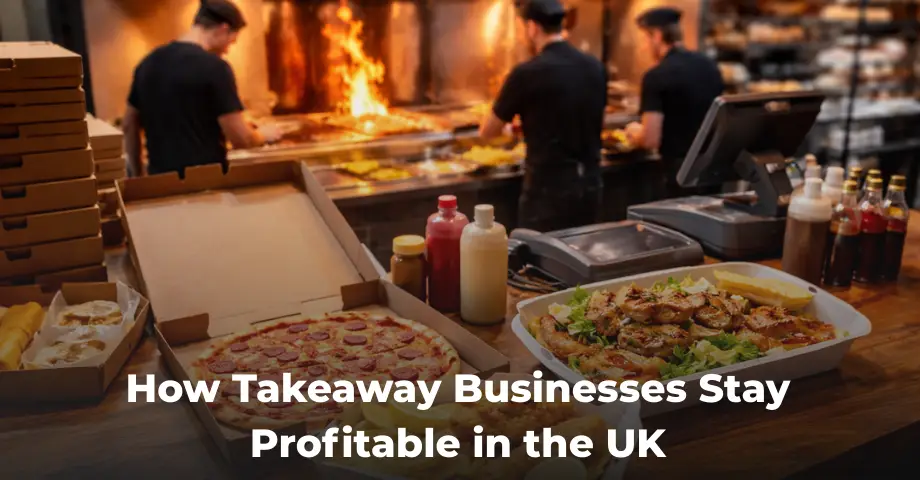
If you stand outside a popular UK takeaway on a Saturday evening, it is easy to assume the owner must be doing extremely well. The phone keeps ringing, delivery drivers are in and out, and there is often a queue of customers waiting at the counter. From the outside, it looks like a thriving, money-making business.
However, speak to experienced takeaway owners and you will often hear a different reality. A busy takeaway does not automatically mean a profitable one. In today’s UK takeaway industry, staying profitable has become more challenging than ever. Rising food prices, higher energy bills, increased staff wages, expensive high-street rents, and delivery app commissions have all squeezed margins. Many owners are working longer hours but taking home less money than they did years ago.
So how do the most successful takeaway businesses in the UK stay profitable? They do not rely on luck or sheer volume of orders. They run their businesses with structure, strategy, and discipline. This article explains, in clear and practical terms, how takeaways stay profitable UK, and how to make a takeaway profitable by focusing on pricing, menu design, delivery apps, staffing, waste control, inventory management, and revenue mix.
What profitability really means for a UK takeaway
Before looking at practical tactics, it is important to understand what profitability actually means. Many new takeaway owners focus only on revenue — how much money comes into the business. But revenue alone does not pay the bills. Profit does.
Profit is what remains after all costs have been paid, including rent, business rates, ingredients, staff wages, packaging, gas and electricity, equipment maintenance, insurance, compliance, and delivery app commissions. UK takeaway margins are often thinner than people expect, particularly when a large proportion of orders come through platforms such as Deliveroo, Uber Eats, or Just Eat.
This is why understanding your takeaway business model is essential. This is a big part of how takeaways stay profitable UK — by controlling costs, protecting margins, and diversifying their revenue rather than simply chasing more orders.
Pricing strategy that protects your profit
One of the most common mistakes made by new takeaway owners is setting prices based purely on what competitors charge. They see a similar shop selling a dish for a certain price and assume they should match it. This approach can quietly damage profits.
A strong takeaway pricing strategy UK should be built around your own costs, not someone else’s. Every menu price should realistically cover the cost of ingredients, staff time, packaging, utilities, and any delivery commission if the order comes through an app.
Many independent takeaway businesses under price because they fear losing customers. In reality, consistently low pricing often leads to stress, exhaustion, and eventually business failure. Successful takeaway profit tips UK usually come back to one simple principle: know your numbers. Even rough calculations are better than pricing blindly.
Menu engineering — designing a menu that makes money
In many takeaways, the most popular dishes are not always the most profitable. Some items sell well but require expensive ingredients, long preparation time, or create a lot of waste, meaning they make very little profit per order — or even lose money.
Menu engineering for takeaways involves understanding which items generate good margins, which break even, and which drain resources. A profitable menu design does not mean removing customer favourites overnight. Instead, it means:
- Promoting high-margin items more clearly on the menu
- Creating meal deals that encourage profitable combinations
- Reducing overly complex dishes that slow down staff and increase waste
- Keeping the menu focused rather than trying to offer too many options
A simpler, better-structured menu often leads to higher takeaway business profits UK, faster service, and smoother kitchen operations.
Real UK examples like the Top 5 Briton Ferry Chinese Takeaways show how streamlined, popular menus can help takeaways keep both customers and margins healthy.
Delivery app strategy — one of the biggest profit factors
Delivery apps can be extremely useful, particularly for new businesses that do not yet have a strong local reputation, but using them wisely is crucial to understanding how takeaways stay profitable UK. They provide visibility, marketing, and a steady stream of orders without requiring large advertising budgets.
However, takeaway vs delivery app profit is very different. Delivery apps work best when a business is new, needs exposure, or wants to fill quiet periods. They are less ideal when a takeaway is already busy and has a strong base of loyal local customers.
Encouraging collection is usually better when margins need protecting and when the business wants more control over customer relationships. The most successful takeaways use delivery apps as a tool rather than relying on them as their primary source of income.
Delivery app commissions are one of the biggest challenges for takeaway profitability. Deliveroo commission UK, Uber Eats commission UK, and Just Eat commission UK can range from around 20 per cent to 35 per cent or more once all fees are included. If a business does not plan for this, it can end up working harder while earning less.
Many profitable takeaways manage this by setting slightly higher prices on apps, encouraging loyal customers to order directly, and treating delivery platforms mainly as a marketing channel rather than the core of their business.
Labour efficiency — running a tighter, smarter kitchen
Reducing labour costs in takeaways does not mean cutting corners or overworking staff. It means using staff efficiently and scheduling them wisely.
Good takeaway staffing tips UK include cross-training employees so they can cover multiple roles, avoiding overstaffing during quiet periods, and matching staffing levels to expected demand. A well-run small kitchen operations UK approach can significantly improve profitability without harming service quality.
Many takeaways lose money because they keep the same number of staff on duty throughout the day, even during quiet hours. Smarter practice includes reducing staff during slow periods, preparing less food in advance, and sometimes limiting menu options when demand is very low. Sensible kitchen staff scheduling is a simple but powerful way to improve takeaway operating costs UK.
Waste control — where money often disappears
Food waste is one of the silent profit killers in many UK takeaways. Common causes include over-preparing food, poor storage, inaccurate demand forecasting, and keeping too many slow-moving ingredients in stock.
Reducing food waste takeaway starts with paying attention to what actually sells and adjusting preparation accordingly. Even small improvements in waste control can make a noticeable difference to overall profits.
Good takeaway inventory management also plays a key role. This means ordering the right amount of stock, tracking best-selling items, avoiding overstocking perishable ingredients, and working with reliable suppliers. Strong stock control takeaway UK practices save money and improve consistency and quality.
Revenue mix — don’t rely on just one channel
The most profitable takeaway business UK rarely depends on a single source of sales. A healthy business balances three main revenue streams:
- Walk-in sales: Usually the most profitable because there are no delivery commissions and packaging costs are often lower. They also help build strong relationships with local customers.
- Delivery orders: Great for reach and visibility, but lower margin due to fees and packaging costs. They should be part of the business, not the whole business.
- Phone orders: Often underestimated but highly valuable. They avoid app commissions, usually come from loyal customers, and frequently lead to repeat business.
Encouraging more direct orders — through loyalty cards, simple promotions, or good customer service — is one of the smartest ways to improve margins.
A practical profitability playbook
If you want a simple, real-world checklist that actually helps day-to-day running, focus on the following:
- Price for profit, not just competition
- Engineer your menu around high-margin items
- Use delivery apps strategically rather than relying on them
- Match staffing levels to demand, especially during off-peak hours
- Reduce food waste and improve stock control
- Encourage more walk-in and phone orders
- Keep basic records of costs and sales
None of these require expensive technology — just better habits and awareness.
The bigger picture
At its core, running a profitable takeaway in the UK is about control. It is about having control over pricing, costs, staffing, waste, and sales channels. Takeaways that struggle financially are often those that rely too heavily on delivery apps, underprice their food, overstaff during quiet periods, and fail to track their expenses.
Takeaways that succeed are usually well-run, respected in their local community, and financially disciplined. They balance volume with margin, efficiency with quality, and delivery with direct sales.
Final thought
There is no single trick that magically makes a takeaway profitable. Profitability comes from consistent, sensible decision-making across every part of the business — from menu design to delivery strategy, from staffing to stock control. If these fundamentals are done well, you will clearly see how takeaways stay profitable UK — and your business will not just be busy, but sustainable and genuinely profitable.
Frequently Asked Questions (FAQ)
1. How much profit does a takeaway make in the UK?
Most UK takeaways typically make 5–12% net profit, but this varies widely depending on rent, staffing, delivery app usage, and food costs. Businesses relying heavily on apps often sit at the lower end of this range.
2. What is the biggest cost for a takeaway in the UK?
The biggest costs are usually rent, staff wages, food, and delivery app commissions. For many businesses, app commissions (20–35%+) can be one of the most damaging costs to profitability.
3. How can a takeaway reduce delivery app fees?
Takeaways can:
-
Charge slightly higher prices on apps
-
Encourage phone or walk-in orders
-
Use apps mainly for marketing and customer acquisition
-
Promote loyalty for direct ordering
4. Is collection more profitable than delivery?
Yes. Collection is usually more profitable because there are no platform commissions and packaging costs are lower. Delivery is better for reach, but worse for margins.
5. How can a takeaway improve profit without raising prices?
You can improve profit by:
-
Reducing food waste
-
Better inventory management
-
Smarter staffing during off-peak hours
-
Simplifying the menu
-
Increasing phone and walk-in orders
6. Why do some busy takeaways still struggle financially?
Because being busy does not equal being profitable. Many takeaways struggle due to low pricing, high delivery commissions, over staffing, and poor waste control.
7. Are delivery apps good for new takeaways?
Yes, they are useful for visibility and early sales, but they should not be your only revenue source long-term.
8. What is the best way to price takeaway food?
Base prices on your actual costs (food, labour, rent, packaging, commissions) rather than just copying competitors.








Comments are closed