



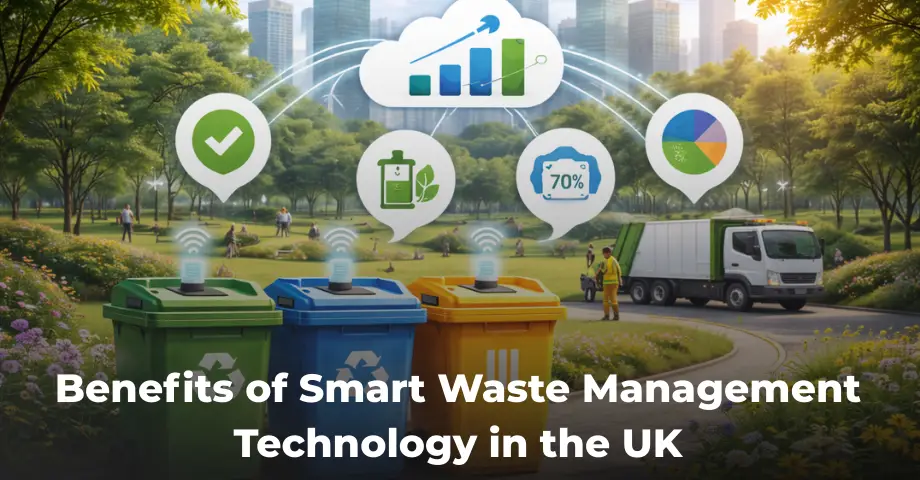
Waste management is not something most people think about until it affects their daily lives. An overflowing bin outside a block of flats, litter building up in a park, or missed collections on a busy street quickly become visible problems. Across the UK, these issues are becoming harder to manage as towns grow, public spaces get busier, and expectations around cleanliness increase. This is where many people start asking about the benefits of smart waste management technology and whether it genuinely makes a difference.
Smart waste management technology is often discussed as part of modern, efficient cities, but its real value lies in how it improves everyday situations. This article looks at what benefits it offers in the UK, where it works well, and where expectations need to stay realistic.
Why Smart Waste Management Matters in the UK
The UK faces some very specific waste management challenges. Urban areas are becoming denser, housing developments are expanding, and public spaces are being used more intensively than ever before. At the same time, waste services are under pressure to work efficiently and reliably.
Traditional waste collection schedules don’t always reflect how waste is actually produced. A quiet residential street and a busy town centre might be treated the same, even though their needs are completely different. Smart waste management technology matters because it helps address this mismatch.
By improving awareness of real conditions, waste services can respond more effectively to where and when waste builds up.
Environmental Benefits of Smart Waste Management Technology
One of the most widely discussed benefits is its positive environmental impact.
Smart waste management technology helps reduce unnecessary waste collection trips. When bins are only emptied when needed, fewer vehicle journeys are required. Over time, this can help lower fuel consumption and emissions.
It also supports better waste separation and recycling outcomes. When bins are monitored more accurately, issues such as overflow and contamination are easier to spot early. This helps reduce waste spilling into the environment and supports cleaner public spaces.
While it won’t solve all environmental challenges on its own, smart waste management plays a useful role as part of broader environmental technology and sustainable waste management efforts.
Improved Efficiency in Waste Collection Services
Efficiency is one of the most practical advantages of smart waste management technology.
By understanding which bins actually need emptying, waste services can plan routes more effectively. Instead of following fixed schedules, collections can be adjusted to reflect real usage. This leads to more efficient waste collection without increasing workload.
For waste management teams, this can mean:
- Fewer unnecessary stops
- Better use of time and resources
- Improved reliability of service
Efficiency here is not about cutting corners. It’s about aligning effort with actual need.
Reduced Overflow and Missed Waste Collections
Overflowing bins are one of the most visible waste management problems in UK towns and cities. They affect how areas look, smell, and feel, particularly in busy locations.
Smart waste management technology helps reduce these issues by identifying rising waste levels earlier. Instead of waiting for complaints or visual checks, waste services can be alerted before bins become a problem.
This early awareness helps:
- Prevent bins from overflowing
- Reduce litter spreading into surrounding areas
- Minimise missed collections during busy periods
For residents and visitors, the result is a cleaner, more pleasant environment.
Cleaner Streets, Parks, and Public Spaces
The impact of smart waste management is often most noticeable in shared public spaces.
Parks, high streets, transport hubs, and event locations all experience fluctuating waste levels. Smart systems help manage this variation more effectively than fixed schedules alone.
Cleaner streets and public areas encourage people to use these spaces more confidently. While technology doesn’t replace good behaviour, it supports better maintenance and faster responses when issues arise.
In this way, smart waste management technology contributes to improved quality of life in everyday UK settings.
Benefits for Councils and Waste Management Teams
Smart waste management technology is sometimes misunderstood as a tool designed only for systems, not people. In reality, one of its key benefits is how it supports waste management teams.
By providing clearer information, teams can:
- Plan work more effectively
- Reduce last-minute pressure
- Respond to real needs rather than assumptions
- Improve consistency of service
Importantly, this technology does not replace workers. It supports them by reducing uncertainty and helping them focus their efforts where they matter most.
This human-centred approach is essential for long-term success.
How Smart Waste Management Fits into UK Urban Life
UK towns and cities are diverse. From dense city centres to mixed residential developments, waste patterns vary significantly.
Smart waste management technology fits into urban life by adapting to these differences. It works particularly well in:
- High-footfall areas
- Transport hubs
- Housing estates
- Tourist locations
- Areas with seasonal demand
Adoption doesn’t have to be all-or-nothing. Systems can be introduced gradually, allowing services to learn what works best in their specific context.
Honest Limitations and Challenges in the UK
While the benefits are real, smart waste management technology is not a perfect solution.
Some challenges include:
- Differences in infrastructure across regions
- Connectivity limitations in certain areas
- The need for staff training and adjustment
- Gradual integration with existing systems
Not every area will benefit equally, and not every problem can be solved with technology alone. Expectations need to remain realistic. Smart waste management works best when it supports good planning rather than replacing it.
Being open about these limitations helps build trust and long-term value.
How These Benefits Link Back to How the Technology Works
The benefits discussed above depend entirely on understanding both the concept and the operation of smart waste systems.
Readers who want a clearer foundation can revisit what smart waste management technology is, while those interested in the practical process can explore how smart waste management technology works in practice. Together, these perspectives explain why benefits are achieved and why they vary between locations.
This connection between understanding and outcome is what makes smart waste management effective when applied thoughtfully.
Is Smart Waste Management Technology Worth It for the UK?
So, is smart waste management technology actually worth it in the UK?
In many cases, yes — particularly in areas where waste patterns are unpredictable and public spaces are heavily used. It helps improve efficiency, cleanliness, and planning without requiring a complete overhaul of existing systems.
However, it’s not a universal solution. Its value depends on where and how it’s applied. When introduced sensibly, it offers meaningful improvements rather than dramatic transformation.
Final Thoughts
The benefits of smart waste management technology in the UK are practical rather than flashy. Cleaner streets, fewer overflowing bins, more efficient collections, and better support for waste management teams all contribute to improved everyday environments.
Smart waste management is best understood as a tool that enhances traditional waste services, not replaces them. By improving awareness and flexibility, it helps address modern waste challenges more effectively.
For the UK, its strength lies in thoughtful adoption — using technology where it genuinely improves outcomes and recognising its limits where it doesn’t.
Frequently Asked Questions (FAQ)
What are the main benefits of smart waste management technology?
The main benefits include more efficient waste collection, fewer overflowing bins, cleaner public spaces, reduced unnecessary collections, and better use of resources through data-driven planning.
How does smart waste management help the environment?
Smart waste management helps the environment by reducing unnecessary vehicle trips, lowering fuel use, cutting emissions, and preventing waste from overflowing into streets and green spaces.
Is smart waste management technology useful in the UK?
Yes, it is particularly useful in UK towns and cities where waste levels change frequently, such as busy high streets, transport hubs, housing estates, and public parks.
Does smart waste management reduce missed waste collections?
Smart systems can help reduce missed collections by identifying when bins need attention earlier, allowing waste services to prioritise areas before problems become visible.
How does smart waste management improve efficiency?
It improves efficiency by helping waste services collect bins based on actual need rather than fixed schedules, saving time, fuel, and effort while maintaining service quality.
Are there any disadvantages to smart waste management technology?
Some challenges include infrastructure requirements, connectivity issues in certain areas, and the need for gradual adoption. It works best as a support tool rather than a complete replacement for traditional systems.
Is smart waste management suitable for all UK areas?
Not all areas benefit equally. Urban and high-footfall locations tend to see the most value, while rural areas may adopt smart systems more selectively depending on local needs.
Does smart waste management replace waste collection workers?
No. Smart waste management supports workers by providing better information for planning and decision-making. Human involvement remains essential.
How does smart waste management improve public spaces?
By reducing overflow and responding more quickly to changing waste levels, smart systems help keep streets, parks, and shared spaces cleaner and more pleasant to use.
What should I read next after learning about the benefits?
After learning about the benefits, many readers explore how smart waste management technology works in practice or revisit what smart waste management technology is to understand the full picture.








Comments are closed