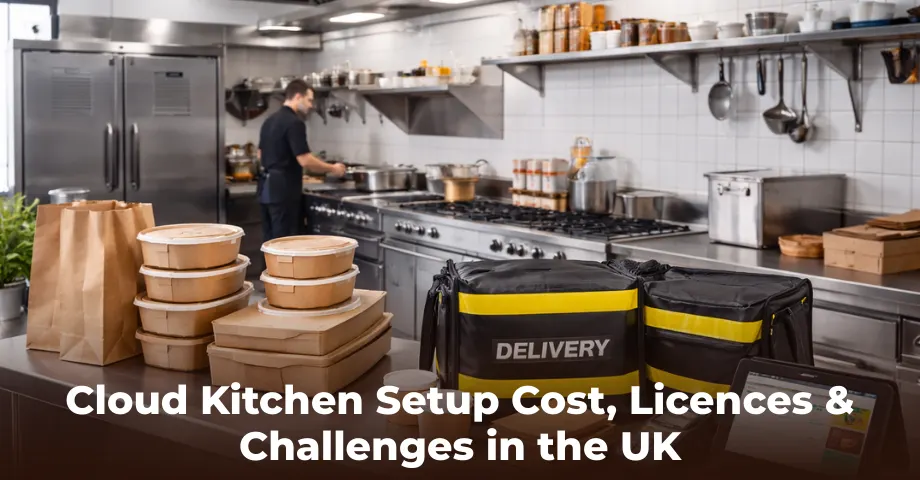
Cloud kitchens have become one of the fastest-growing food business models in the UK. Instead of operating a traditional restaurant with tables and front-of-house staff, cloud kitchens focus entirely on preparing food for delivery.
This delivery-first model can significantly reduce overhead costs. However, starting a cloud kitchen still requires careful planning, legal compliance, and the right equipment.
For anyone researching the cloud kitchen setup cost UK, this guide explains what you actually need to launch a delivery-only food business in the UK — including realistic startup costs, licences, equipment, and common challenges.
What Is a Cloud Kitchen?
A cloud kitchen — sometimes called a delivery-only kitchen or ghost kitchen — is a commercial kitchen designed specifically for preparing food ordered through delivery apps.
Unlike traditional restaurants, cloud kitchens:
-
Do not have dine-in areas
-
Operate primarily through delivery platforms
-
Focus on efficiency and high order volume
Many operators run multiple virtual brands from a single kitchen, allowing them to serve different cuisines without opening multiple restaurants.
If you’re still comparing models, it may help to review the full comparison of cloud kitchen vs takeaway in the UK before deciding which business structure fits your goals.
How Much Does It Cost to Start a Cloud Kitchen in the UK?
The cloud kitchen setup cost UK typically ranges between:
£15,000 – £80,000+
The final amount depends on several factors:
-
Whether you rent a shared kitchen or private unit
-
Kitchen equipment required
-
Delivery platform setup
-
Branding and packaging costs
Compared with opening a traditional restaurant, startup costs can be significantly lower because there is no need for customer-facing space.
Shared Kitchen vs Private Kitchen Setup
One of the first decisions you’ll face is whether to operate from a shared commercial kitchen or a private facility.
Shared Commercial Kitchens
Shared kitchens allow multiple food businesses to operate from the same facility.
Typical costs:
-
£15 – £30 per hour rental
-
Monthly packages: £800 – £2,500
Benefits include:
-
Lower startup investment
-
Access to existing equipment
-
Flexible rental agreements
However, shared kitchens also mean limited control over space and availability.
Private Cloud Kitchen Unit
Some operators choose to rent their own dedicated kitchen.
Typical costs include:
-
Rent: £1,000 – £4,000 per month
-
Deposit: 3–6 months rent
-
Kitchen fit-out: £10,000 – £40,000+
Private kitchens offer more control and branding flexibility but require significantly higher upfront investment.
Equipment Needed for a Cloud Kitchen
Even without a dining area, a cloud kitchen still requires professional commercial equipment.
Common equipment includes:
Cooking Equipment
-
Commercial fryers
-
Grills or ovens
-
Induction or gas hobs
-
Extraction and ventilation systems
Estimated cost:
£5,000 – £20,000+
Refrigeration and Storage
Food safety regulations require proper cold storage.
You’ll need:
-
Commercial refrigerators
-
Freezers
-
Stainless steel prep tables
-
Storage shelving
Estimated cost:
£3,000 – £10,000
Packaging and Delivery Equipment
Delivery-focused kitchens must prioritise packaging.
Important items include:
-
Heat-resistant containers
-
Delivery bags
-
Sealed packaging to prevent leaks
Packaging setup typically costs:
£500 – £2,000 initially.
Delivery Platform Setup
Cloud kitchens rely heavily on food delivery apps.
Most operators partner with platforms such as:
-
Deliveroo
-
Uber Eats
-
Just Eat
These platforms provide access to customers but charge commission fees.
Typical delivery platform commission:
20% – 35% per order
Many cloud kitchens also build their own ordering website to reduce reliance on third-party platforms.
Licences and Legal Requirements for Cloud Kitchens
Even though cloud kitchens don’t serve dine-in customers, they must still comply with UK food safety regulations.
Food Business Registration
You must register your food business with your local council at least 28 days before opening.
Cost:
Free
This applies whether you operate from a commercial kitchen, shared facility, or home kitchen.
Environmental Health Inspection
After registration, your premises will be inspected by an Environmental Health Officer (EHO).
The inspection assesses:
-
Food handling practices
-
Kitchen cleanliness
-
Food storage methods
-
Staff hygiene
You will receive a Food Hygiene Rating (0–5).
Most delivery platforms require a rating of 4 or higher.
Insurance Requirements
Common insurance policies include:
-
Public liability insurance
-
Employer’s liability insurance (if hiring staff)
-
Equipment insurance
Estimated cost:
£300 – £1,000 annually.
Common Challenges of Running a Cloud Kitchen
While cloud kitchens reduce overheads, they come with their own operational challenges.
Heavy Platform Dependence
Many cloud kitchens rely heavily on delivery apps. Commission fees can significantly reduce margins if not managed carefully.
High Competition
Because startup costs are lower, more operators enter the market. Standing out requires strong branding and consistent food quality.
Logistics and Delivery Timing
Late deliveries or poor packaging can damage customer reviews quickly.
Cloud kitchens must optimise kitchen workflow to maintain fast preparation times.
Limited Customer Interaction
Without a physical dining space, customer relationships depend heavily on:
-
Food quality
-
Online reviews
-
Packaging presentation
Building brand recognition requires additional effort.
Is a Cloud Kitchen Cheaper Than a Traditional Takeaway?
In many cases, yes.
Cloud kitchens avoid costs such as:
-
Dining area refurbishment
-
Front-of-house staff
-
High street retail rent
However, delivery commissions and marketing costs can offset some of these savings.
Understanding the differences between cloud kitchen vs takeaway in the UK helps entrepreneurs choose the model that best fits their budget and long-term strategy.
Final Thoughts: Is Starting a Cloud Kitchen Worth It?
For many entrepreneurs, cloud kitchens offer a lower-risk entry point into the food industry. With lower startup costs and flexible kitchen options, the model can be attractive for new operators.
However, success still requires careful planning, strong food quality, and effective cost management.
Understanding the real cloud kitchen setup cost UK — along with licences, equipment, and delivery logistics — is essential before launching any delivery-first food business.
With the right preparation, a cloud kitchen can become a scalable and profitable operation in the modern UK food market.
FAQ
How much does it cost to start a cloud kitchen in the UK?
The cost to start a cloud kitchen in the UK typically ranges between £15,000 and £80,000. Costs depend on whether you use a shared commercial kitchen or rent a private space, as well as equipment and delivery platform setup.
Do you need a licence for a cloud kitchen in the UK?
Yes. You must register your food business with your local council at least 28 days before opening. You will also need to comply with food hygiene regulations and may require additional licences depending on operating hours.
What equipment is needed for a cloud kitchen?
A cloud kitchen typically requires commercial fryers or ovens, refrigeration units, prep tables, ventilation systems, storage shelving, and packaging equipment for delivery orders.
Can you start a cloud kitchen from home in the UK?
In some cases, yes. Home-based cloud kitchens must still register with the local council and pass food hygiene inspections. However, planning permission and council rules may vary depending on the property.
Are cloud kitchens profitable in the UK?
Cloud kitchens can be profitable because they reduce overhead costs such as dining space and front-of-house staff. However, delivery platform commissions and competition can affect profit margins.
What is the difference between a cloud kitchen and a takeaway?
A cloud kitchen prepares food only for delivery orders, while a takeaway usually has a physical location where customers can collect food directly.