



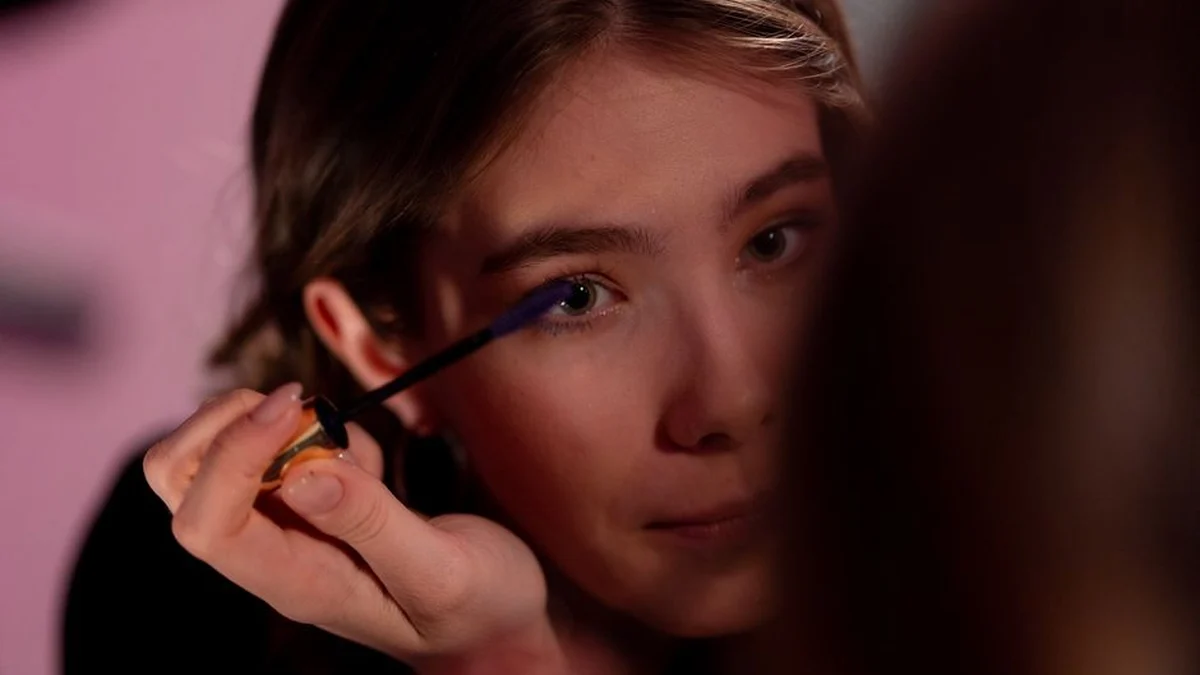
Waterproof mascara solves one problem and creates another. It stays put through rain, tears and a British summer’s worth of humidity — and then you have to get it off, and the way most people do that is quietly costing them lashes.
Lash loss from aggressive removal is common, gradual, and easy to miss until you notice your lashes are sparser than they were. The fix is entirely about technique.
Where mascara sits in the routine is in the eye makeup guide.
What makes it waterproof
Regular mascara is water-based, with pigment suspended in a formula that dries as the water evaporates. Water rewets it, which is why it runs.
Waterproof mascara replaces much of that with waxes, silicones and film-forming polymers that repel water entirely. It doesn’t dissolve in water at all, which is exactly the point and exactly the removal problem.
Tubing mascara — the third option
Genuinely different and under-appreciated.
Tubing formulas form flexible polymer tubes around each lash. They resist water and humidity almost as well as waterproof mascara, but they come off with warm water and gentle pressure — the tubes slide off intact, and you can see them coming away.
For anyone with sensitive eyes, contact lenses, or sparse lashes, this is often the better choice. All the staying power, none of the scrubbing.
The trade-offs: it gives less volume than a thick waterproof formula, and it can flake if you rub your eyes.

When waterproof is worth it
Yes: weddings and emotional occasions; swimming and beach days; humid weather; exercise; long days; hot climates; if you have watery eyes or hay fever; and on the tips of lashes to hold a curl.
No: everyday wear. The removal cost isn’t worth it for a normal Tuesday. If you have sparse or fragile lashes, or you’re prone to blepharitis or dry eye, regular or tubing formulas are kinder.
A useful compromise: regular mascara on the whole lash, waterproof on the tips only. You get curl retention and smudge resistance with far less to remove.
Removing it properly
The technique that matters, and it’s the opposite of what instinct suggests.
Use an oil-based or bi-phase remover. Water-based micellar water will not dissolve a waterproof formula, and trying makes you rub harder. Bi-phase removers — the ones with two visible layers you shake together — are designed for exactly this.
Saturate a cotton pad properly. A barely-damp pad drags.
Hold it against the closed eye for 20 to 30 seconds. Don’t move it. This is the entire technique — you’re letting the solvent dissolve the mascara rather than scrubbing it off.
Then wipe gently downwards, in the direction the lashes grow. One pass.
Repeat with a fresh pad rather than scrubbing with the same one.
Use a cotton bud for the lower lashes and the lash line, which gives far more control than a pad.
Then cleanse normally — an oil cleanser or balm, then your usual cleanser, as covered in face cleansing routine.
What not to do
Rub back and forth. Pull at the lashes. Use a dry wipe. Use your fingernails. Go to bed in it and deal with it in the morning — dried waterproof mascara is considerably harder to remove and you’ll rub harder.
And don’t sleep in it. Mascara left on overnight makes lashes brittle, and it’s a genuine contributor to blepharitis and styes.
Application
Curl first, always. An eyelash curler after mascara — waterproof especially — snaps lashes, because you’re clamping a stiff coated lash. Squeeze at the base for five seconds, then two more squeezes moving towards the tips.
Wiggle at the base and pull through. Volume comes from product at the root; the tips only add length.
Two coats maximum, and apply the second while the first is still slightly tacky. Waiting until it’s dry produces clumps.
Don’t pump the wand. It forces air into the tube, dries the formula and shortens its life. Twist instead.
Waterproof dries fast, so work efficiently — you have less time to fix mistakes than with a regular formula.
Lash health
Lashes have a growth cycle of roughly six to ten weeks, so damage takes a while to show and a while to recover.
Losing one to five lashes a day is normal. Noticeably sparser lashes over months usually means either aggressive removal or repeated extension damage.
To protect them: remove gently, don’t sleep in mascara, replace mascara every three months, avoid daily waterproof wear, and don’t rub your eyes — which is often an untreated allergy problem rather than a habit.
A little castor oil or a conditioning serum along the lash line can help with condition, though the evidence for growth is thin. Products that genuinely lengthen lashes have real safety considerations, covered in lash serum.

Hygiene
Replace every three months. This is the one product where it genuinely matters — a wet, dark tube next to your eye is an ideal environment for bacteria, and the wand reintroduces them every use.
Never share mascara. Never use a tester at a counter.
Don’t add water or eye drops to a drying tube. You’re introducing bacteria into a preservative system designed for the original formula.
If you get an eye infection, throw the mascara out. Reinfection from a contaminated tube is common and entirely avoidable.
Common problems
Clumping: too much product, or applying the second coat too late. Wipe the wand before use, and comb through with a clean spoolie.
Flaking: the mascara is old, or you’ve applied too many coats.
Transfer to the upper lid: the curl is dropping and the lashes are touching the lid. A better curl and a translucent powder on the lid help.
Curl dropping: heavy formulas weigh lashes down. A lighter, waterproof formula holds curl better.
Spidery lashes: too much on the tips. Concentrate at the base.
Irritation: stop using it. Persistent redness, itching or swelling means a reaction or an infection, and neither improves by continuing.
The alternatives
If you’re wearing waterproof mascara daily because you want more than your lashes give you naturally, it’s worth knowing the other routes and their costs — false lashes vs extensions covers both, including the damage risk from extensions, which is real and frequently understated.
A good curl and a lash tint are the low-effort middle ground: a tint lasts four to six weeks, needs no daily removal, and does more for sparse fair lashes than any mascara.
Stop using any eye product that causes persistent redness, itching, swelling or discharge and see a GP or optician.






Comments are closed