



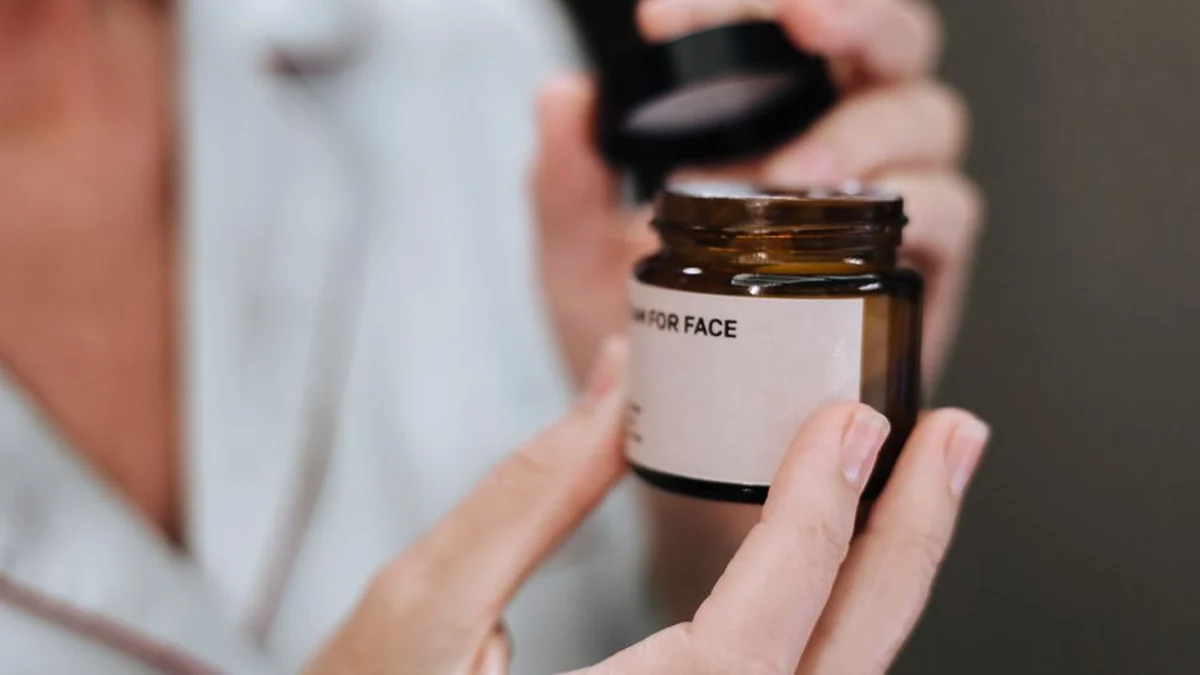
Most people who abandon retinol do it in week three. The skin has gone red and flaky, it stings when they put moisturiser on, and the whole thing feels like a mistake being made in slow motion.
It usually is a mistake — not of using retinol, but of starting too strong and too often. Retinoids are the best-evidenced anti-ageing ingredient available without a prescription, and the single biggest determinant of whether they work for you is how carefully you begin.
Where they fit in the wider picture is in the anti ageing skincare routine guide.
What retinol actually does
Retinoids are vitamin A derivatives. They bind to receptors in skin cells and change how those cells behave — speeding up turnover, increasing collagen production, and normalising how the skin sheds.
The evidence base is substantial and goes back decades: improvements in fine lines, texture, pigmentation, and acne. This is one of the few skincare ingredients where the marketing is roughly proportionate to the science.
The strength ladder
Not all retinoids are equal, and the differences are large.
Retinyl esters (retinyl palmitate, retinyl acetate) — weakest. Several conversion steps before the skin can use them. Gentle, slow, suitable for very sensitive skin.
Retinol — the standard over-the-counter option. Two conversion steps. Available from around 0.1% to 1%.
Retinaldehyde (retinal) — one conversion step, so noticeably stronger than retinol at equivalent percentages, with a good tolerability profile. An underrated middle option.
Adapalene — a synthetic retinoid, available over the counter in the UK for acne. Effective and generally well tolerated.
Tretinoin — prescription only. No conversion needed, so the strongest and fastest-acting, with correspondingly more irritation.
Starting properly
The whole method, in one place.
Start low. 0.2–0.3% retinol, or a low-concentration retinal. There is no prize for starting at 1%.
Start infrequently. Twice a week for two weeks. Then three times a week for two weeks. Then every other night. Only increase to nightly if your skin is completely comfortable, which for many people it never is — and every other night is perfectly effective.
Apply to dry skin. Wait 20 minutes after cleansing. Damp skin increases penetration and irritation substantially, and this is the mistake that catches out the most people.
Use a pea-sized amount for the entire face. More is not better; it’s just more irritating.
Avoid the immediate eye area, the corners of the nose, and the corners of the mouth — the thinnest, most reactive skin.
Moisturise afterwards. Always.
The sandwich method
For sensitive skin, or anyone who’s tried and failed before, this works well: moisturiser, then retinol, then moisturiser again.
It buffers the retinoid, reducing irritation considerably while retaining most of the benefit. The purists will tell you it reduces efficacy. That’s true in principle, and it’s irrelevant if the alternative is not using it at all.
Purging versus irritation
Worth being able to tell apart, because the responses are opposite.
Purging is accelerated turnover bringing existing congestion to the surface faster. It appears in areas where you normally break out, consists of small spots that clear quickly, and settles within four to six weeks.
Irritation is barrier damage. It appears in areas where you don’t normally break out, involves redness, stinging, burning, tightness and flaking, and gets worse rather than better with continued use.
If it’s purging, push through carefully. If it’s irritation, stop, repair the barrier with a plain moisturiser for a week or two, then restart at a lower frequency.
The distinction is not always obvious in the first fortnight. If in doubt, reduce frequency — you lose very little and avoid a lot.
Retinol uglies, and how long they last
Weeks two to six are typically the worst. Dryness, flaking around the nose and mouth, some redness, and skin that looks temporarily worse than when you started.
This settles as the skin adjusts. Most people are through it by week eight.
If it hasn’t settled by then, you’re on too strong a product or using it too often. Drop back a step.
What not to combine it with
Exfoliating acids — AHAs and BHAs — on the same night. Alternate.
Benzoyl peroxide in the same routine, which can deactivate some retinoid formulations. Different times of day.
Vitamin C is fine at a different time of day. Morning vitamin C, evening retinoid is the standard and effective arrangement — the specifics are in vitamin c serum.
Physical scrubs, while you’re adjusting. Skin on a retinoid doesn’t need mechanical exfoliation and doesn’t tolerate it well.
Sunscreen is not optional
Retinoids increase photosensitivity and accelerate cell turnover, which means newer, more vulnerable skin at the surface.
Using a retinoid without daily sunscreen is close to pointless — you’re stimulating collagen production at night and allowing UV to degrade it during the day. Broad spectrum SPF 30 minimum, every morning, including in a British winter.
The eye area
Retinoids do work around the eyes, and that’s where fine lines usually appear first. But the skin there is thinner and reacts more.
Use a formulation designed for it, apply on the orbital bone rather than close to the lash line, and expect a longer adjustment period. The wider approach is in eye cream.
Who shouldn’t use it
Anyone pregnant, breastfeeding, or trying to conceive. Retinoids are contraindicated in pregnancy. This applies to prescription retinoids definitively and to over-the-counter retinol on a precautionary basis. Stop before trying to conceive.
Anyone with an actively compromised barrier — repair first, then start.
Anyone with rosacea or eczema, without medical advice. Some tolerate low-strength retinoids; many don’t.
If you want the mechanism without the irritation and you’re in one of these groups, bakuchiol is the usual suggested alternative — with the caveat that its evidence base is far smaller.
Realistic results
Texture and smoothness: 4–8 weeks.
Pigmentation: 8–12 weeks.
Fine lines: 3–6 months.
Collagen changes: 6–12 months.
Retinol is a long game. Using it three nights a week for two years does far more than using it nightly for six weeks and giving up — which is what most people do.
This article is general information, not medical advice. Speak to a pharmacist, GP or dermatologist before starting a retinoid if you are pregnant, breastfeeding, planning a pregnancy, or have a diagnosed skin condition.








Comments are closed