



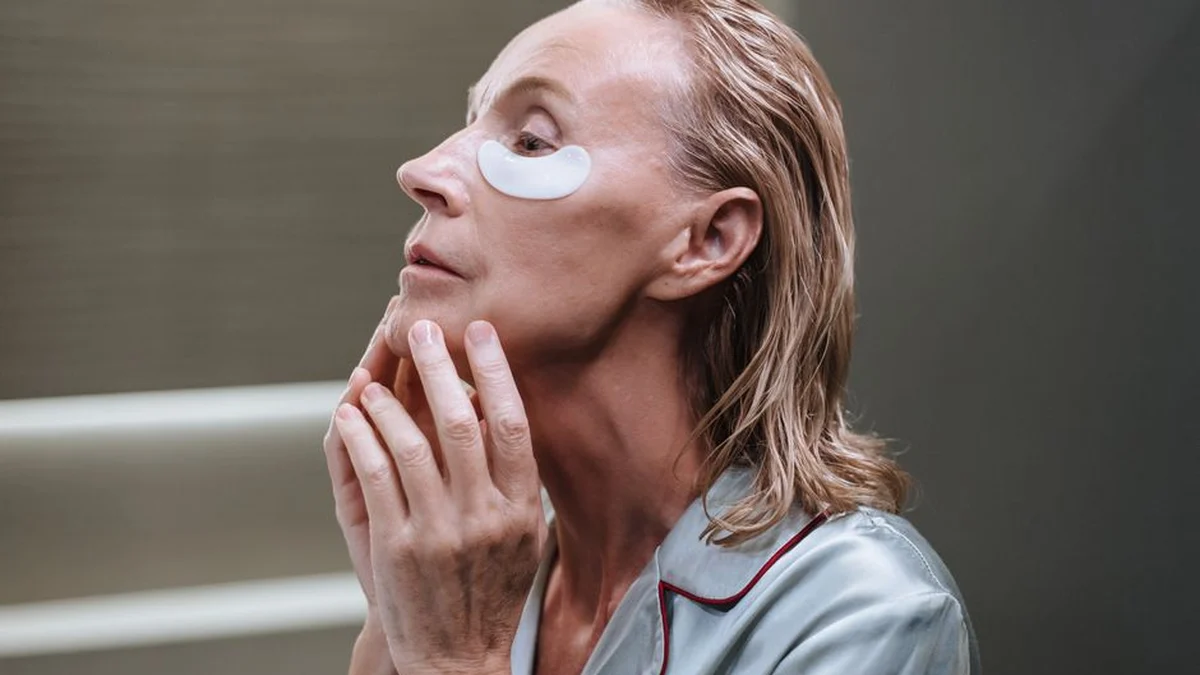
Skincare is the only industry I can think of where the customer is expected to buy twelve products, use them in a specific order, and then be unable to tell which one is working.
The useful version is much smaller than the marketed version. There are four ingredients with genuinely strong evidence behind them, and if you use those consistently for a year you will get better results than someone rotating through a shelf of serums. Everything else is optimisation, and optimisation only matters once the basics are in place.
What actually causes skin to age
Two processes, and they’re not equally important.
Intrinsic ageing is the biological process — collagen production declines from around your mid-twenties at roughly 1% a year, cell turnover slows, and the skin’s fat and bone structure changes. This is genetic and unavoidable.
Extrinsic ageing is environmental damage, and it’s the larger share of what people see in the mirror. Photoageing from UV exposure is the dominant factor by a wide margin — commonly estimated at around 80% of visible facial ageing. Pollution, smoking, poor sleep and chronic sun exposure make up most of the rest.
The practical implication is uncomfortable for anyone with an elaborate evening routine: sunscreen does more than every other product combined, and it’s the one most British people skip because it’s overcast.
UVA passes through cloud and window glass, and it’s the wavelength primarily responsible for photoageing. A grey Tuesday in Leeds still delivers UVA. This is genuinely the single highest-value habit in skincare, and it’s free of any complexity.
The four ingredients with real evidence
1. Sunscreen
Broad spectrum, SPF 30 minimum, every morning, all year. In the UK, the UVA star rating or the circled UVA logo tells you about protection against the ageing wavelengths — SPF alone only describes UVB.
Application quantity is where most people fail. Roughly a third of a teaspoon for the face is the figure usually cited; most people apply a quarter of that and get a fraction of the stated protection.
2. Retinoids
The best-evidenced topical anti-ageing ingredient there is. Decades of research showing improvements in fine lines, texture, pigmentation and collagen production.
They’re also the ingredient people most often abandon, because starting badly causes weeks of irritation and peeling. The guide to retinol cream covers how to start without wrecking your skin barrier — which is genuinely the difference between success and a drawer full of half-used tubes.
3. Vitamin C
An antioxidant that neutralises free radicals from UV and pollution, supports collagen synthesis, and helps with pigmentation. Used in the morning, it complements sunscreen rather than replacing it.
Formulation matters enormously here, more than for almost any other ingredient — the detail is in vitamin c serum.
4. Moisturiser
Unglamorous and essential. A compromised skin barrier makes every other product harder to tolerate and skin look worse immediately. Ceramides, glycerin, hyaluronic acid, squalane.
A routine that fits into real life
Morning: gentle cleanser (or just water, if your skin is dry), vitamin C serum, moisturiser, sunscreen.
Evening: cleanser, retinoid (three or four nights a week to start), moisturiser.
That’s it. Six products total, four of which do the work.
Add things later if you have a specific concern, one at a time, with four to six weeks between additions so you can tell what’s doing what.
The layering rule
Thinnest to thickest. Water-based before oil-based. Actives before occlusives.
Where people go wrong is applying a rich cream and then a serum on top, which mostly doesn’t get through. And applying actives to skin that’s still wet, which increases penetration and irritation — retinoids in particular should go on completely dry skin.
Ingredients that don’t mix well
Less dramatic than the internet suggests, but a few combinations genuinely cause problems.
Retinoids and exfoliating acids on the same night is a common route to a damaged barrier. Alternate nights instead.
Retinoids and benzoyl peroxide can deactivate each other in some formulations. Use at different times of day.
Vitamin C and retinoids are fine used at different times — vitamin C in the morning, retinoid at night — which is the standard arrangement anyway.
Too many actives at once is the real problem, and it’s what most “purging” actually is. Skin that stings, flakes and looks red is not adjusting; it’s irritated.
Realistic timelines
Hydration and glow: days to two weeks.
Texture and tone: 4–8 weeks.
Pigmentation: 8–12 weeks.
Fine lines: 12 weeks to 6 months.
Collagen changes: 6–12 months of consistent use.
Skin cell turnover takes roughly 28 days in your twenties and slows with age, so nothing meaningful happens in under a month. Any product promising visible line reduction in a week is describing temporary plumping from hydration, which is real but disappears when you stop.
By decade, roughly
Twenties. Sunscreen, gentle cleansing, moisturiser. Introduce a retinoid towards the end of the decade if you want. Prevention is dramatically easier than correction.
Thirties. Add a retinoid properly and a vitamin C. Consider an eye cream if the under-eye area is a specific concern — the skin there is thinner and shows change first.
Forties. Richer moisturisers as skin gets drier. Peptides become worth considering — see peptide serum. Keep the retinoid going.
Fifties and beyond. Barrier support becomes the priority as skin thins and oil production drops. Gentler cleansing, more occlusive moisturisers, and a possible switch to a gentler retinoid or a bakuchiol alternative if tolerance has dropped.
These are rough guides rather than rules. Skin varies enormously between people of the same age.
The things that matter beyond products
Sleep, genuinely. Sleep deprivation shows in skin within days and chronically over years.
Not smoking. It constricts blood vessels and degrades collagen, and its effect on facial ageing is dramatic and well documented.
Alcohol in moderation — it’s dehydrating and inflammatory.
Diet with enough protein, and plenty of vegetables. The evidence for specific “anti-ageing foods” is weak; the evidence for general nutritional adequacy is not.
And managing sun exposure over decades, which includes holidays. A fortnight in Spain without protection undoes a lot of careful evenings.
What to skip
Anti-ageing products for teenagers and young twenties, which is a genuinely unhelpful trend. Young skin needs cleansing, moisturiser and sunscreen, and retinoids on skin that doesn’t need them cause irritation without benefit.
Collagen creams. Collagen molecules are far too large to penetrate the skin. Collagen supplements have somewhat better evidence for skin than topicals, though it’s still modest.
Anything promising results in seven days.
Very expensive products with proprietary blends and no published data. Price correlates poorly with efficacy in this category — well-formulated retinoids and vitamin C serums exist at every price point, including supermarket ones.
If you’re pregnant or breastfeeding
Retinoids are contraindicated in pregnancy. This includes prescription retinoids and, on a precautionary basis, over-the-counter retinol. Stop before trying to conceive if possible.
Vitamin C, sunscreen, niacinamide, azelaic acid and most moisturisers are generally considered fine. Bakuchiol is often suggested as a pregnancy-safe retinol alternative, though the safety data is limited rather than established.
Check with your midwife or GP rather than relying on a website.
This article is general information, not medical advice. For persistent skin conditions, suspicious moles or skin changes, or before starting any prescription treatment, see a GP, pharmacist or dermatologist.





Comments are closed