



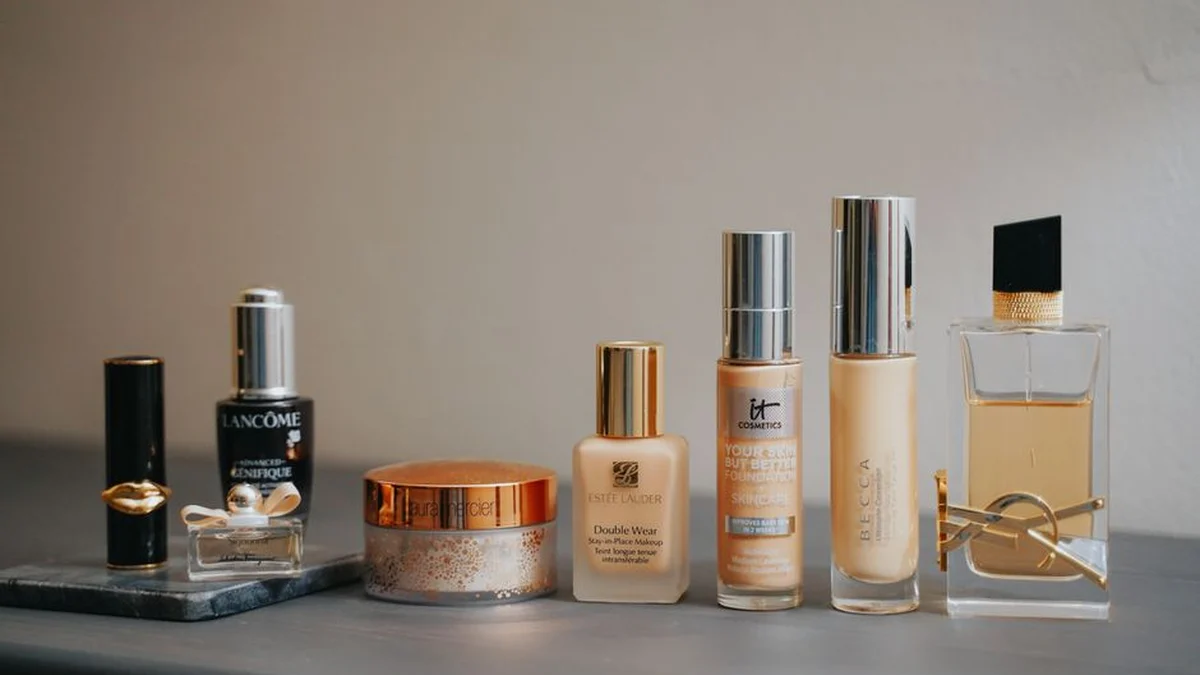
Foundation is bought in a shop, under shop lighting, in a ten-minute decision, and then lived with for six months. It’s a strange system, and it’s why so many people are wearing a shade that’s slightly wrong in a way they can’t quite identify.
Three variables decide whether a foundation works: shade, finish and formula. Most people get one right and assume the problem is the other two.
Where foundation sits in the wider routine is in the base makeup routine guide.
Undertone matters more than depth
If your foundation looks slightly off but you can’t say why, this is usually it.
Cool: pink, red or bluish undertones. Veins on the inner wrist look blue or purple. Silver jewellery tends to suit.
Warm: yellow, peachy or golden undertones. Veins look green. Gold jewellery tends to suit.
Neutral: a balance of both. Veins look blue-green. Both metals suit.
Olive: a green or grey undertone alongside warmth, common in Mediterranean, South Asian, Middle Eastern and Latin American skin. Frequently mismatched, because most ranges offer warm or cool and skip olive entirely — which is why olive-skinned people so often end up looking orange in a warm shade and grey in a cool one.
A foundation that’s the right depth but the wrong undertone will always look wrong. A slightly imperfect depth with the right undertone usually looks fine.
Testing a shade properly
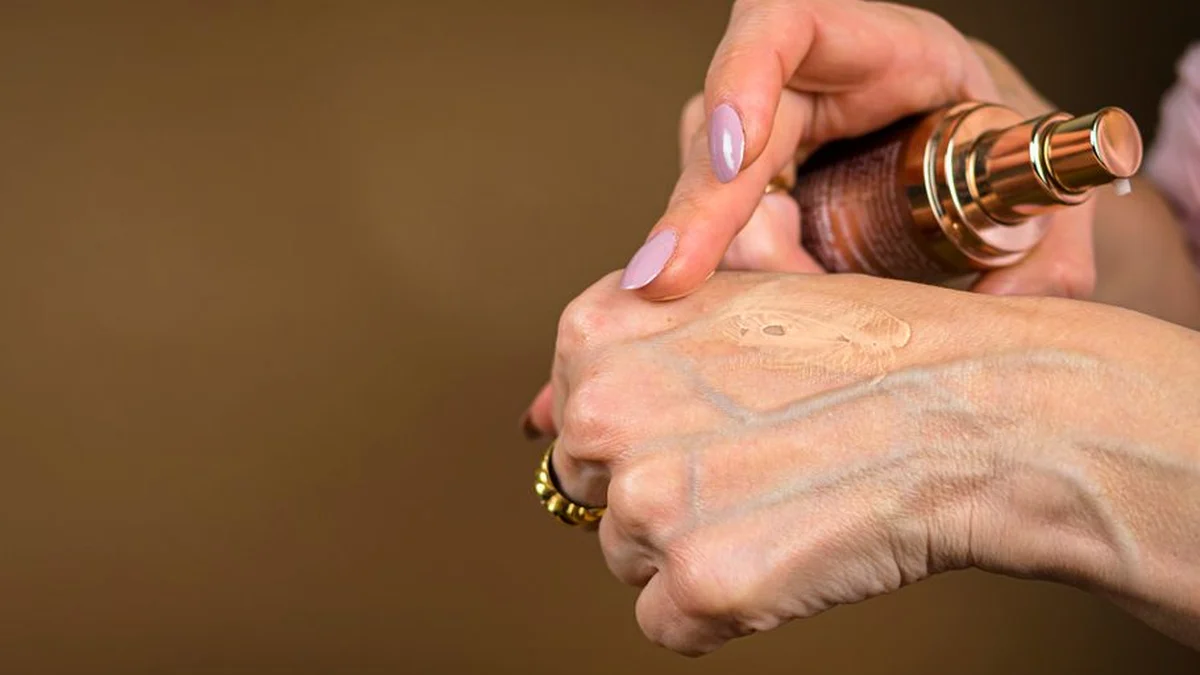
Not on your hand. The back of your hand is almost always a different colour from your face — usually darker.
Test on the jawline, three stripes of neighbouring shades, and look for the one that disappears.
Go outside. Shop lighting is designed to flatter and it will lie to you. Daylight is the only reliable test.
Wait ten minutes. This is the step nobody does and it explains a great deal.
The oxidation problem
Many foundations darken after application, sometimes noticeably, as ingredients react with air and with the oils in your skin. A shade that matched perfectly in the shop can look orange an hour later.
This is why the ten-minute wait matters. If you’re buying without testing, sizing down half a shade is often safer than sizing up.
Oxidation is worse on oily skin and with certain formulations. A primer creates a barrier that reduces it, which is one of the more genuine reasons to use one.
Matching your neck, not just your face
Faces are frequently a different colour from necks — more sun exposure, more redness, sometimes pigmentation.
Match to your neck and blend down over the jaw. A face that’s a different colour from the neck is the most visible foundation error there is, and it’s the one other people notice while you don’t.
If the difference is substantial, the honest answer is that your face has more sun damage than your neck, and the long-term fix is in the sun protection skincare guide.
Choosing a finish
Matte. Oil-absorbing, long-wearing. Good for oily skin. On dry or textured skin it looks flat and clings to every flake.
Natural or satin. The middle ground and the right answer for most people. Skin-like without shine.
Dewy. Luminous, hydrating. Beautiful on dry and mature skin. On oily skin it slides within hours.
Radiant with light-reflecting particles. Blurs texture optically. Can emphasise pores under flash photography.
The commonest mismatch: oily-skinned people buying matte because it sounds right, and finding it looks harsh and still breaks up — because the problem was that they skipped moisturiser, not that they needed more mattifying.
Coverage
Sheer: evens tone, lets skin show. Tinted moisturisers and skin tints.
Light to medium: covers redness and unevenness, still looks like skin. Where most people should be.
Full: covers pigmentation, scarring and significant redness.
The key principle: buildable medium coverage applied well beats full coverage applied heavily. A thin layer of medium coverage plus targeted concealer looks far more natural than full coverage everywhere, and it’s the same amount of covering.
By skin type
Oily. Oil-free, matte or natural finish, long-wear. Set the T-zone. Use a mattifying primer only where you get oily, not all over.
Dry. Hydrating, dewy or satin, with glycerin or hyaluronic acid. Exfoliate first — foundation cannot fix flaking, it can only sit on it.
Combination. Natural finish, with different primers in different zones if you’re being thorough.
Sensitive. Fragrance-free, minimal ingredients, mineral formulations often suit best.
Acne-prone. Non-comedogenic, oil-free. Foundation does not cause acne in most cases, but not removing it properly does — see makeup remover. Green colour-correcting primer under foundation neutralises redness better than piling on coverage.
Mature. Satin or luminous, lighter coverage, minimal powder. Heavy matte foundation settles into fine lines and emphasises them.
Textured or large pores. A blurring primer, a natural finish, and applied with a damp sponge rather than buffed with a brush — see makeup primer.
Application
Start with half a pump. Most people use two or three times what they need.
Apply to the centre of the face — around the nose, the chin, the centre of the forehead — and blend outwards. That’s where redness and unevenness live. The perimeter needs almost nothing, which also solves the jawline demarcation problem.
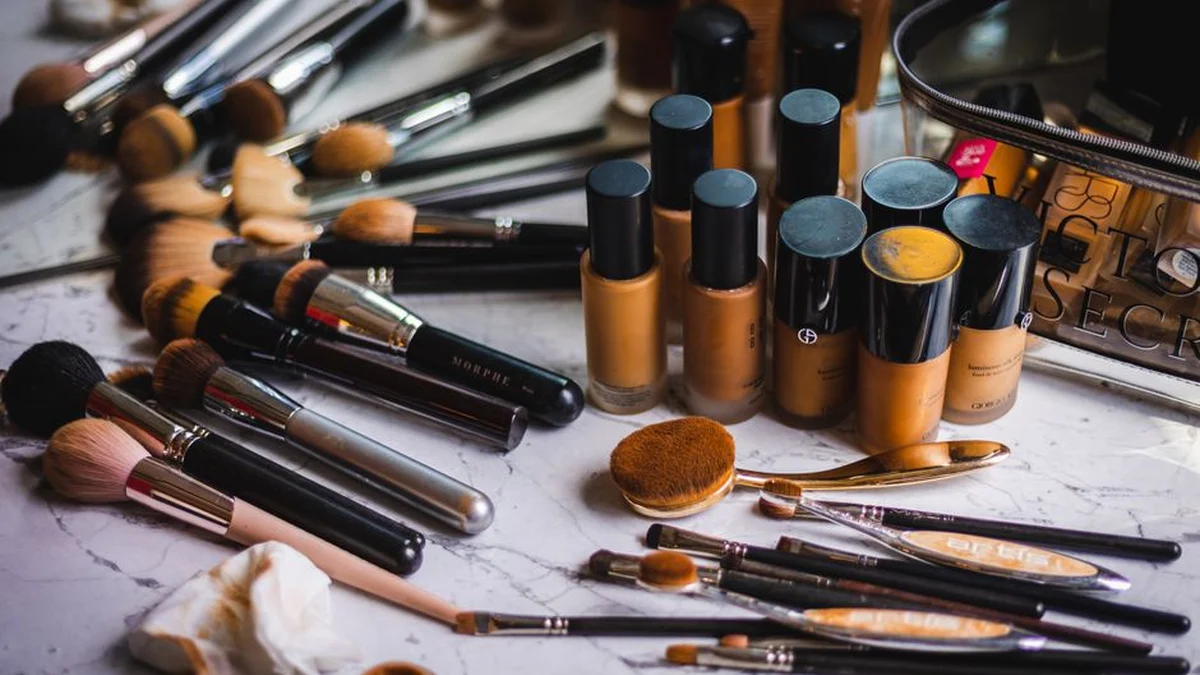
Damp sponge: most natural finish. Press and bounce; dragging removes what you just applied.
Brush: more coverage, buffed in circles.
Fingers: sheerest, and the warmth helps it melt in.
Build in thin layers where you need more, rather than applying thickly everywhere.
Don’t forget to take it over the ears and down the neck if there’s any visible line.
Shade ranges, honestly
Foundation shade ranges have improved enormously, and they are still weakest at the two ends of the spectrum and in the middle for olive tones.
If you struggle to find a match, mixing two shades is entirely legitimate — a darker and a lighter, or a warm and a cool, blended on the back of your hand. A lot of makeup artists work this way as standard.
Foundation drops — concentrated pigment you add to your own base — are useful for adjusting depth seasonally, since most people are lighter in a British February than a British August.
When to replace it
Most liquid foundations are good for six to twelve months after opening. The little jar symbol on the packaging gives the period-after-opening figure.
Signs it’s gone: a change in smell, separation that doesn’t remix, a change in texture, or a change in how it wears.
Don’t add water to a drying foundation — it introduces bacteria into a product with a preservative system designed for its original formulation.
And clean your brushes and sponges. A sponge used for three weeks without washing is putting bacteria back on your face daily — the practicalities are in concealer, where the same tools do most of the work.





Comments are closed