



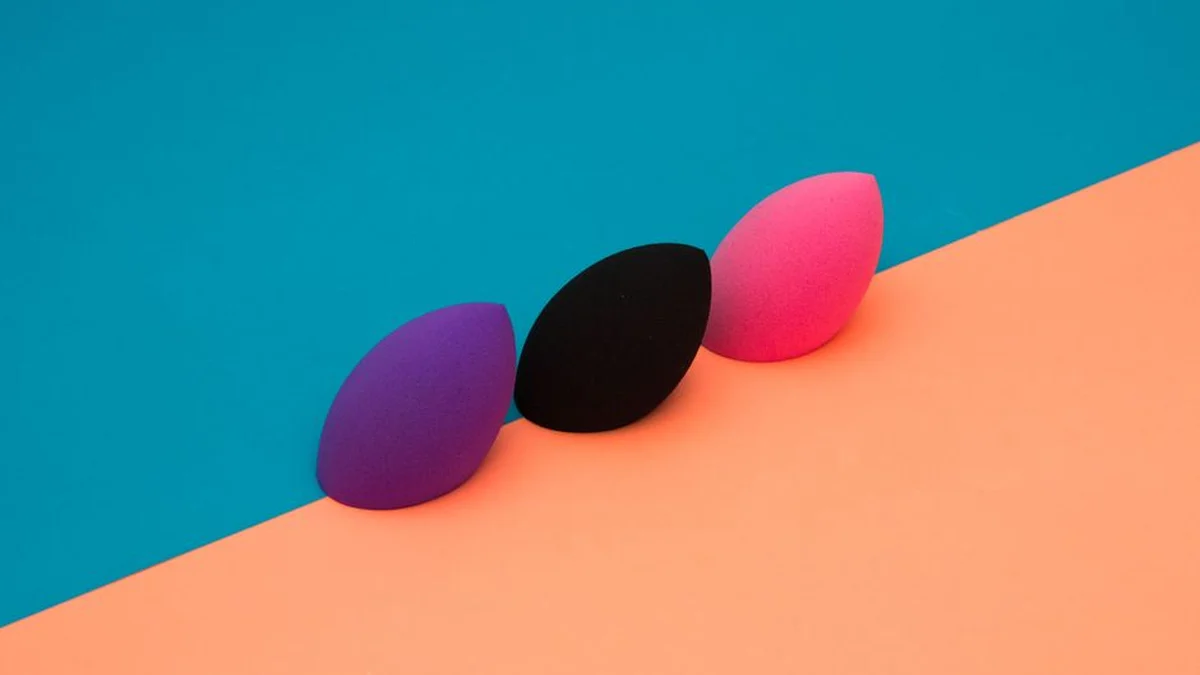
The makeup sponge gives the most natural-looking foundation finish of any tool. It also absorbs a significant proportion of your foundation, needs washing after every use, and becomes genuinely unpleasant if you don’t.
Silicone applicators arrived promising to fix both problems — no absorption, wipes clean in seconds. They mostly failed on the first point that matters, which is finish, though they have a legitimate niche.
Where both sit in a kit is in the makeup brushes and tools guide.
Why a damp sponge works
Two things happen when you dampen a sponge.
The water fills the pores, so the sponge can’t absorb as much foundation. And the residual moisture thins the product slightly on contact, which is what produces that skin-like, melted-in finish that a brush can’t replicate.
The bouncing motion also presses product into the skin rather than pushing it across the surface, which is why it doesn’t leave brush strokes.
The rules
Always damp. Never dry. A dry sponge absorbs an enormous amount of product, drags across the skin, and gives patchy coverage. This is the single most common mistake.
Squeeze it out thoroughly. It should be expanded and damp, not dripping. A soaking sponge dilutes foundation into nothing.
Press and bounce. Never drag or wipe — dragging removes the product you just applied.
Use the shapes. The rounded base for cheeks and forehead, the flat edges for the sides of the nose, the pointed tip for under the eyes and around the nostrils.

The absorption problem
Worth being honest about: a sponge takes a meaningful proportion of your foundation into itself. Estimates vary, but it’s enough to notice on an expensive product.
Dampening it properly reduces this considerably — that’s the main reason to do it beyond finish.
If you use a costly foundation and this bothers you, a dense synthetic brush wastes far less. You’ll get more coverage and a slightly less natural finish.
The hygiene reality
This is the part people avoid thinking about.
A makeup sponge is a damp, porous object that touches your face daily and sits in a bathroom. Studies looking at used makeup products have consistently found high rates of bacterial contamination in sponges specifically, and sponges are frequently the worst-performing item tested.
That’s not a reason to abandon them. It’s a reason to treat them as a consumable rather than a permanent tool.
Wash after every use if you can manage it, or twice a week at absolute minimum.
Dry it properly. Squeeze thoroughly, and leave it somewhere it can air — not in a drawer, not in a closed bag, and not in a sealed case. A damp sponge in an enclosed space is the ideal environment for growth.
Replace every two to three months. Immediately if it tears, stains permanently, changes texture, or develops any smell.
If your skin has been breaking out and you can’t identify why, your sponge is worth eliminating as a variable before you change your skincare.
Washing one
Wet it, work in a gentle soap or dedicated cleanser, and squeeze repeatedly under warm running water until it runs completely clear. Foundation hides deep in the middle — keep going past the point where the surface looks clean.
For stubborn staining, soak in warm soapy water for ten minutes first.
Some people microwave a soapy wet sponge for a minute. It works and it degrades the material faster.
Squeeze out and air dry somewhere open.
The general cleaning principles are in brush cleaners.
Silicone applicators
A flat or dome-shaped silicone pad. Non-porous, so it absorbs nothing.
What’s good: zero product waste, wipes clean in seconds, no bacterial harbouring, lasts indefinitely, and it’s excellent for very small quantities of expensive product.
What isn’t: the finish. Silicone pushes product across the skin rather than pressing it in, so it tends to look like a layer sitting on top rather than melted in. It struggles around the nose and eyes. And it can feel unpleasant — a lot of people simply don’t like the sensation.
Genuinely useful for: applying a sheet mask or a face mask without wasting product on your hands, applying sunscreen, and travel where hygiene is difficult.
Not a real replacement for a sponge on foundation, for most people.
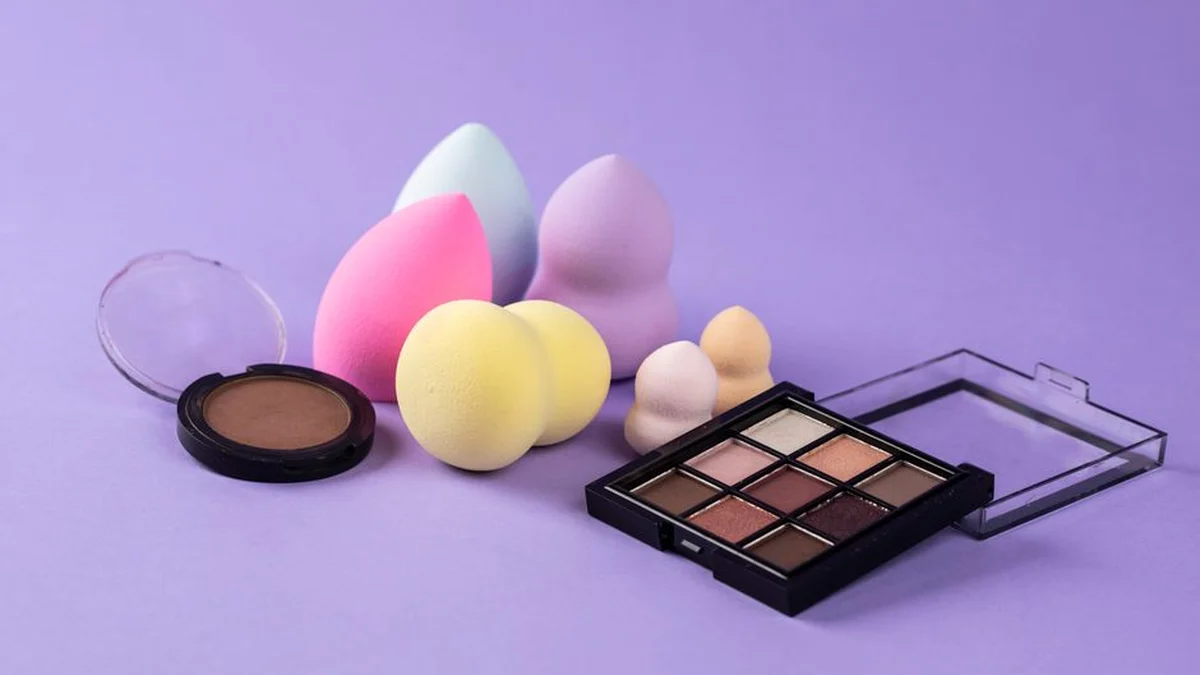
Sponge, brush or fingers?
Sponge: most natural, skin-like finish. Sheer to medium coverage. Best for dewy and satin foundations, dry skin, and anyone wanting minimal-looking makeup.
Brush: most coverage, least waste, fastest. Best for full-coverage foundation, oily skin, and when you want product to go further. Can leave strokes if you sweep rather than buff.
Fingers: sheerest, and the warmth genuinely helps foundation melt into the skin. Best for tinted moisturiser and skin tints. Wash your hands first, which people forget.
Plenty of people use two — a brush to apply and distribute, then a damp sponge to press it in and remove any excess. That combination gives coverage with a natural finish and is what a lot of makeup artists do.
The finish differences matter most with the foundation you’ve chosen, and the pairing is covered in foundation for your skin type.
Other sponge uses
Concealer: the pointed tip, pressed rather than blended, particularly under the eyes where it prevents creasing — see concealer.
Setting powder: press the damp sponge into powder and stamp it on. Gives a more locked-in finish than a brush.
Cream blush and contour: bounces them in beautifully.
Reapplying sunscreen over makeup: a damp sponge presses it on with minimal disturbance, which is one of the better methods covered in reapply sunscreen over makeup.
Buying one
Expensive branded sponges and cheap supermarket ones are more similar than the price gap suggests.
What to look for: it should expand noticeably when wet, feel soft and springy rather than dense and rubbery, and have a pointed end for precision.
Cheap ones sometimes don’t expand, which means they behave like a dry sponge even when wet — that’s the main failure mode. If it doesn’t expand, it’s not worth using.
Given that you should be replacing them every couple of months, buying a multipack of mid-range sponges is more sensible than one expensive one you’ll be reluctant to throw away.



Comments are closed