



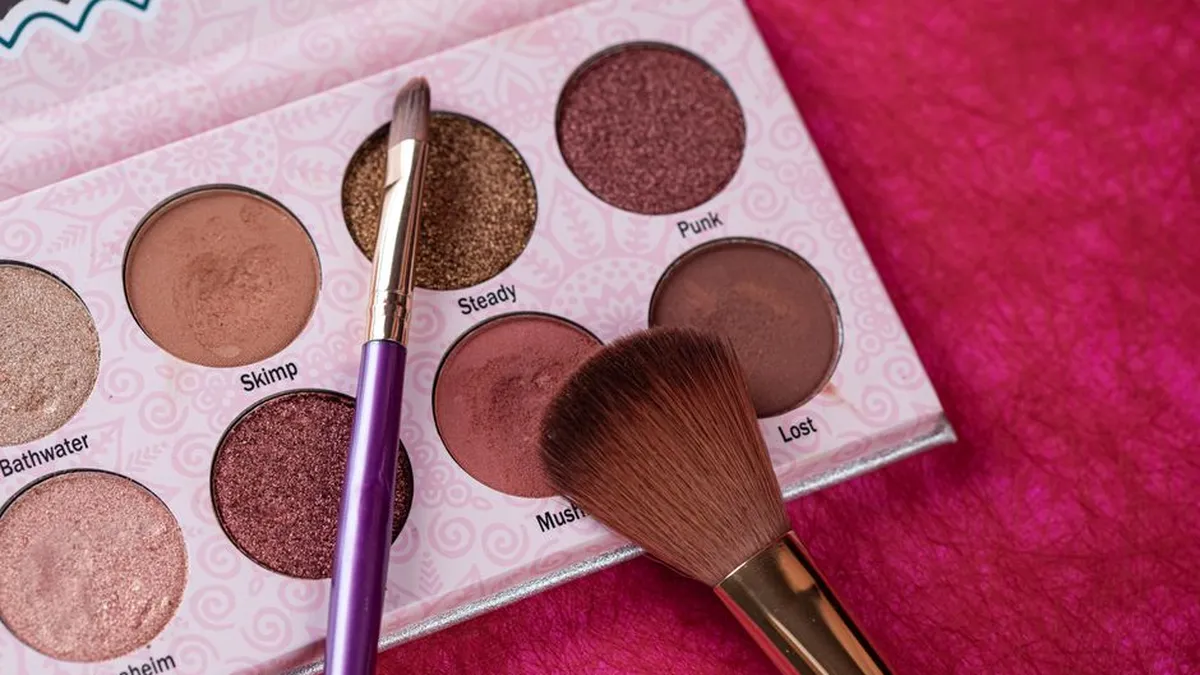
Brush names are close to useless. “Contour brush” and “blush brush” and “highlighter brush” frequently describe the same shape sold three times, and the label tells you nothing about what the brush will actually do on your face.
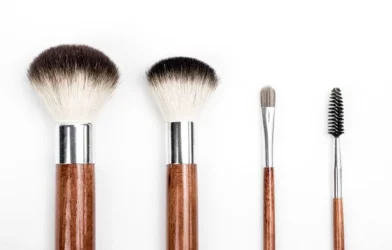
What matters is the physical form: how dense the bristles are, how they’re cut, and how big the head is. Learn to read those and you can look at any brush and know what it’s for, whatever the packaging says.
Where brushes fit in a wider kit is in the makeup brushes and tools guide.
Reading a brush
Density. Dense and tightly packed means more product deposited, more coverage, more precision. Loose and fluffy means less product, more diffusion, more blending.
Shape of the cut. Flat-topped for buffing. Domed for blending. Angled for following a natural line. Tapered for precision.
Size. Larger covers ground faster and with less control. Smaller is precise and slower.
Material. Synthetic for liquids and creams. Natural or good synthetic for powders.
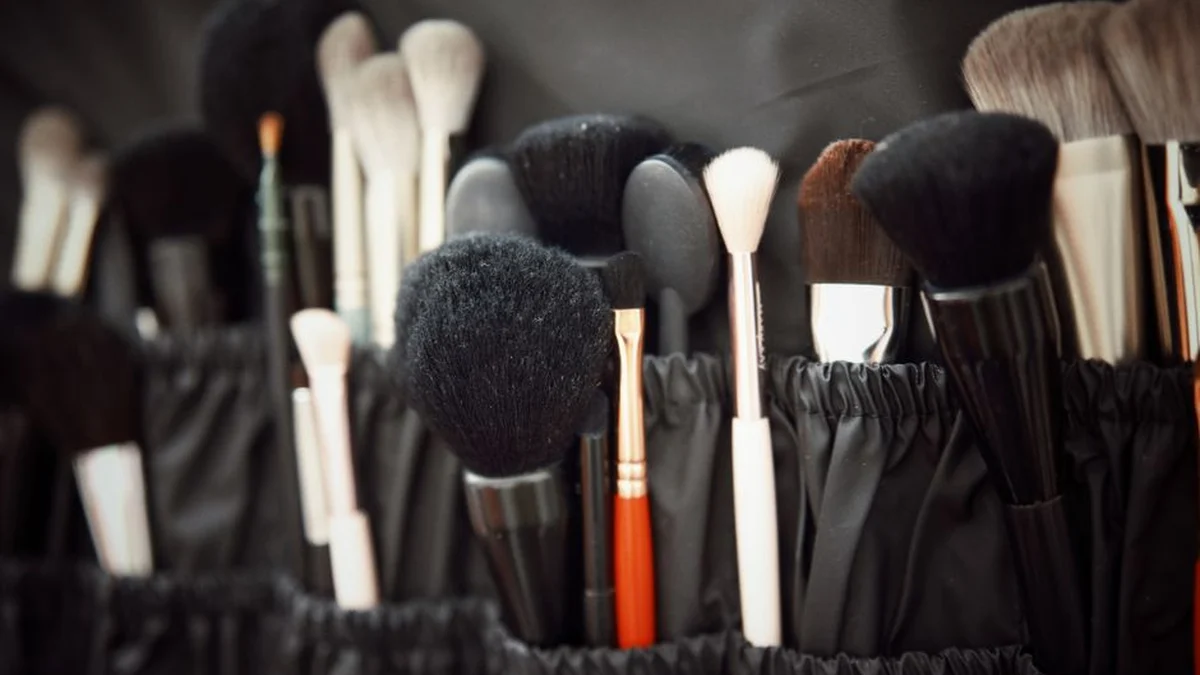
Face brushes
Flat-topped buffing brush
Dense, synthetic, flat surface. Buffs foundation in circular motions.
For: medium to full coverage foundation, evenly applied.
Note: a very dense one can leave streaks if the foundation is thick. Work in small circles, not sweeps.
Domed foundation brush
Dense but rounded. More forgiving than flat-topped, gets around the nose more easily.
Flat paddle brush
The old-fashioned foundation brush. Largely superseded — it tends to leave visible strokes. Useful for painting product on before buffing with something else.
Large fluffy powder brush
Big, soft, loosely packed.
For: setting powder, and bronzer applied lightly.
Technique: tap the excess off firmly, then press and roll rather than sweeping, which disturbs foundation underneath.
Angled cheek brush
Medium density, cut at an angle.
For: blush, bronzer and contour. The angle follows the cheekbone naturally.
The most versatile face brush — if you buy one cheek brush, this is it. The placement differences are in contouring vs bronzer.
Tapered blending brush
Fluffy, pointed. Diffuses harsh edges on cream or powder products.
Fan brush
Thin and splayed.
For: highlighter applied very lightly, and sweeping away eyeshadow fallout.
Honest verdict: skippable. A small fluffy brush does the same job.
Small kabuki
Short-handled, very dense.
For: travel, and mineral powder foundation.
Eye brushes
Flat shader brush
Dense, flat, firm. Packs shadow onto the lid with maximum colour payoff.
For: the main lid colour, and pressing pigment where you want it intense.
Technique: press and pat. Don’t sweep — sweeping with a shader brush wastes the pigment.
Fluffy blending brush
Domed, soft, loosely packed.
The single most important eye brush. Almost all eyeshadow quality is blending, and this is the brush that does it.
Technique: small windscreen-wiper motions. Use one with no product on it at the end to soften every edge.
If you own one eye brush, own this one.
Pencil brush
Small, tapered to a point.
For: the outer corner, the lower lash line, and the inner corner. Precision work in small areas.
Small angled brush
Firm, cut at an angle.
For: gel eyeliner, and filling brows. Two jobs, one brush — see eyeliner types and eyebrow products.
Keep separate brushes for liner and brows, though, or you’ll transfer colour.
Flat definer or smudge brush
Small, dense, flat.
For: smudging liner along the lash line, and applying shadow as liner.
Crease brush
Slightly denser and more tapered than a blending brush.
For: placing colour precisely in the crease before blending it out.
Skippable if you have a good blending brush and a pencil brush.
Spoolie
The mascara-wand-shaped one.
For: brushing brows, separating lashes, softening brow product. Costs almost nothing and improves both brows and lashes noticeably.
Lip brushes
Small, firm, tapered.
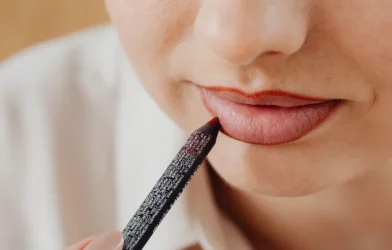
For: precise lipstick application, mixing shades, and getting a sharp edge on a bold colour.
Worth it if: you wear bold or dark colours regularly, or want maximum precision.
Skippable if: you mostly wear balm, tint or gloss. A lip liner does the edge work more easily.
The five that cover everything
If you’re building deliberately:
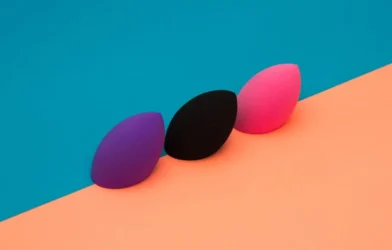
A makeup sponge for foundation. A large fluffy powder brush. An angled cheek brush. A flat shader brush. A fluffy blending brush.
Add a small angled brush for brows and liner, and a spoolie, and you have a complete working kit for under £50.
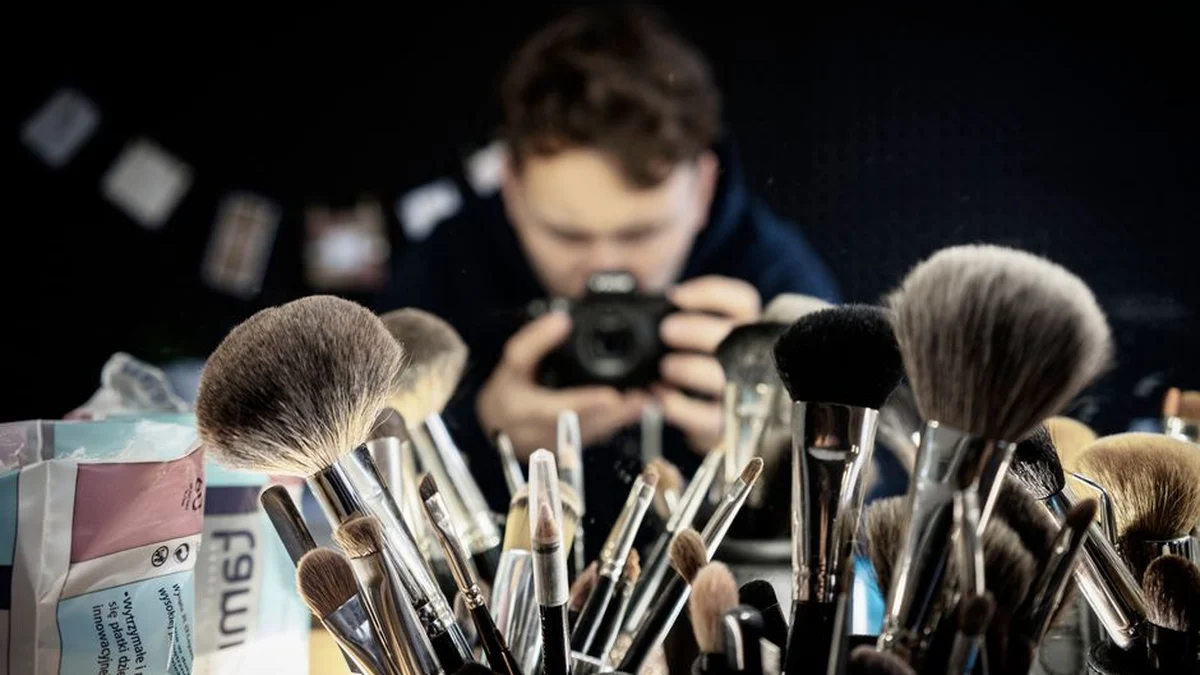
What you can genuinely skip
Fan brushes. Most “highlighter-specific” brushes. Duo-fibre brushes, unless you specifically want very sheer coverage. Every brush in a set beyond the four you actually use. And most brushes marketed for a single product, which are usually a shape you already own with a different label.
Buying them
Mid-range — £8 to £20 each — represents nearly all the available quality. Above about £30 you’re paying for the handle and the name.
Check before buying: tug the bristles gently for shedding, check the ferrule is tight with no gap, and feel the bristles against your inner wrist. Scratchy is a bad sign and doesn’t improve with use.
Sets are usually poor value. They pad the count with brushes nobody uses. Four good individual brushes beat a twelve-piece set at the same price.
Looking after them
Wash face brushes weekly, eye brushes weekly, powder brushes fortnightly. Reshape while damp. And dry them flat or bristles-down — never upright, which lets water into the ferrule and dissolves the glue.
The full method is in brush cleaners, and it’s the difference between brushes lasting five years and five months.



Comments are closed