



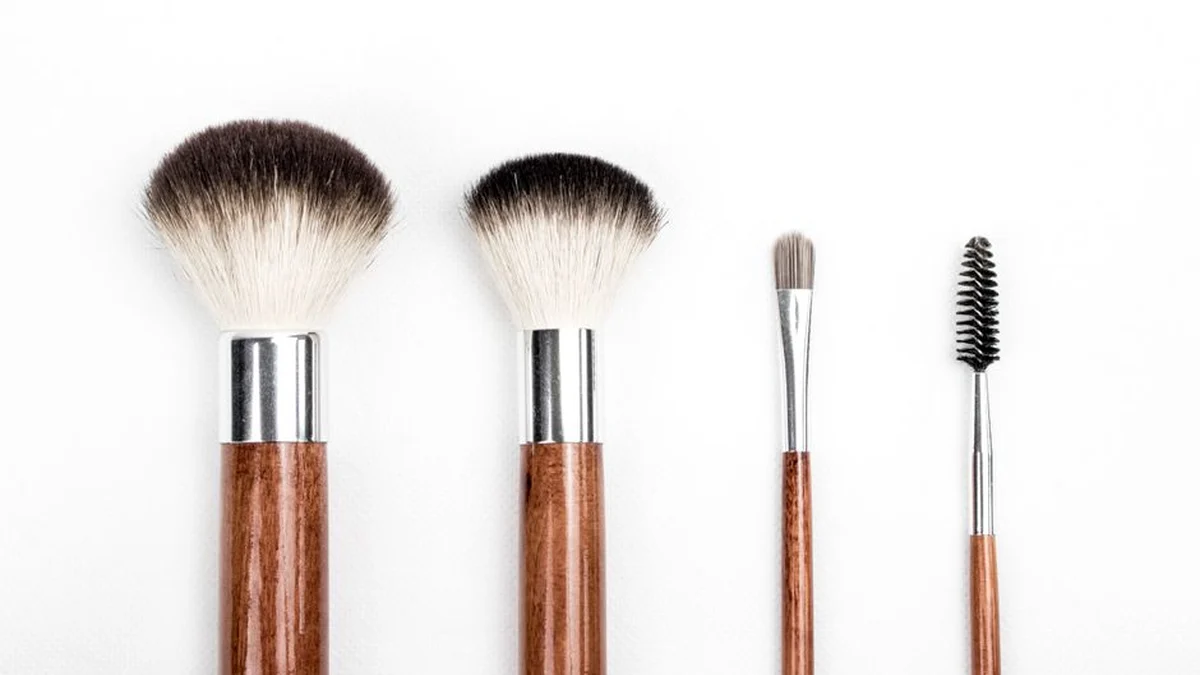
Most people own about fifteen brushes and use four. The other eleven came in a set, have no obvious purpose, and sit in a pot gathering dust and — genuinely — bacteria.
A small, well-chosen kit outperforms a large random one, and the selection principles are simpler than the industry implies. Two facts do most of the work: the density of a brush determines how much product it deposits, and the material determines what type of product it handles well.
The two rules
Density controls coverage. A dense, tightly-packed brush picks up and deposits a lot of product. A loose, fluffy one deposits little and blends a lot.
So: dense brush for coverage and precision, fluffy brush for blending and diffusing. Almost every “which brush do I need” question resolves through that.
Material determines what it handles.
Natural bristles — goat, squirrel, pony — have a textured surface with cuticles that grab powder pigment beautifully. Best for powder products.
Synthetic bristles — nylon, taklon — are smooth and non-porous, so they don’t absorb liquid or cream. Best for foundation, concealer, cream blush and anything liquid.
Using a natural-bristle brush with foundation is why some brushes never seem to come clean — the product soaks into the bristles and stays there.
Modern synthetics have improved enormously and now handle powder well too, which is why a fully synthetic kit is a perfectly good choice, and the only reasonable one if you’d rather not use animal hair.
The brushes worth owning
Six covers almost everything.
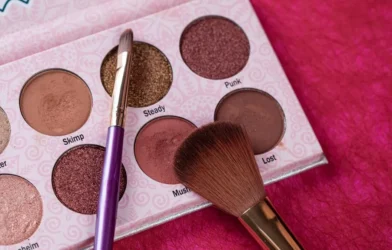
A foundation brush — flat-topped or dense buffing, synthetic. Or skip it and use a sponge.
A small concealer brush — dense, synthetic, tapered. Precision for spots and under-eyes.
A powder brush — large, fluffy, natural or synthetic. For setting.
An angled cheek brush — medium density. Does blush, bronzer and contour.
A flat shader brush — dense, for packing eyeshadow onto the lid.
A fluffy blending brush — the single most important eye brush. Domed, soft, loosely packed. Almost all eyeshadow quality comes from blending, as covered in the eye makeup guide.
Add later if you find you need them: an angled brow brush, a spoolie, a small detail brush, a fan brush for highlighter.
The full breakdown of shapes and what each does is in the makeup brush guide.
Sponges
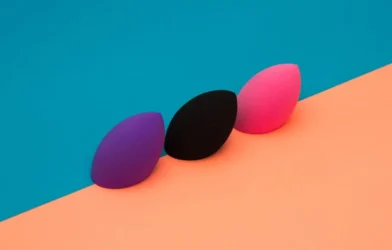
A damp sponge gives the most natural, skin-like foundation finish of any tool, which is why they’ve become standard.
Always damp. Wet it, squeeze it out thoroughly. A dry sponge absorbs an enormous amount of product and drags.
Press and bounce, never drag.
The trade-off is hygiene and product absorption — a sponge takes a meaningful proportion of your foundation into itself, and it’s a damp object that needs washing constantly. The comparison with silicone applicators is in makeup sponges.
Other tools
Eyelash curler. Does more to open the eye than most products. Squeeze at the base for five seconds, then twice more moving outwards. Never after mascara. Replace the pad when it flattens.
Tweezers. A good slanted pair lasts years. Cheap ones don’t grip and cause more plucking than necessary.
Spoolie. For brows and separating lashes. Costs almost nothing and improves both.
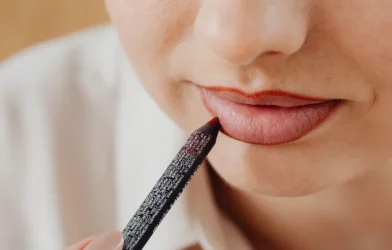
Sharpener. A dull pencil is imprecise, and sharpening removes the contaminated surface layer.
Mirror. A normal one. Magnifying mirrors drive a great deal of unnecessary anxiety and treatment — nobody looks at your face from three centimetres.
Price and quality
The relationship is real but flattens quickly.
Very cheap brushes shed, scratch, and hold their shape badly. Mid-range brushes — £8 to £20 each — are genuinely good and represent almost all of the available quality. Above about £30 you’re mostly paying for the handle, the brand and marginal softness.
What to check: tug the bristles gently — shedding is the main failure. The ferrule (the metal band) should be tightly attached with no gap. Bristles should feel soft against your inner wrist. And the brush should hold its shape when you press it against your hand.
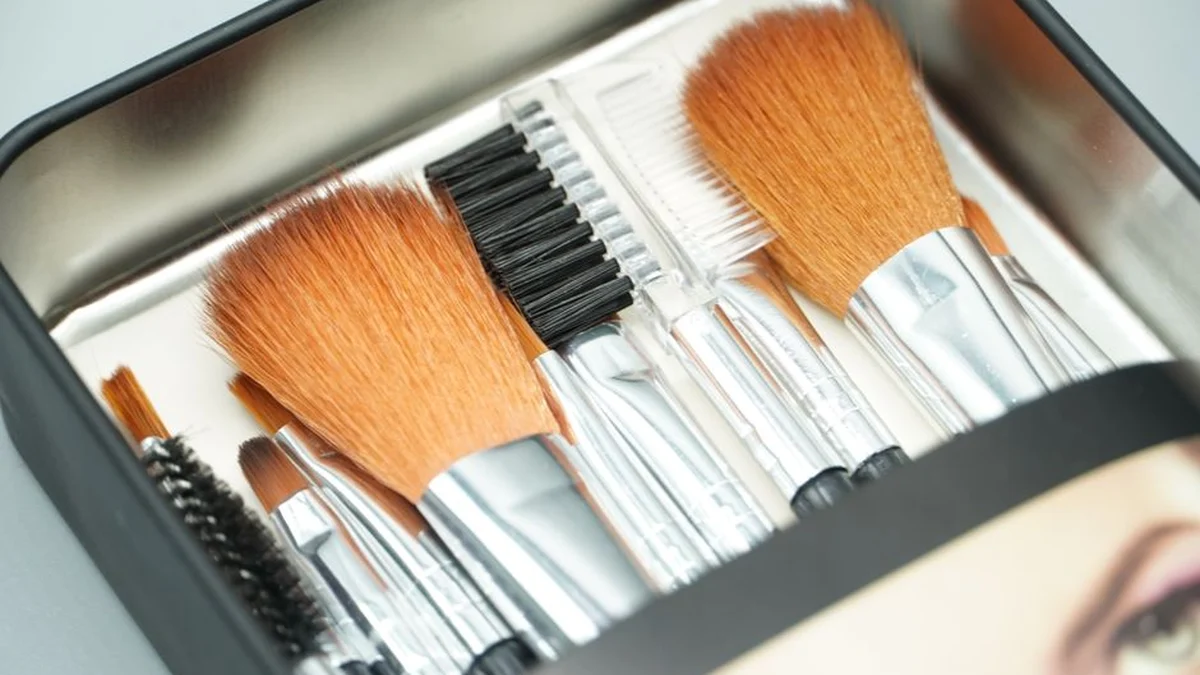
Sets are usually poor value in practice — they include brushes nobody uses to justify the count. Buying four or five good individual brushes beats a twelve-piece set at the same price.
Cleaning — the part everyone skips
An unwashed brush accumulates oil, dead skin, product and bacteria, and puts them back on your face every day.
Foundation and concealer brushes and sponges: weekly minimum. Sponges arguably more often, since they’re damp.
Eye brushes: weekly, given what they sit next to.
Powder and blush brushes: every two weeks.
The method, and the drying mistake that ruins brushes, is in brush cleaners. The short version: warm water, gentle soap, rinse until clear, reshape, and dry flat or bristles-down, never upright — water running into the ferrule dissolves the glue and the brush sheds within months.
Storage
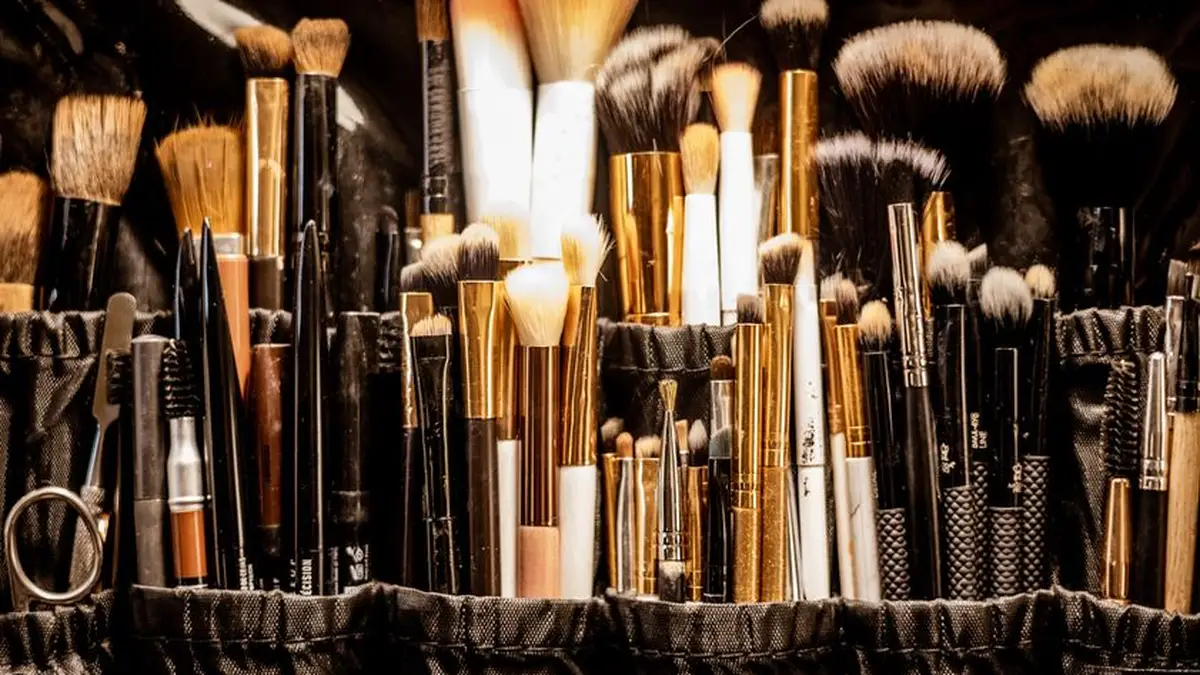
Bristles up in a pot, or flat in a drawer. Not crammed into a bag where they bend and hold the bend.
Keep them out of the bathroom if you can — humidity encourages bacterial growth and degrades the ferrule glue. A bedroom drawer is better than a shelf above a shower.
Brush guards — mesh sleeves — hold shape during drying and travel, and cost very little.
The wider question of keeping a collection usable rather than accumulating is in makeup organisers, including the expiry dates most people never check.
When to replace
Brushes last years with care. Replace when: bristles shed persistently after cleaning; the shape doesn’t recover; the ferrule loosens; the bristles feel scratchy; or product won’t wash out.
Sponges are different — replace every two to three months, and immediately if they tear, stain permanently, or develop any smell.
Eyelash curler pads every three months.
Hygiene rules that matter
Don’t share brushes.
Don’t use testers at counters, or if you must, use a disposable applicator.
Throw out anything used during an eye or skin infection.
Don’t apply product with fingers straight from a jar — decant onto the back of your hand.
Wash your hands before doing your makeup, which sounds obvious and is skipped constantly.
A starter kit
If you’re building from nothing: a makeup sponge, a fluffy powder brush, an angled cheek brush, a flat eyeshadow brush, a fluffy blending brush, a spoolie, and an eyelash curler.
That covers a full face and costs less than one high-end brush. Add specific tools only when you find yourself repeatedly wanting something you can’t do — which, for most people, turns out to be considerably less often than the industry suggests.




Comments are closed