



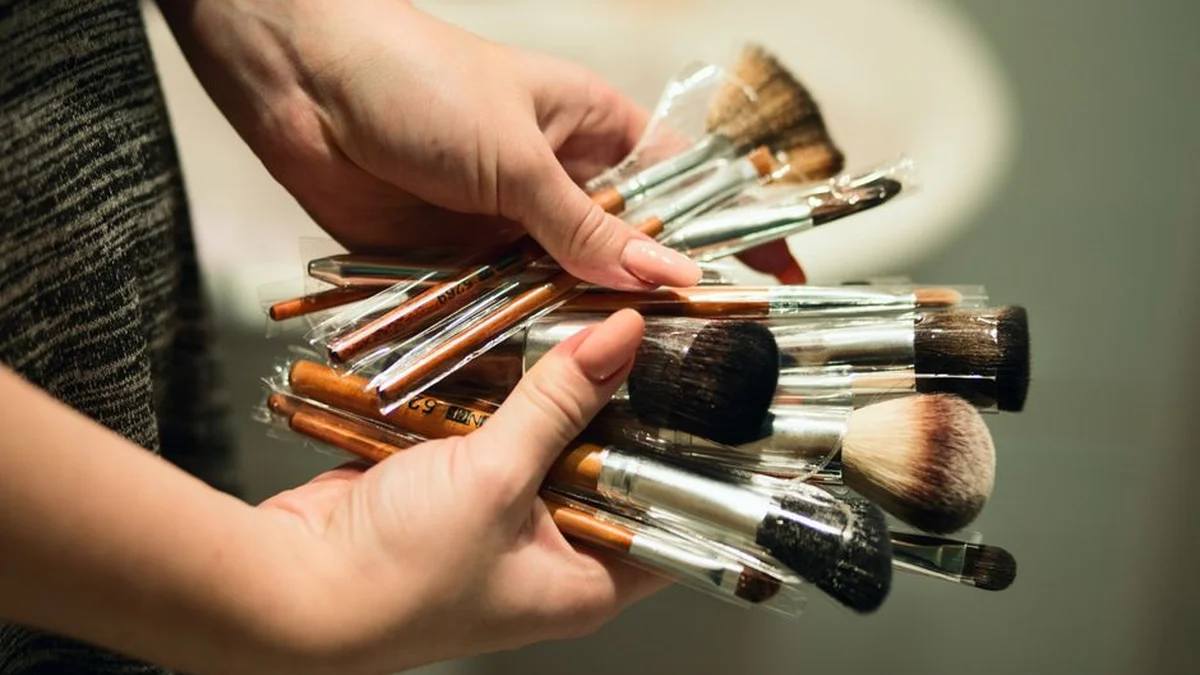
There is one mistake that destroys more makeup brushes than everything else combined, and almost everybody makes it.
Drying brushes upright in a pot.
Water runs down the bristles into the ferrule — the metal band joining bristles to handle — where it dissolves the glue holding everything together. Do this weekly and a good brush starts shedding within months. People conclude they bought a bad brush. They dried a good one badly.
Dry flat with the head hanging over an edge, or bristles pointing down. That single change extends brush life by years.
Where cleaning fits into looking after a kit is in the makeup brushes and tools guide.
Why it matters beyond the brushes
A dirty brush accumulates oil, dead skin cells, product and bacteria, and redeposits them on your face every time you use it.
Studies looking at used makeup tools have consistently found significant bacterial contamination, with sponges and brushes among the worst offenders. If your skin has been breaking out and you’ve changed your skincare three times without result, your brushes are worth eliminating as a variable.
Dirty brushes also perform badly. Product build-up stiffens bristles, so blending gets harder and colour payoff drops. A lot of “this eyeshadow is rubbish” is actually a clogged brush.
How often
Foundation and concealer brushes: weekly. They handle wet product on the largest area of skin.
Makeup sponges: after every use ideally, twice weekly minimum. They’re damp and porous, which is the worst combination — see makeup sponges.
Eye brushes: weekly, given what they sit next to.
Powder, blush and bronzer brushes: every two weeks.
Lip brushes: weekly.
Anything used during an eye or skin infection: immediately, and consider replacing it.
Realistically, most people manage monthly. Weekly for the foundation brush and sponge, monthly for everything else, is a workable compromise that gets most of the benefit.
What to use
Gentle soap — unscented bar soap, baby shampoo, or a mild washing-up liquid — works perfectly well and costs almost nothing. Baby shampoo is the classic and it’s genuinely fine.
Dedicated brush shampoo is formulated to break down makeup without stripping natural bristles. Worth it if you own expensive natural-hair brushes; unnecessary otherwise.
Solid cleansing bars with a textured surface for swirling. Convenient and effective.
Brush cleaning mats or gloves — silicone with textured ridges. Genuinely useful; the friction gets product out of dense brushes far better than your palm.
Spray cleaners are for spot-cleaning between colours, not for actual washing. They evaporate quickly and don’t remove build-up. Useful mid-application when switching eyeshadow shades.
What not to use: hot water, which loosens ferrule glue and can damage natural bristles. Harsh detergents on natural hair. Alcohol as a routine cleaner, which dries and splits bristles. And oil-based cleansers on synthetic brushes, where the residue is difficult to rinse out.
The method
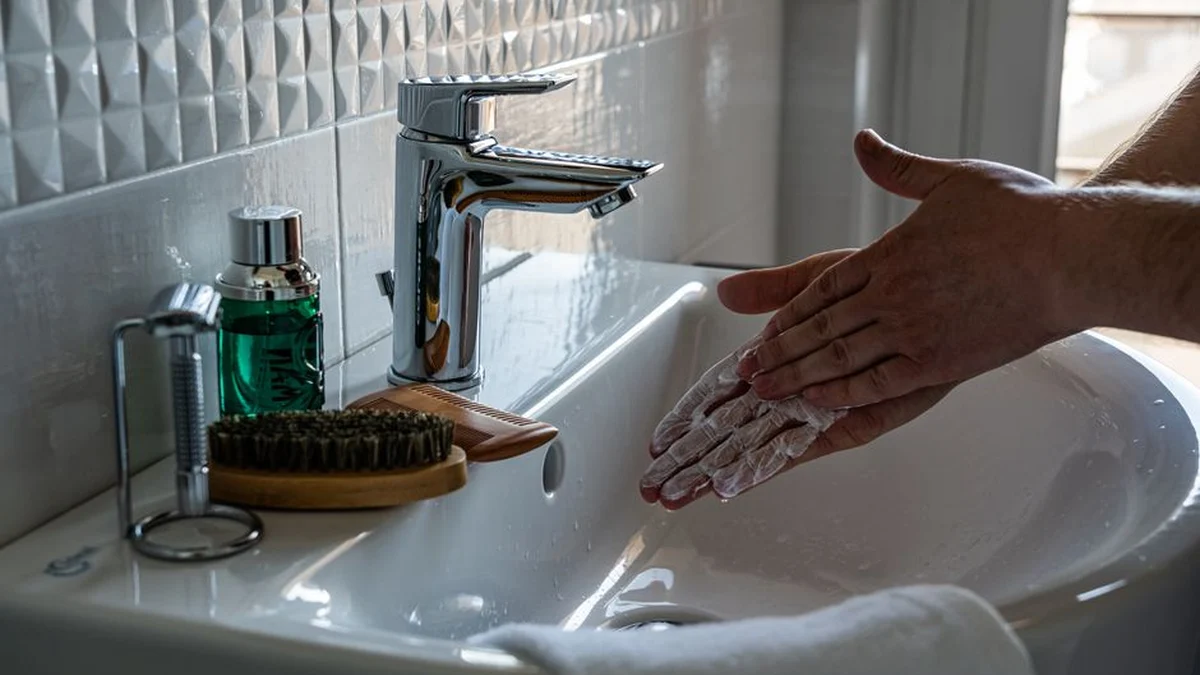
1. Run the bristles under lukewarm water, pointing downwards. Keep the ferrule out of the water entirely — this is the second most important rule after drying.
2. Swirl into soap on your palm or a cleaning mat.
3. Work the lather through gently. Don’t crush or splay the bristles.
4. Rinse, still pointing downwards, until the water runs completely clear. Foundation brushes take longer than you expect — keep going past the point where the surface looks clean.
5. Squeeze out excess water gently, from the ferrule towards the tip.
6. Reshape the head with your fingers while it’s damp. Brushes dry in whatever shape you leave them.
7. Dry flat with the head over the edge of a counter, or hanging bristles-down. Never upright.
Allow to dry completely — several hours, overnight for dense brushes. Don’t use a hairdryer; heat damages the bristles and the glue.
Stubborn brushes
Dense foundation brushes hold product deep in the base. Use a cleaning mat, and rinse for longer than feels necessary.
Long-wear or waterproof products need a little oil first — a drop of olive or coconut oil worked through to dissolve the product, then washed out with soap.
Dried-on product at the base: soak just the bristles in warm soapy water for ten minutes, keeping the ferrule dry.
Permanent staining is cosmetic. A brush that’s stained but clean and soft is fine.
Sponges
Different technique.
Wet, work soap in, then squeeze repeatedly under running water until it runs clear. Foundation hides in the centre.
Soak in warm soapy water for ten minutes first if it’s badly stained.
Squeeze out and air dry somewhere open — not in a drawer, not in a closed case, not in a bag. A damp sponge in an enclosed space is exactly where you don’t want it.
And replace every two to three months regardless of how well you clean it.
Drying, properly
Worth restating because it’s the whole point.
Best: lay a towel on the counter with the brush heads hanging over the edge, so any residual water drips away from the ferrule.
Also good: a brush drying rack or a hanging holder, bristles down.
Improvised: a hair elastic around a mug, brushes slotted through at an angle with heads pointing down.
Never: upright in a pot.
Brush guards — the mesh sleeves — hold shape while drying and cost very little. Put them on damp.
Spot cleaning
Between eyeshadow colours, or when you want to use a brush again the same day.
Spray cleaner onto a tissue, swirl the brush, wipe. Dries in a minute.
Useful, and not a substitute for washing. It removes surface pigment, not build-up or bacteria.
When to replace
Persistent shedding after cleaning. A head that won’t hold its shape. A loose ferrule. Scratchy bristles. Product that won’t wash out. Any smell.
A well-made brush, washed correctly and dried flat, lasts five years or more. The shapes worth owning in the first place are in the makeup brush guide — and a smaller kit is also easier to keep clean, which is a genuine argument for owning fewer brushes.
Where to keep them once clean, and the wider question of a collection you can actually use, is in makeup organisers.




Comments are closed