



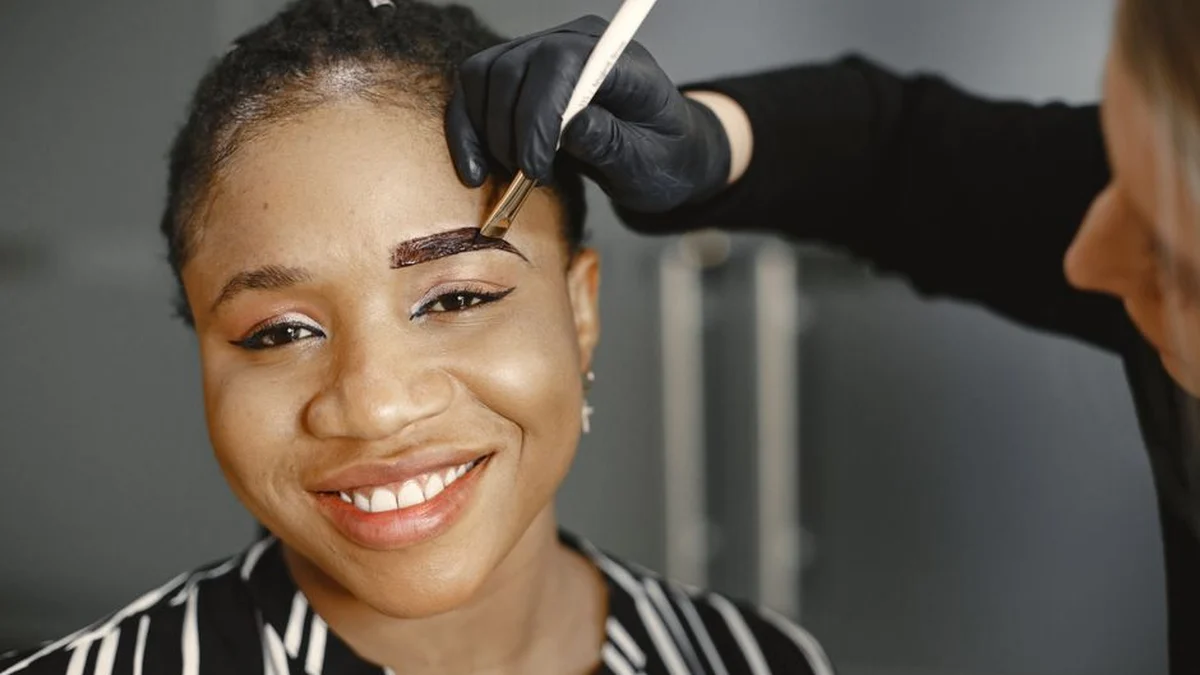
Brows do more for a face than any other single element of makeup, which is why brow trends have been so aggressively cyclical — thin in the nineties, thick and blocked-in through the 2010s, fluffy and brushed-up now.
The useful skill is independent of trend: filling gaps and defining what you already have, rather than drawing a shape from scratch. That looks better in every era and takes less time.
Where brows sit in the routine is in the eye makeup guide — and they go early, before shadow, because they set the proportions for everything else.
The products
Pencil
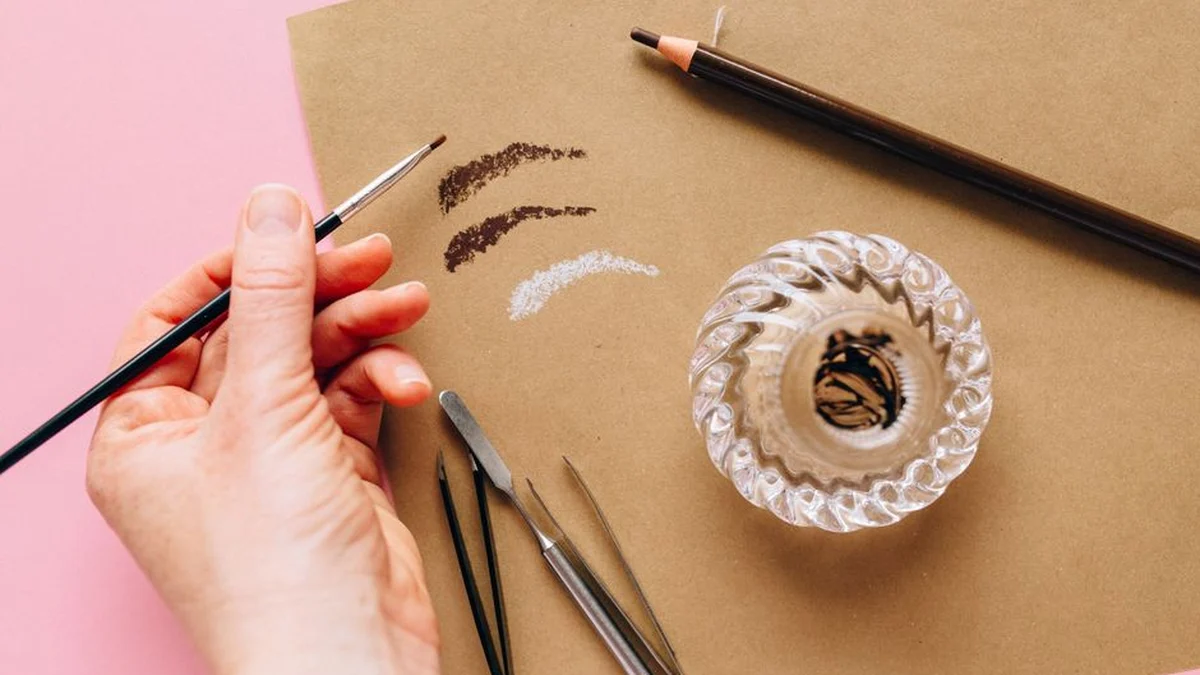
The default. Fine-tipped pencils create hair-like strokes; thicker ones fill more quickly.
Best for: sparse brows, defining a shape, precision at the tail.
Watch out: waxy pencils drag and deposit too much. Look for a fine, firm tip.
Powder
Applied with an angled brush. The softest, most natural result.
Best for: filling gaps subtly, brows that are already fairly full, anyone who finds pencil too defined.
Pomade or gel pot
Creamy, applied with a brush. Long-wearing and buildable, from soft to sharp.
Best for: definition and long wear, oily skin.
Watch out: deposits a lot. Wipe the brush before it touches your brow.
Brow pen or microblading pen
A fine felt tip that draws individual hair strokes.
Best for: very sparse brows or gaps, where realistic strokes matter.
Watch out: can look drawn-on if the strokes are too uniform or too dark.
Tinted brow gel
A mascara-style wand that coats and colours the hairs.
Best for: fair brows, adding fullness quickly. Often all you need — a tinted gel alone gives a fuller, softer brow in fifteen seconds and looks more current than a filled-in one.
Clear brow gel
Holds hairs in place with no colour.
Best for: anyone with reasonable brows who just wants them tidy and brushed up. The lowest-effort option and often the most flattering.
Brow soap or wax
Strong hold for the brushed-up, fluffy look.
Watch out: can flake, and looks stiff if over-applied.
Shade — where most people go wrong
Too dark is the single commonest brow error, and it’s the one that reads as makeup from across a room.
Dark hair: go one or two shades lighter than your hair.
Fair hair: go one or two shades darker.
Red hair: a warm taupe or soft auburn, not brown.
Grey or white hair: a soft taupe or grey-brown. Warm browns look artificial against grey.
Undertone: most people suit a neutral or slightly cool taupe. Warm, reddish brow products are the reason a lot of brows look orange, especially on cool-toned colouring.
Test on the brow itself, not the back of your hand, and check in daylight.
Technique
Brush them first. Brush the hairs upwards and outwards with a spoolie. This alone shows you where the actual gaps are — usually far fewer than you’d think.
Start at the sparsest part, which is normally the tail or the middle. Use the leftover product on the fuller inner section.
Keep the front soft. The inner edge should be the lightest part of the brow, fading in rather than starting with a hard block. A dark, defined front is the most ageing brow mistake.
Short, light, upward strokes in the direction the hairs grow. Not one continuous line.
Blend with a clean spoolie at the end. This softens everything and removes excess, and it’s the step that separates natural from drawn-on.
Set with a gel if your brows don’t stay put.
Don’t clean up the edges too sharply. Concealer carved around the brow creates a hard edge that reads as makeup. If you use it, blend it thoroughly.
Shape
Follow what you have. Your natural brow follows your bone structure, and a shape drawn against it rarely looks right.
The classic mapping — front in line with the side of the nostril, arch about two-thirds along, tail on a diagonal from the nostril past the outer corner — is a useful guide rather than a rule.
Over-plucked brows take a long time to recover, and some follicles never do. If you’re growing them out, stop tweezing entirely for three months, use a tinted gel to make the growth look intentional, and get them shaped professionally when there’s something to work with.
As you get older, brows naturally thin and lose pigment. A softer, slightly fuller brow is more flattering than a thin, defined one.
Lamination, honestly
A chemical treatment that restructures the brow hairs so they stay brushed upwards. Lasts six to eight weeks, costs £30–£70 in the UK.
Good for: unruly brows, coarse hairs that won’t sit, creating the appearance of fullness in sparse areas by redirecting hairs to cover gaps.
The risks: it uses the same chemistry as a perm. Over-processing makes hairs brittle, frizzy and prone to breaking, and that damage takes months to grow out. It’s not uncommon, and it’s usually a technician leaving the solution on too long.
Patch test 24 to 48 hours before. Reactions to the solution happen and the eye area is not where you want one.
Not suitable if your brows are already damaged, over-processed, or very fine.
Tinting, microblading and tattooing
Brow tint darkens the hairs for three to four weeks. Cheap, quick, and genuinely transformative for fair brows. Patch test required.
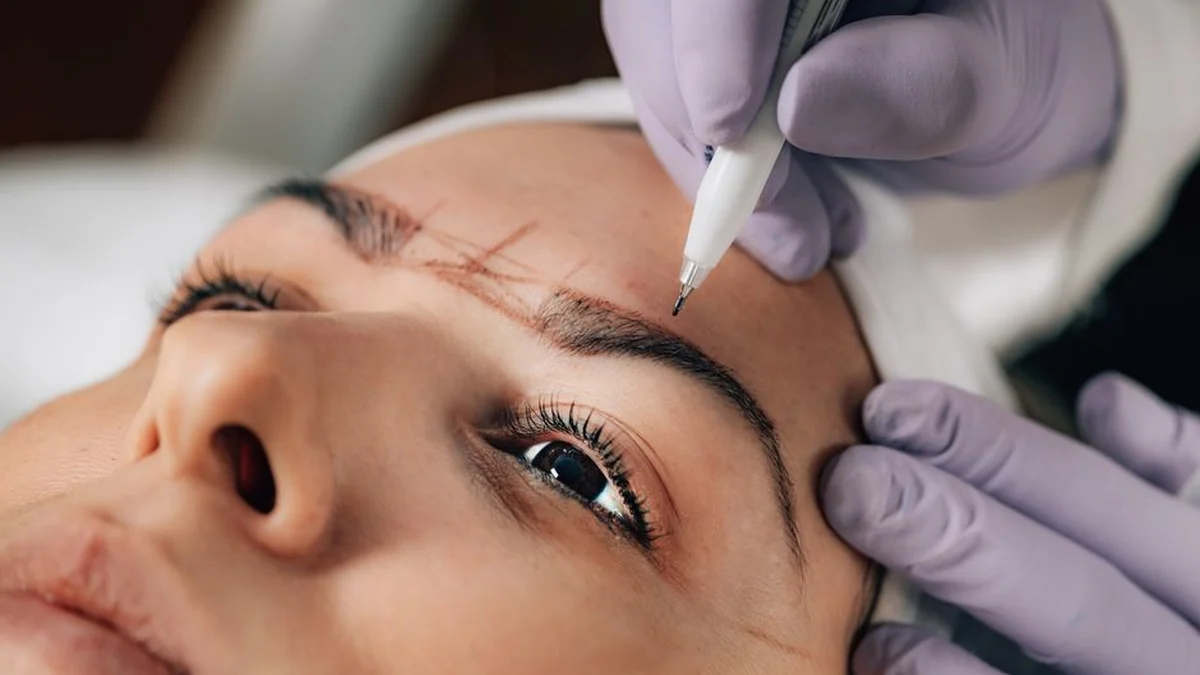
Microblading is semi-permanent tattooing with fine hair-like strokes, lasting 12 to 18 months. £250–£600 in the UK.
Things to know before booking: results depend enormously on the artist, and poor work is expensive and slow to remove. It fades unpredictably — often warmer or greyer than the original. Oily skin holds the strokes less well. And it needs a top-up appointment to look right.
The UK cosmetic tattooing sector is inconsistently regulated. Check the practitioner’s registration with the local authority, their insurance, and their healed results — not just fresh photos, which always look good.
Patch test required for the pigment.
Growth
Over-plucked brows sometimes regrow and sometimes don’t, depending on how long the follicles were suppressed.
Stop tweezing for three months minimum before judging. Castor oil and conditioning serums may help with condition; the evidence for growth is limited.
Brow serums containing prostaglandin analogues carry the same safety considerations as lash products — worth reading lash serum before buying one, because the issues are real and not well advertised.
If brows are thinning without over-plucking, that can indicate a thyroid problem or other medical cause — the outer third of the brow thinning in particular. Worth mentioning to a GP rather than treating cosmetically, and the wider context is in hair loss treatment for women.
Patch test any brow tint, lamination or pigment 24-48 hours before treatment. See a GP if brows thin without an obvious cause.

Comments are closed