



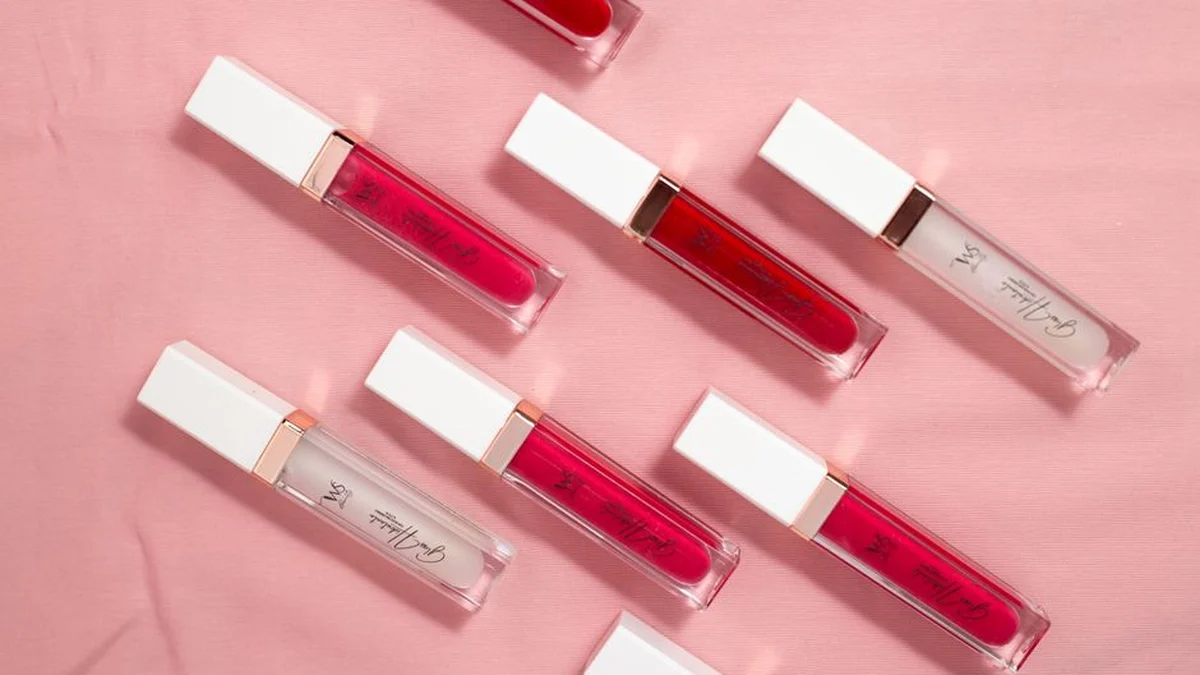
Liquid lipstick is the format that delivers exactly what it promises and charges for it. Eight hours of colour that survives coffee, food and a conversation. Also eight hours of your lips feeling like they’ve been laminated.
The dryness isn’t a manufacturing flaw — it’s the mechanism. Understanding that changes how you use it, and most of the discomfort turns out to be avoidable.
Where it sits alongside other formats is in the lip care and lip makeup guide.
How it works
Liquid lipstick is pigment suspended in volatile solvents — usually silicone-based like isododecane — with film-forming polymers.
You apply it wet. The solvents evaporate within a minute or two. What’s left is a thin, flexible polymer film with the pigment locked into it, bonded to your lip surface.
That film is what makes it transfer-proof. It’s also why it feels tight, and why it can’t hydrate — there’s nothing in it designed to.
Two consequences follow directly. The setting minute is critical, and your lips need to be in good condition beforehand, because the film sets over whatever surface it finds.
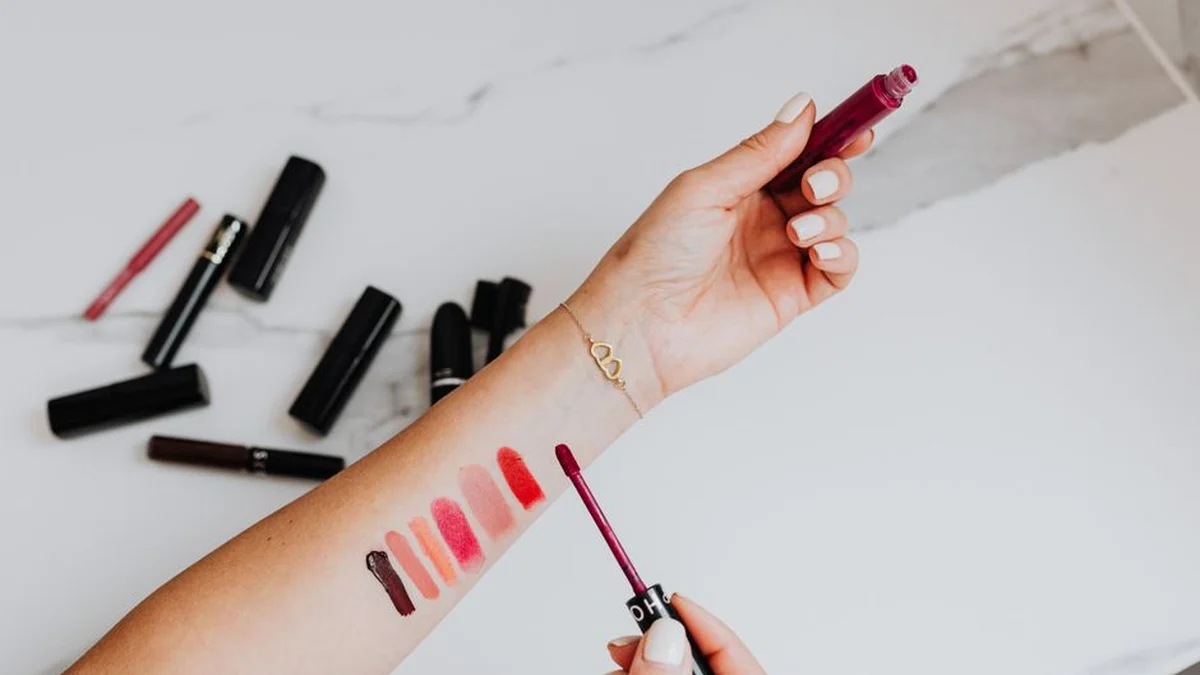
Preparation decides everything
Exfoliate the night before. Not immediately before — freshly scrubbed lips are sensitised and the formula will sting. Gentle, once or twice a week maximum, as covered in lip scrubs.
Balm, then wait, then blot. Apply a proper balm at least ten to fifteen minutes before, then blot the excess thoroughly with a tissue. Liquid lipstick over residual balm won’t adhere — it beads, slides and comes off in patches within the hour.
That balm-then-blot step is the one people skip, and it’s why the formula feels so much worse for some people than others.
Line first. Prevents feathering and gives a clean edge, which matters more with a formula this pigmented — see lip liner.
Application, and the one rule
One coat. Don’t go back over it.
This is the rule people break most and it causes almost every problem. Going over a partially-set area drags the film, creates patches, and produces the streaky, uneven texture people blame on the product.
The method:
Start at the cupid’s bow, working outwards. Then the bottom lip, centre outwards. Then the corners, which are always the first place it wears off.
Use a thin layer. Wipe excess off the applicator first — the doe-foot deposits far more than you need.
Then keep your lips apart while it sets. A full minute. Don’t press them together, don’t rub them, don’t talk. Pressing during setting is what creates the uneven middle patch and the transfer to the inner lip.
If you need a second coat for opacity, wait until the first is completely dry.
Stopping the cracking
The film is flexible but not infinitely so, and lips move constantly.
Thin layers. A thick coat cracks; a thin one flexes.
Hydrated lips underneath. A dry, flaking surface has nothing continuous for the film to bond to, so it breaks along every flake line.
Don’t purse or press your lips during the first minute.
Accept some settling into lines if you have significant vertical lip lines. Liquid matte emphasises them, and a satin or cream formula is genuinely more flattering — this isn’t a technique problem.
Wearing it comfortably
Applying a balm over the top defeats the point — it breaks the film down and causes transfer. If you need the comfort, accept the reduced wear time.
Better approach: hydrate properly beforehand and choose a satin liquid formula rather than a full matte. Satin liquid lipsticks are a genuine improvement in this category — most of the wear time, considerably less discomfort.
Drink through a straw where practical. Eating oily food is what breaks it down fastest.
Reapply the centre only after eating, not the whole lip.
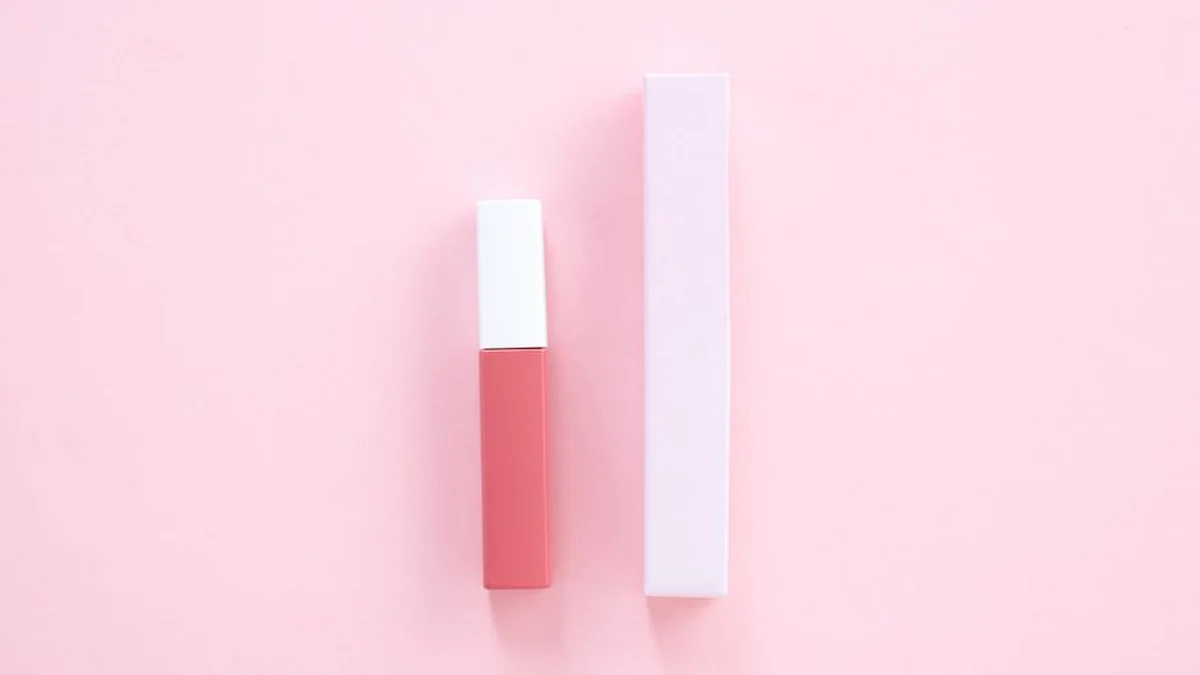
Removing it without damage
The other half of the problem, and where people damage their lips.
Don’t rub it off dry. A polymer film bonded to your lip surface will not come off with friction, and trying takes lip skin with it. This is the commonest cause of the post-liquid-lipstick soreness people assume is the product’s fault.
The method: apply an oil-based remover, balm, or a cleansing oil, and leave it for thirty seconds to a minute. The oil dissolves the film. Then wipe gently with a soft cloth or cotton pad.
Repeat if needed rather than pressing harder.
Then apply a thick balm and leave it on. Lips need recovery after a full day under a film.
The general removal principles are in makeup removers.
Choosing one
Full matte: longest wear, driest. For events and long days.
Satin or cream liquid: most of the wear time, far more comfortable. The better everyday choice for most people.
Stain-based liquid: sheerer, lightest feel, fades evenly rather than patchily.
Look for formulas containing oils or emollients alongside the film-formers. They wear slightly less long and feel considerably better.
Avoid ones containing menthol or camphor — the tingle is irritation, and on lips under a film for eight hours that’s the last thing you want. The full ingredient warning is in the lip care guide.
Who it doesn’t suit
Anyone with chronically dry or chapped lips, until that’s addressed.
Anyone with eczema or dermatitis affecting the lips.
Anyone with pronounced vertical lip lines, where matte emphasises them.
Anyone who wants to wear lip colour daily — the removal and recovery cycle is too much for everyday use. Save it for occasions and use a lip oil or a tint the rest of the time.
Troubleshooting
Patchy: balm residue underneath, or going back over a setting layer.
Transfers to the inner lip and teeth: pressed lips together while setting. After it’s dry, use the clean-finger trick — finger in the mouth, close lips, pull out.
Wears off the centre first: normal. Reapply just there.
Feathers at the edges: use a liner, or a clear anti-feathering pencil around the outside.
Stings on application: either the lips are damaged or the formula contains an irritant. Check the ingredients.
Lips sore afterwards: the removal was too rough. Oil, wait, wipe gently.

Comments are closed