




Balayage was sold to everyone as the low-maintenance option, and in one specific sense that’s true: there’s no hard regrowth line, so appointments stretch to twelve or sixteen weeks instead of six.
What nobody mentions at the time is that “low maintenance” refers to salon visits, not to what happens at home. Balayage creates a head of hair with two completely different conditions on it — untouched natural hair at the roots and heavily lightened hair at the ends — and treating them the same is why so many people’s balayage looks tired by week eight.
The general principles are in the hair colour care guide. This is about the specific problem of managing two hair types at once.
Why the ends need different treatment
Lightening removes pigment, and in doing so it removes some of the hair’s natural lipids and breaks some of the disulphide bonds that give it strength. The lightened sections are permanently more porous, drier and more fragile than the rest.
More porous means they absorb water fast and lose it fast, which is why balayaged ends frizz in humidity while the roots behave normally. It also means they grab pigment from any toning product faster, which is why over-toning accidents nearly always happen at the ends.
The practical rule that follows: your roots and your ends need different products, applied at different times, in different amounts.
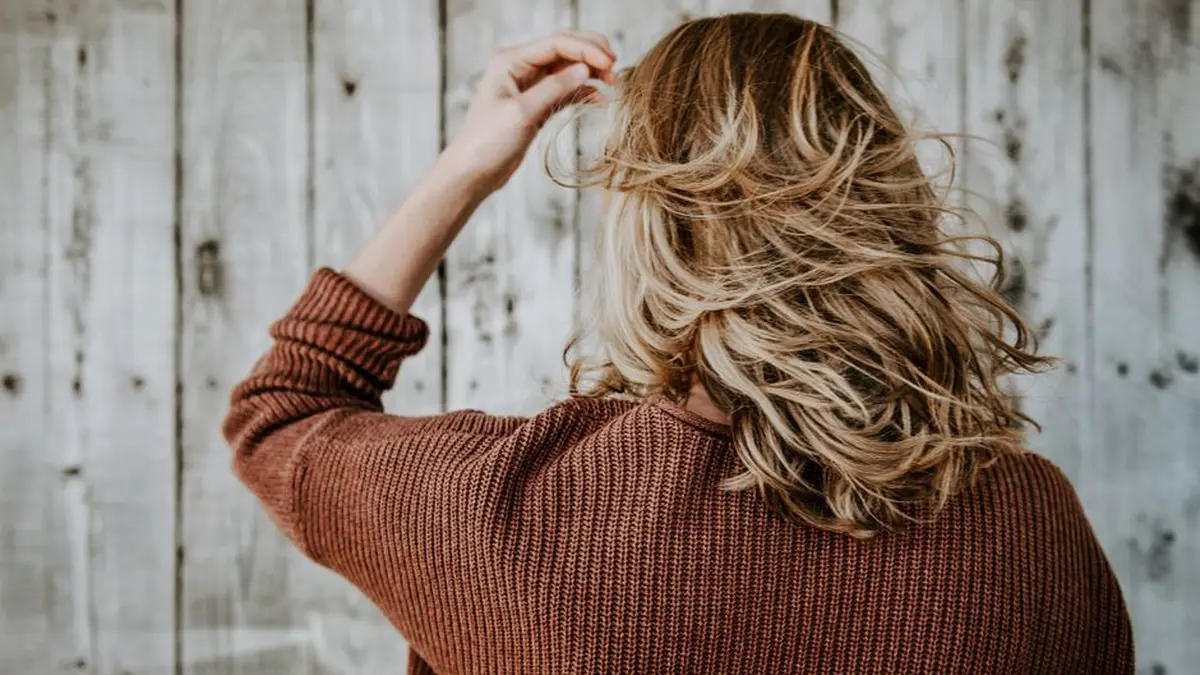
Washing
Sulphate-free shampoo, without exception. Sulphates strip toner and dry out lightened hair faster than anything else in a bathroom.
Shampoo the scalp only. Let the suds rinse through the ends on their way down — that’s enough cleaning for hair that produces no oil of its own.
Condition the mid-lengths and ends only. Roots don’t need it and it’ll make them limp.
Wash two or three times a week at most. Cool rinse.
Managing brassiness
Lightened ends go warm as toner fades — first yellow, then orange if the lift was heavy. This is the most common complaint about balayage at the eight-week mark.
Purple shampoo once a week neutralises yellow. Apply to the lightened sections only, and here’s the balayage-specific warning: those sections are more porous than a full-head blonde, so they take violet pigment faster. Start with two minutes, not five, and check in daylight.
If the tone has gone orange rather than yellow, purple won’t help. Blue shampoo, or a salon toner.
If the colour has gone flat rather than warm — losing depth and dimension rather than shifting tone — a colour depositing conditioner in a matching shade restores it. Apply to the lightened pieces only, with the same porosity caution.
The moisture and protein balance
Lightened hair needs both, and getting the balance wrong causes the two most common balayage problems.
Too little moisture: dry, rough, frizzy ends that tangle constantly.
Too little protein: mushy, over-elastic hair that stretches when wet and won’t hold a style. Common in people who deep condition religiously and never use anything strengthening.
Too much protein: brittle, straw-like hair that snaps. Common in people who’ve been sold three different bond-building products at once.
A workable rhythm: a moisturising mask weekly, a bond-building or protein treatment every three to four weeks, and a leave-in on the ends every wash. Adjust based on how the hair feels — if it’s snapping, cut the protein; if it’s mushy, add some.
Heat, and why it matters more here
Lightened hair has less structural integrity, so heat damages it faster and more visibly than it damages virgin hair.
Cap the temperature at 180°C on the lightened sections — lower than you’d use elsewhere. Use a heat protectant spray every single time, applied properly rather than sprayed vaguely at the surface.
Reduce frequency where you can. Air drying two extra days a week does more for balayaged ends than any mask.

The frizz problem
Balayaged ends frizz more than the rest of the head, and it’s a porosity issue rather than a texture one — the raised cuticle on lightened hair absorbs atmospheric moisture and swells.
Sealing is what helps. A serum or light oil on the ends after styling, and a leave-in underneath it. The full approach is in the anti frizz hair products guide, and it applies with particular force to lightened ends.
If your natural texture is curly and the balayage has loosened the pattern at the ends, that’s lightening damage rather than product failure — the curly hair products routine will help manage it but won’t fully restore the curl.
The things that ruin balayage fastest
Chlorine. Wet your hair with clean water first so it absorbs that instead. Wear a cap. Rinse immediately after. Blondes should know that the green tint from pools comes from copper in the water reacting with chlorine, not from the chlorine itself — a chelating shampoo removes it.
Sun. UV degrades both the hair and the toner. A hat, or a UV protection spray, on holiday.
Hard water. Mineral deposits build up on porous hair fastest, and lightened ends are the most porous hair on your head. In the South East and Midlands especially, a chelating shampoo once a month is close to essential for keeping balayage looking clean.
Sea water. Salt is dehydrating and it lifts the cuticle. Rinse as soon as you’re out.
Stretching to sixteen weeks
The whole point of balayage is fewer appointments, and with proper care that’s achievable.
Weeks 1–4: minimal intervention. The toner is fresh. Just wash gently and condition.
Weeks 5–8: start weekly toning. Purple shampoo or a depositing conditioner as needed.
Weeks 9–12: increase toning if brassiness accelerates. Add a bond-building treatment. Consider a salon gloss — cheaper and quicker than a full appointment, and it buys another month.
Weeks 13–16: this is where most people book back in. If the ends have gone dry and straw-like rather than simply warm, a trim will do more than a toner.
Talking to your colourist
Two questions worth asking at the appointment. First, what toner did you use and what’s the closest home equivalent — so you’re maintaining the same tone rather than fighting it. Second, how much lift did my ends take — because that tells you how fragile they are and how carefully to treat them.
And if you’re going back for a second round of balayage, say clearly whether you want more lightening or just a refresh of the existing pieces. Repeated lightening over the same sections is how balayage ends up dry, and it’s avoidable with one sentence at the start of the appointment.





Comments are closed