



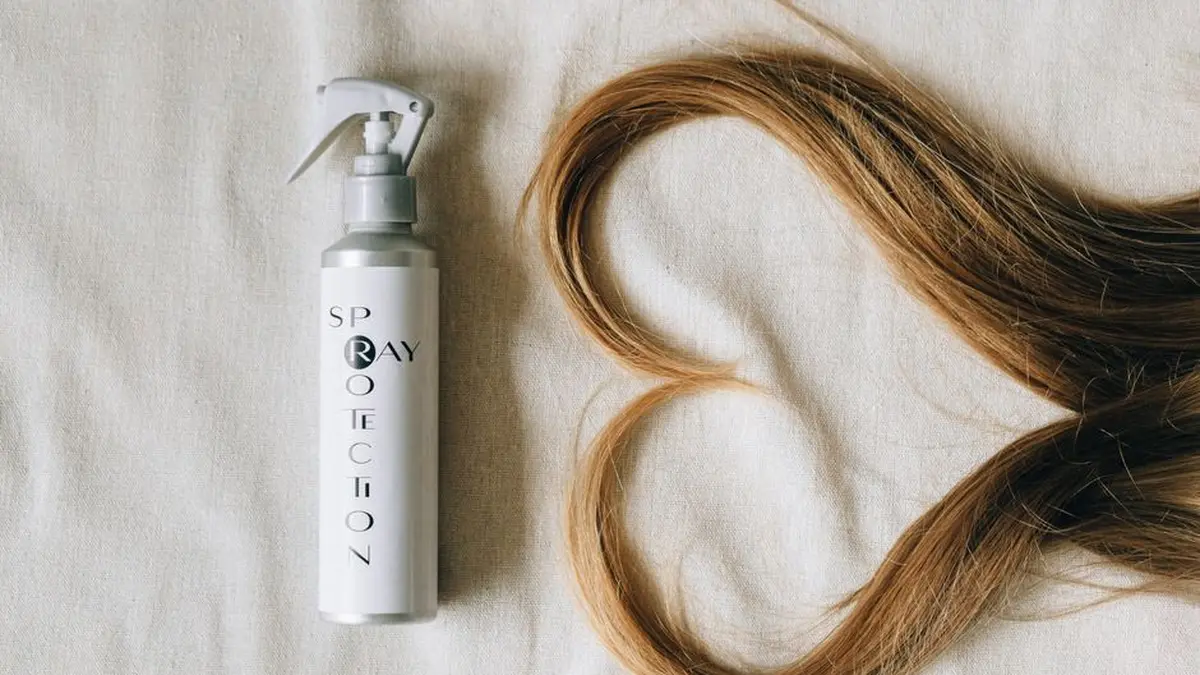
Ask a hairdresser what people most consistently get wrong and a fair number will say this: they skip the heat protectant, or they use it in a way that does nothing.
It’s understandable. It’s an extra step, it doesn’t visibly do anything, and the effect of skipping it is invisible for months and then arrives all at once as split ends and hair that won’t grow past your shoulders. Nothing about the feedback loop encourages you to bother. But it belongs in every routine involving heat — see the wider guide to hair styling tools for where it sits.
What it actually does
It doesn’t make hair heatproof. Nothing does, and any product implying otherwise is overselling.
What it does is slow and distribute heat transfer. The polymers and silicones in the formula create a thermal barrier on the cuticle surface. Heat still reaches the hair, but more slowly and more evenly across the strand, which prevents the concentrated hot spots that crack the cuticle.
Many formulas also contain humectants that hold moisture in the strand during styling, and film-formers that reduce surface friction so the tool glides instead of dragging.
Studies on heat protection products generally show meaningful reductions in measurable damage — protein loss, cuticle disruption, breakage under tension — rather than elimination. Meaningful reduction, applied daily over five years, is the difference between hair that grows and hair that snaps off at the same length forever.
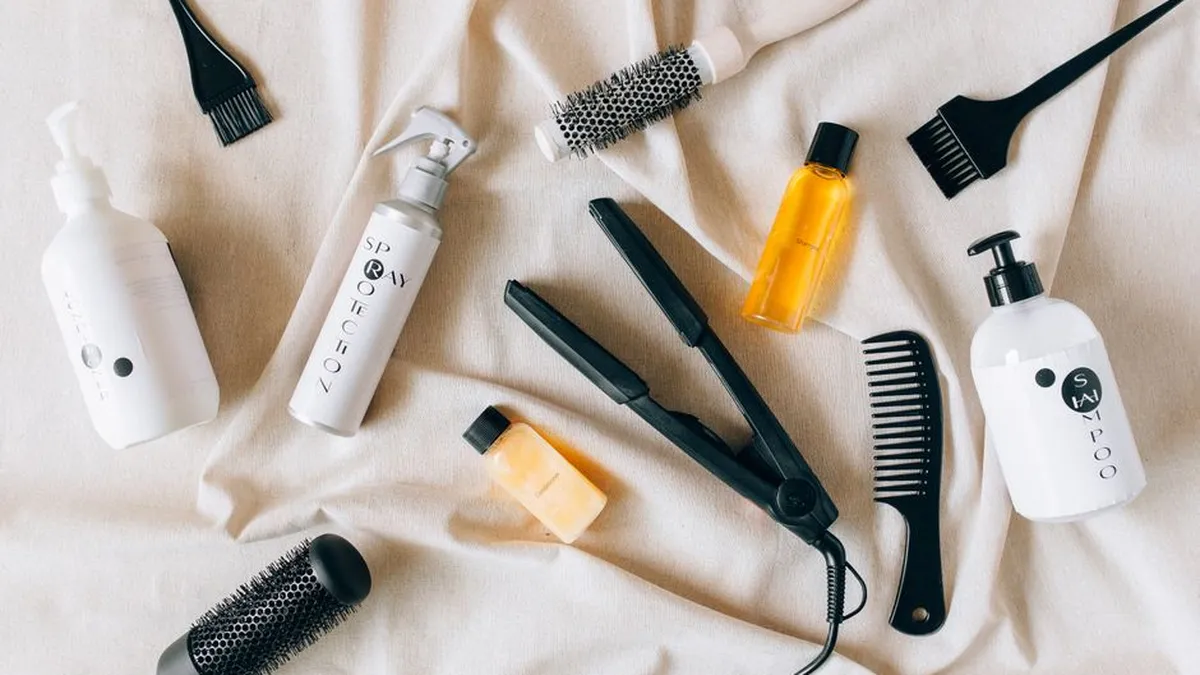
What’s in it
Silicones — dimethicone, cyclomethicone, amodimethicone — do most of the thermal barrier work. They’re the reason silicone-free heat protectants generally perform worse.
Film-forming polymers like PVP and VP/VA copolymer add a protective coating and some hold.
Hydrolysed proteins reinforce weakened strands and help hair hold a style.
Humectants like glycerin and panthenol maintain internal moisture during heating.
Natural oils appear in “clean” formulas. They offer some protection, but most have smoke points well below styling temperatures, and an oil that smokes at 180°C is not protecting anything at 190°C.
Sprays, creams and serums
Spray is the most common and the best for even coverage on medium to fine hair. Lightweight, quick, minimal residue. Weakest protection of the three.
Cream gives stronger protection and added moisture. Better for thick, coarse or dry hair. Heavier, and it will flatten fine hair.
Serum or oil gives the strongest barrier and the most shine. Easy to overdo — a small amount on the mid-lengths and ends only, never at the roots. Also useful as a general anti-frizz serum afterwards.
Most people should own a spray. People with thick or damaged hair should own a cream.
Application: where it goes wrong
Not enough. Two shy spritzes over a whole head protects a whole head very badly. You need enough that the hair feels slightly damp — six to ten sprays for medium-length hair, more for thick.
Only on the outside. Lift sections and spray underneath. The under-layer gets the same heat and usually gets none of the protection.
Sprayed from too close. Fifteen to twenty centimetres away gives an even mist. Close up, you get wet patches and dry patches.
Ironing hair that’s still wet from the spray. This is the serious one. Water in the strand plus a 190°C plate equals steam, and steam inside a hair shaft cracks the cuticle outwards. Let the spray dry completely before the iron touches the hair. If you hear a sizzle, you’ve made this mistake.
Applied yesterday. It doesn’t accumulate. Reapply every time you use heat.
Damp or dry hair?
Depends what you’re about to do.
Before blow-drying: apply to damp hair, straight out of the shower, distributed with a wide-tooth comb.
Before straightening or curling: apply to completely dry hair, and let the product dry fully before styling. Give it a couple of minutes.
If you’re blow-drying and then straightening, apply once before drying, then a light second application before the iron. Two rounds of heat, two rounds of protection.
Does it work at every temperature?
Most products are formulated to protect up to around 200–230°C, and the good ones state a figure on the packaging. Above that, protection drops off sharply.
This is another argument for turning the temperature down. At 150–170°C, a decent spray is doing its job comfortably. At 230°C it’s fighting a losing battle, and so is your hair.
The temperature guidance by hair type is in the flat iron vs curling iron comparison, and it’s worth setting your tool deliberately rather than leaving it wherever the dial happened to be.
The DIY question
Coconut oil, argan oil and aloe vera get recommended as natural heat protectants, and the advice circulates widely.
Be careful. Coconut oil has a smoke point around 175°C and does penetrate the hair shaft, which gives it some genuine protective effect — but heat it past its smoke point and you’re frying the hair. Argan oil smokes lower still. Aloe vera is mostly water, which is the opposite of what you want under an iron.
If you’re using heat at any reasonable temperature, use a formulated product. This is not a place where a kitchen ingredient does the job as well.
Worth remembering
Heat protectant is insurance, not immunity. It reduces damage substantially; it doesn’t license daily 230°C styling.
The full protection strategy is: use it every time, apply it properly, turn the temperature down, use fewer passes, and use heat less often. Any one of those helps. All five together is why some people’s hair looks better at forty than it did at twenty-five, and it isn’t genetics.
And on the days you skip the iron entirely, hot rollers and heat-free sets will give you shape for a fraction of the thermal cost.



Comments are closed