



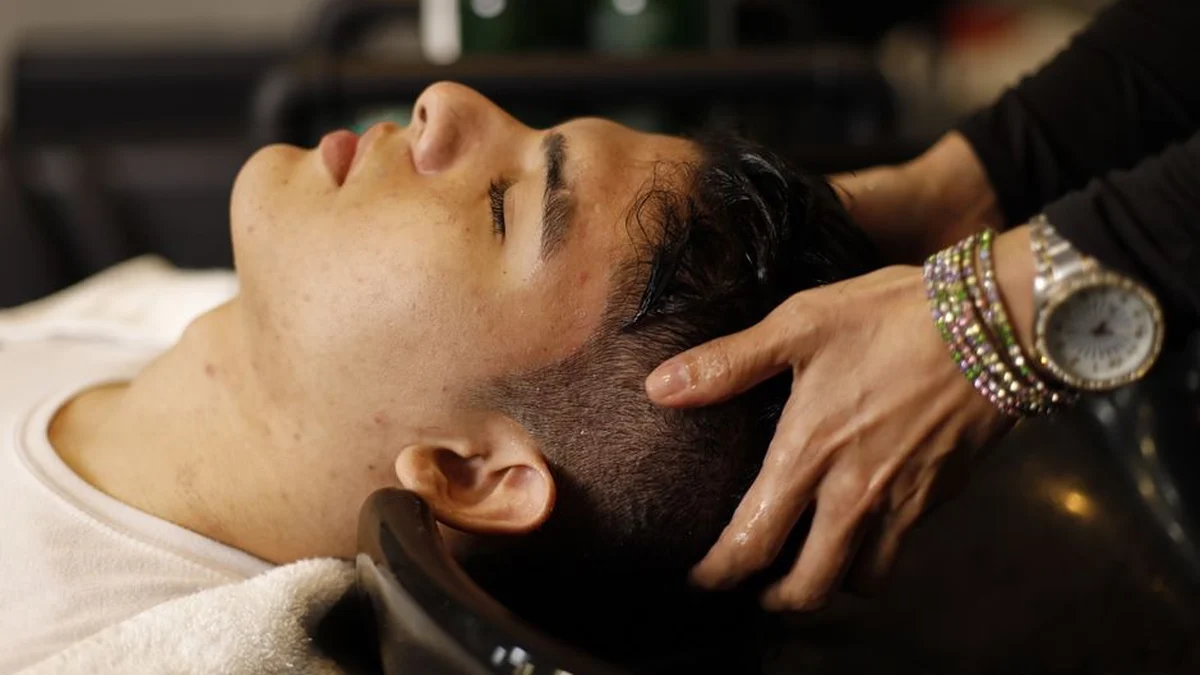
For about thirty years, hair care treated the scalp as an inconvenience — the bit you had to get shampoo onto in order to clean the hair. All the interesting products were for the lengths.
That’s changed, and for good reason. The scalp is skin. It has the same follicles, oil glands, microbiome and barrier function as the skin on your face, and it produces more sebum per square centimetre than almost anywhere else on the body. Every hair on your head grows out of it. If it’s inflamed, congested or stripped, the hair growing out of it will reflect that.
The useful way to think about it: you’d never treat your face with a strong detergent every day and then wonder why it was irritated. Most people do exactly that to their scalp.
Working out what kind of scalp you have
Check 24 hours after washing, before you’ve put anything on it.
Oily. Roots look greasy within a day, hair goes flat fast. Overproducing sebum, often made worse by over-washing, which triggers more production.
Dry. Tight, sometimes itchy, small dry flakes. Not producing enough oil, or the barrier has been stripped.
Flaky. Larger, sometimes yellowish or greasy flakes, often with itching and redness. This is usually not simple dryness — see the section on dandruff below.
Sensitive. Reacts, stings, goes red. Often alongside eczema or psoriasis elsewhere.
Combination. Oily at the crown, dry at the hairline or nape. Very common and usually mismanaged, because people treat the whole scalp for whichever problem annoys them more.
Balanced. Comfortable for two to three days, no itching, no visible flaking.
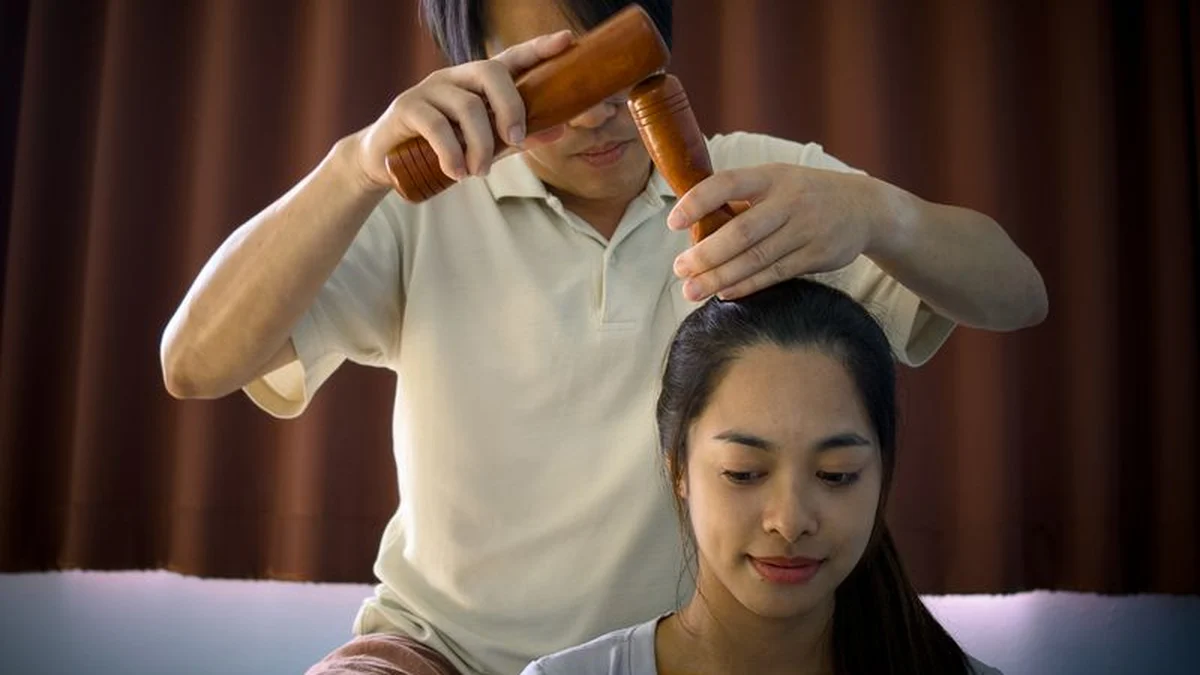
The four steps
1. Cleansing
The core of the routine, and where most people go wrong in one of two opposite directions.
Over-washing strips the barrier, triggers rebound oil production, and creates the daily-wash cycle people find themselves trapped in. Under-washing leaves sebum, dead skin and product to build up around the follicles, which causes itching, odour and, over time, congestion.
Most people land somewhere between two and four washes a week. Fine, oily hair needs the higher end; thick, dry or coily hair the lower.
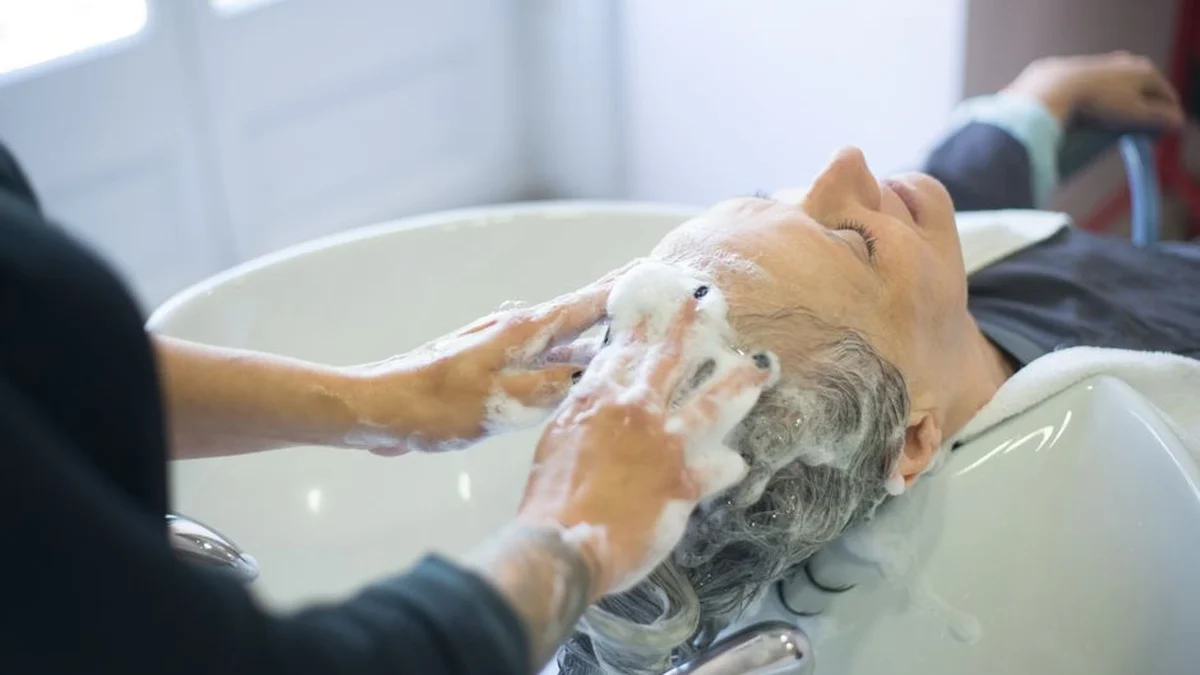
Technique matters more than product. Shampoo the scalp, not the lengths — massage with your fingertips, never your nails, for a full 60 seconds. Two shorter shampoos clean better than one long one, because the first lifts the oil and the second actually cleans.
2. Exfoliation
The scalp sheds skin cells like anywhere else, and they accumulate around the follicle along with oil, hard water minerals and styling product. A scalp scrub once a week or fortnight clears that, and the difference in how a scalp feels afterwards surprises most people the first time.
Alongside physical scrubs, chemical exfoliants — salicylic acid, particularly — dissolve build-up without any friction, which suits sensitive scalps better.
3. Deep cleansing
Every three to four weeks, a stronger reset. This is what a clarifying shampoo is for: removing accumulated silicones, styling product and, in hard water areas, mineral deposits that ordinary shampoo leaves behind.
If you’re in the South East, East Anglia or the Midlands, this step is doing more work than you realise. Hard water minerals coat both scalp and hair, and they’re a common hidden cause of scalps that itch no matter what you buy.
4. Treating
Leave-on products that address a specific issue — dryness, oiliness, irritation, or thinning. A scalp serum is the usual format, applied to a clean scalp and left in.
Routines by scalp type
Oily. Wash every other day with a gentle clarifying or balancing shampoo. Exfoliate weekly. Skip conditioner at the roots entirely. Resist the urge to wash twice daily, which makes it worse.
Dry. Wash twice weekly with a moisturising, sulphate-free shampoo. Exfoliate fortnightly, gently. A hydrating scalp serum or a light oil massaged in before washing.
Flaky. A medicated anti dandruff shampoo two or three times weekly, left on for the full contact time stated on the bottle. This is the step people skip and it’s why the product appears not to work.
Sensitive. Fragrance-free, sulphate-free, minimal ingredients. Lukewarm water. Skip physical exfoliation entirely; use a gentle chemical exfoliant instead if needed.
Combination. Clarifying shampoo at the crown, gentler product at the hairline. Sounds fussy; takes about fifteen extra seconds.
Massage, and whether it does anything
Scalp massage increases local blood flow, and small studies have suggested it may support hair thickness with regular consistent practice — though the evidence base is modest and the effect sizes are not dramatic.
What it definitely does: helps distribute sebum, loosens build-up before washing, relieves tension, and makes shampooing more effective. A few minutes daily costs nothing. A scalp massager makes it easier to do consistently and gives a better clean in the shower, which is a more reliable benefit than the growth claims on the packaging.
What actually causes an itchy scalp
Working through this list solves most cases.
Product build-up. The most common. Clarify and see.
Hard water. Mineral residue irritates. A chelating shampoo or a shower filter.
Over-washing. Stripped barrier. Wash less.
Under-rinsing. Shampoo left in the hair is a surprisingly common cause. Rinse for longer than feels necessary.
Fragrance or preservative sensitivity. Switch to fragrance-free for a month and see.
Seborrhoeic dermatitis. An inflammatory condition involving an overgrowth of Malassezia yeast. Very common, and it needs an antifungal shampoo rather than a moisturiser.
Psoriasis or eczema. Thicker, well-defined plaques or persistent inflammation. These need medical treatment, not a cosmetic product.
When to see someone
Most scalp problems respond to routine changes within four to six weeks. Some don’t, and those are worth taking seriously rather than working through another shelf of products.
See a GP or a pharmacist if: flaking or itching persists after six weeks of using an appropriate medicated shampoo correctly; you have painful sores, pustules, or oozing; you notice sudden or patchy hair loss; there’s persistent redness with thick scaling; or the itching is severe enough to disturb your sleep.
Sudden hair loss in particular is worth investigating rather than treating cosmetically — thyroid problems, iron deficiency, and several other treatable causes present this way, and the sooner they’re identified the better the outcome.
The things that help most
Wash with lukewarm water rather than hot, which strips the barrier.
Rinse properly. Longer than you currently do.
Use your fingertips, not your nails.
Don’t sleep with wet hair — a damp scalp under a duvet is a good environment for yeast overgrowth.
Clean your hairbrush. It’s carrying oil, skin cells and product back onto a scalp you just cleaned.
And give any change six weeks before judging it. The hair growth cycle is slow and scalp conditions take time to settle. Most people abandon a routine at week two, right before it would have started working.
This article is general information, not medical advice. Persistent scalp symptoms, sudden hair loss, or any painful or infected-looking scalp condition should be assessed by a GP, pharmacist or dermatologist.







Comments are closed