




Almost everyone uses clay masks wrong, and it’s the same mistake every time: leaving them on until they’re bone dry and cracking.
The tight, squeaky feeling afterwards reads as “clean”. It’s actually the sensation of a stripped skin barrier, and on oily skin it sets off a predictable chain — barrier damage, dehydration, rebound oil production, and skin that’s oilier than before. People then mask more often to fix it, which makes it worse.
Clay masks are genuinely useful. Used for eight minutes instead of twenty-five, they’re a different product entirely.
Where they sit is in the face masks for skin guide.
How clay works
Clay particles carry a negative charge, and they’re highly absorbent. Applied to skin, they absorb excess sebum and lift surface debris as they dry.
That’s the whole mechanism. There’s no “drawing out toxins” — skin doesn’t store toxins, and nothing topical extracts anything from your bloodstream. What clay does is soak up oil, which is genuinely useful if you have too much of it.
The absorption is why timing matters so much. Once the clay has absorbed the excess oil, it keeps going — into the oil your skin needs to maintain its barrier.
The clays, compared
Kaolin (white or china clay)
The gentlest. Mild absorption, minimal drying. Comes in white, pink and yellow varieties of increasing strength.
Best for: sensitive, dry or normal skin, and anyone new to clay masks.
Timing: 10–15 minutes.
Bentonite
Highly absorbent volcanic ash clay. Swells and forms a strong negative charge when wet.
Best for: oily and acne-prone skin, congested T-zones.
Timing: 5–10 minutes, and no longer. This is the clay people most often overdo.
Note: traditionally mixed in a non-metal bowl, as the charge is said to be affected by metal. The practical impact is debatable but a ceramic bowl costs nothing.
French green clay (illite)
Strong absorption, mineral-rich. Similar strength to bentonite.
Best for: oily and congested skin.
Timing: 5–10 minutes.
Rhassoul (ghassoul)
Moroccan clay, high in magnesium and silica. Absorbs without stripping as aggressively.
Best for: combination skin, and people whose skin is oily but reactive.
Timing: 10–15 minutes.
Fuller’s earth
The most absorbent of the common clays, and used traditionally for oil control and pigmentation.
Best for: very oily skin only.
Timing: 5 minutes.
Too drying for most people.
Activated charcoal
Not a clay, but sold in the same category and usually combined with one. Absorbs oil similarly.
Best for: oily skin.
Avoid: peel-off charcoal masks, which are among the harshest products on the shelf — they remove the top skin layer and vellus hair, and cause real irritation on sensitive skin.
The eight-minute rule
The single most useful change you can make.
Apply the mask. Set a timer. When the edges start to lighten and the centre is still slightly tacky, rinse. Do not wait for it to crack.
A cracked, fully-dried clay mask has passed the point of usefulness and is now pulling water out of the skin.
If it’s drying too fast — which it will in a heated room — mist your face with water or a facial spray partway through. This keeps the clay active without letting it over-dry.
Application
Cleanse first.
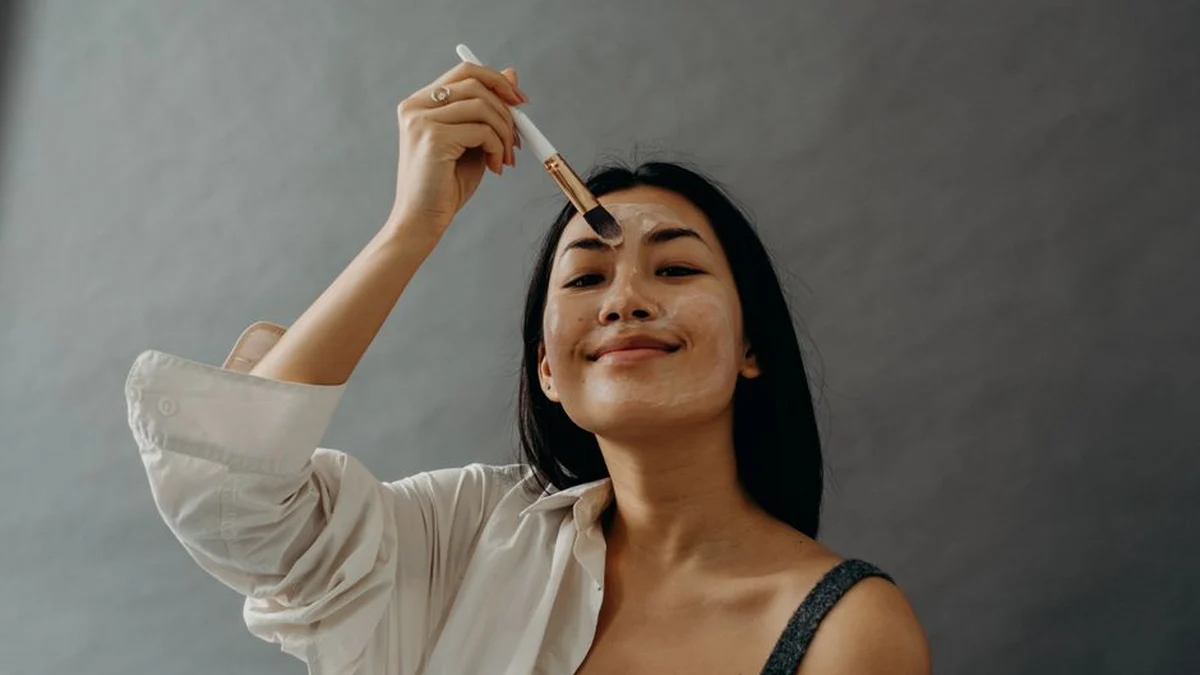
Apply an even, moderately thick layer with a brush or clean fingers. Thin patches dry first and unevenly.
Consider spot-masking rather than the whole face. Most people only need clay on the T-zone; the cheeks are usually drier and don’t benefit. Multi-masking — clay on the nose and forehead, something hydrating on the cheeks — looks faintly absurd and is more sensible than a full-face application.
Rinse with lukewarm water and a soft cloth. Don’t scrub the clay off dry, which is abrasive.
Moisturise immediately. Not optional. The skin has just had oil removed and needs the barrier supporting.
How often
Oily skin: twice a week maximum.
Combination: once a week, T-zone only.
Normal: once a week or fortnightly.
Dry: rarely, and only on specific congested spots.
Sensitive: kaolin only, fortnightly, with a short contact time.
If your skin feels tight after a mask, you’ve either used it too long or too often. Both are common.
The oily skin paradox
Worth stating explicitly, because it catches out so many people.
Oily skin is frequently also dehydrated. Oil and water are different things — you can produce plenty of sebum and still have a water-depleted, compromised barrier.
Stripping oily skin repeatedly triggers more oil production, not less. The result is skin that’s simultaneously greasy and tight, which is a miserable combination and an extremely common one among people who mask twice a week and cleanse aggressively.
The counterintuitive fix is usually less clay and more hydration. A hydrating routine on oily skin often reduces oiliness within a few weeks.
DIY clay masks
Reasonable, because clay is genuinely cheap in powder form.
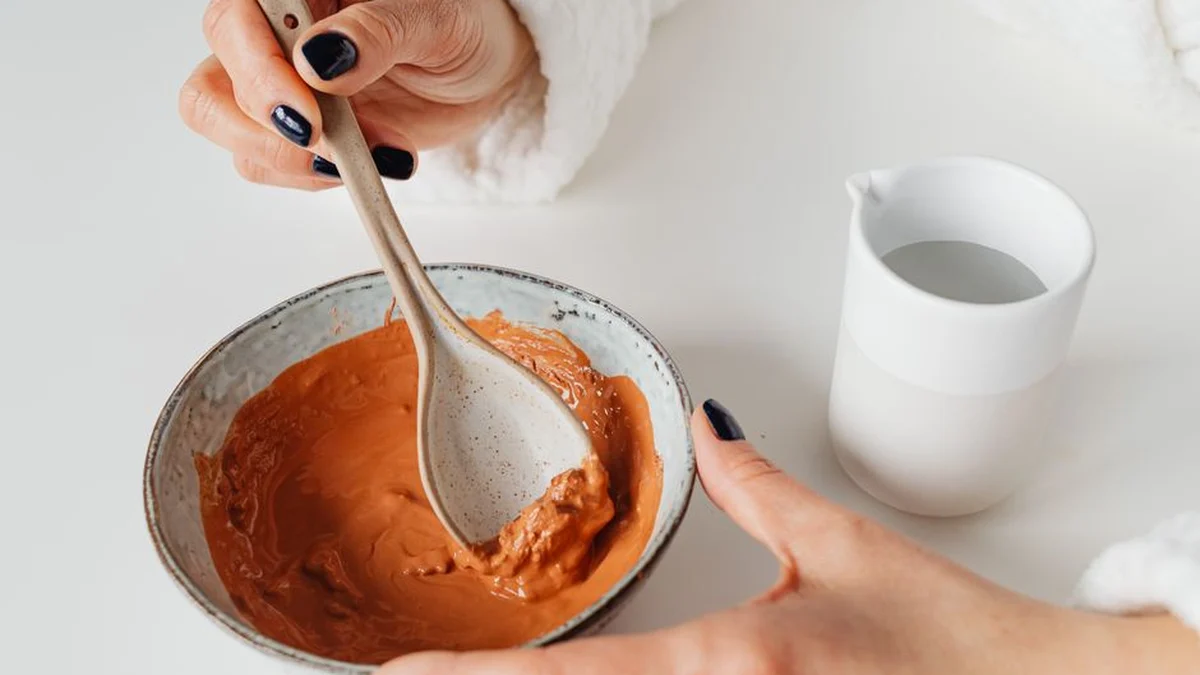
Mix a tablespoon of clay powder with water in a non-metal bowl until it’s the consistency of yoghurt. That’s it — and plain water is the best liquid for most people.
Additions that are fine: a teaspoon of honey for its antibacterial and soothing properties; plain yoghurt for a mild lactic acid effect.
Additions to avoid, all of which circulate widely: lemon juice, which is highly acidic and photosensitising and can cause chemical burns; apple cider vinegar, same problem; bicarbonate of soda, far too alkaline for skin; undiluted essential oils, which cause sensitisation.
Make fresh each time. Wet clay grows bacteria and homemade mixes have no preservative system.
What clay masks can’t do
Shrink pores permanently. Pore size is largely genetic; clearing the oil inside makes them look smaller for a day or two.
Treat acne. They help with surface congestion. Actual acne needs consistent leave-on treatment.
Remove blackheads. They loosen some surface oxidised sebum. They don’t extract anything.
Replace a routine. If your skin is oily and congested, the answer is a consistent daily routine with a salicylic acid or retinoid — a weekly mask is a supplement to that, not a substitute.
For a gentler approach to congestion on sensitive skin, an overnight sleeping mask with hydrating rather than absorbent ingredients often does more for overall skin quality than clay does — and if you’re using actives, the interaction rules in the anti ageing skincare routine guide apply.



Comments are closed