



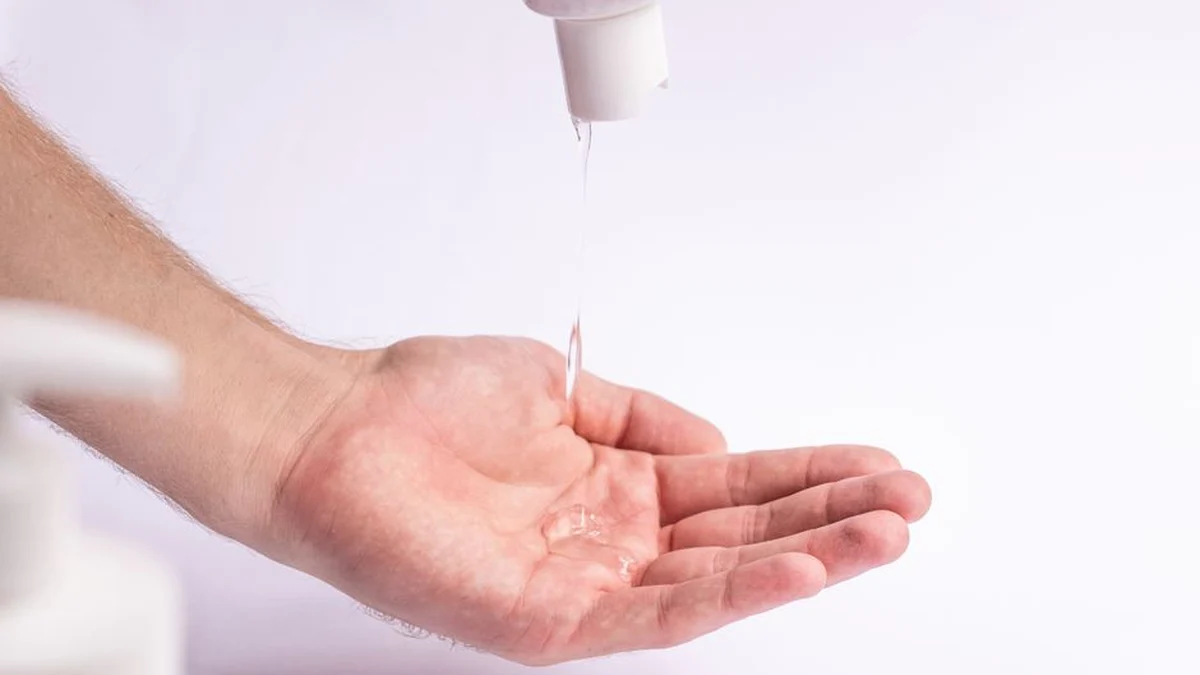
The first time someone uses a proper gel, they nearly always panic.
The hair dries and it has gone hard. Crunchy, solid, faintly ridiculous. It looks like a mistake, so they wash it out, and they never touch gel again.
That hard shell is called the cast, and it is the entire point of the product. It is doing its job precisely because it feels wrong. Break it once the hair is properly dry and what you get underneath is soft, defined and frizz-free. Where gel sits alongside everything else is set out in the guide to anti frizz hair products.
What gel actually is
Two ingredients do two completely different jobs, and confusing them is why ingredient lists are so hard to read.
Carbomer is in nearly every hair gel on the market. It is a thickener. It is what makes the product a gel rather than a liquid, and it contributes nothing at all to hold.
Film-forming polymers are what hold your hair. As the water evaporates they knit into a continuous film around each clump, and that film is the cast.
So a gel with an impressive-looking carbomer content and a weak polymer will feel thick in the pot and hold nothing. Texture in the bottle tells you nothing about performance on your head.
There are two other things in a good formula worth knowing about. Plasticisers, usually glycerin or something similar, keep the film flexible so it bends with your hair instead of cracking. Conditioning agents stop it feeling sticky. The balance between those and the polymer is what separates a gel you like from one you do not.
The polymer that fails twice a year
If you are going to read one thing on the label, read this.
PVP is the workhorse film-former in a great many gels. It is clear, it sticks to hair well, and it is completely water soluble. It also has two failure modes that happen at opposite ends of the British year.
In humid weather, PVP absorbs water out of the air. The film goes tacky and sticky, the hair dulls, and frizz comes through anyway. In dry heated air, the same polymer goes brittle and flakes.
So the gel that turned sticky on you in July and flaked on you in January was not two different problems. It was the same ingredient failing in two directions, and neither was your technique.
What to look for instead: VP/VA copolymer, or a polyquaternium such as Polyquaternium-55 or Polyquaternium-69. These hold up considerably better in damp air, and they stay flexible longer in dry air. Anything marketed on humidity retention is usually built on one of them.
Flaking, and why “you used too much” is usually wrong
Ask anywhere why a gel flakes and you get one of two answers. You used too much, or it is a cheap gel.
Both happen. Neither is the commonest cause.
A polymer film has to stick to the hair and then bend with it every time you move your head. Doing that requires a certain amount of stretch in the film. If the film is too rigid, ordinary movement snaps it, and what snaps off is a white speck.
Rigid films come about in two ways. Some formulas are simply short on plasticiser. And some polymer combinations are brittle by nature: PVP together with carbomer produces a film that is strong but barely stretches at all, which is exactly the recipe for cracking. That combination is very common.
The bigger cause, though, is the layer underneath. Gels flake most when they do not get on with the product applied before them. A silicone-heavy leave-in under a water-based gel, or a heavy butter cream under a strong-hold polymer, and the two films sit on each other without bonding. The top one lifts and breaks.
So work through it in this order:
First, suspect the layer underneath. Strip back to gel alone for one wash day. If the flaking stops, you found it, and you reintroduce the leave-in next time as a smaller amount or a different product.
Second, emulsify. Rub the gel between wet palms until it is slick and slightly diluted before it touches your hair. This one change fixes a surprising proportion of flaking on its own.
Third, keep it off the roots. White residue on the scalp is not flaking, it is gel where gel should never have been. Mid-lengths and ends.
Fourth, and only then, use less.
Fifth, if it still flakes, change the gel. A brittle formula is a brittle formula, and no amount of technique fixes it.
Choosing a hold level
Most gels are rated somewhere on a scale of one to five, and the number matters more than the marketing.
Light hold. Waves, fine hair, anyone who wants movement more than definition. Soft cast, drops sooner.
Medium hold. The default for most curls in most weather.
Strong or extra strong. Tight curls, dense hair, and genuinely bad days. Hard cast that has to be broken properly.
One trap worth naming. Layering a light gel over a cream feels like it should give more hold than a medium gel on its own, and it usually gives less. Two soft films do not add up to one firm one. If your hair drops by lunchtime, go up a hold level rather than adding another product.
The honest ceiling
A good gel controls frizz up to roughly seventy per cent humidity. Above that, no gel alone holds.
That is worth knowing because a muggy August afternoon in London, or almost any day on the coast, sits above that line. When your gel fails on a day like that, it has not failed. It has been asked to work outside its range, and the answer is a humidity resistant hair spray over the top rather than a different gel.
Applying it
Gel goes on soaking wet hair, over your cream or leave-in. It is the outer layer, always.
Emulsify it in wet palms first. Rake it through with fingers together to distribute, then scrunch upward from the ends to form the clumps. Two motions, two jobs.
If you are layering it over a curl defining cream, put the cream on first while the hair is still dripping, then the gel while it is still very wet. Reversing that order means the cream breaks the cast down before it has set.
Then stop touching it. Every contact while it dries breaks a clump and creates the frizz you were trying to prevent.
Breaking the cast
This is where most of the remaining mistakes happen, and all of them are timing.
Wait until the hair is completely dry. Not nearly. Completely.
The way to check: take one clump and bend it. If it snaps crisply, you are ready. If it bends softly and gives, there is still water in there, and breaking it now will collapse the shape and let the frizz straight back in.
When it is ready, use dry hands and scrunch upward from the ends. You will hear it crack. It feels alarming and it is correct.
A drop of oil warmed between the palms before you start softens the hair as you scrunch and adds shine. It also means fewer passes, which means less disturbance.
Why yours might not be working
Sticky rather than crunchy. Too much product, or a humid day working on a PVP-based formula. Emulsify more, use less, and check the polymer before the next bottle.
The cast never forms. Not enough gel, hold level too low, or you applied it to hair that had already dried past the point of usefulness.
It forms and then drops within the hour. You broke it too early. Almost always this.
Curls look defined but the hair feels like straw. Gel holds; it does not moisturise. You need a cream or leave-in underneath, not a different gel.
Everything is fine but the hair is dull. Build-up. Gel polymers accumulate like any other film, and a dull coating over a good cast reads as bad hair. Clarify, and if you are in a hard-water area, use a chelating wash instead, which the clarifying shampoo guide covers.
It works for two weeks then stops. Also build-up, and possibly limescale rather than product. Mineral deposits sit between the hair and the film and stop the polymer sticking properly, which costs you both hold and flaking resistance.
Gel on fine hair
Fine hair can absolutely take gel, but weight is the constraint rather than hold.
Use a light gel, emulsify it thoroughly, and skip the cream underneath entirely. If it still flattens, a curl enhancing mousse first with a small amount of light gel over the top gives you a cast without the load.
What does not work on fine hair is a heavy cream plus a strong gel. That is a lot of film on a strand with very little structural strength of its own.

Day two on a gel cast
Gel is the best styler to live with midweek, because there is more film left to work with than with anything else.
Water softens the polymer and lets it re-set. Mist a flattened section until properly damp, squeeze upward a few times, leave it alone. A curl refreshing spray does it more neatly than plain water, though the water is doing most of the work.
If you scrunched the cast out on day one, there is less film to reactivate, which is the trade-off for softer hair. Some people leave the cast in overnight and break it in the morning for exactly this reason.
Gel versus serum
They solve different halves of the same problem, and on curly hair you often want both.
An anti-frizz serum smooths the surface of each strand. Gel holds strands together in a clump. Smoothing without holding leaves you with soft, separated, frizzy curls. Holding without smoothing leaves you with defined curls that look a bit rough up close.
Gel first while wet, serum afterwards on the dry cast as you scrunch it out. That order, not the other way round. The full stack is in the guide to curly hair products.
One thing gel cannot do is change your hair. It holds the pattern you have. If what you actually want is a looser, smoother pattern rather than a better-defined version of your own, that is a different decision entirely, and the hair smoothing treatment guide covers what it involves and what it costs you.
The short version
The cast is meant to happen. Break it only when the hair snaps crisply rather than bending.
If it flakes, suspect the product underneath before you blame the gel, and emulsify with water before you reduce the amount.
If it goes sticky in summer and brittle in winter, look for VP/VA or a polyquaternium next time instead of PVP on its own. And above about seventy per cent humidity, no gel is going to save you on its own.




Comments are closed