



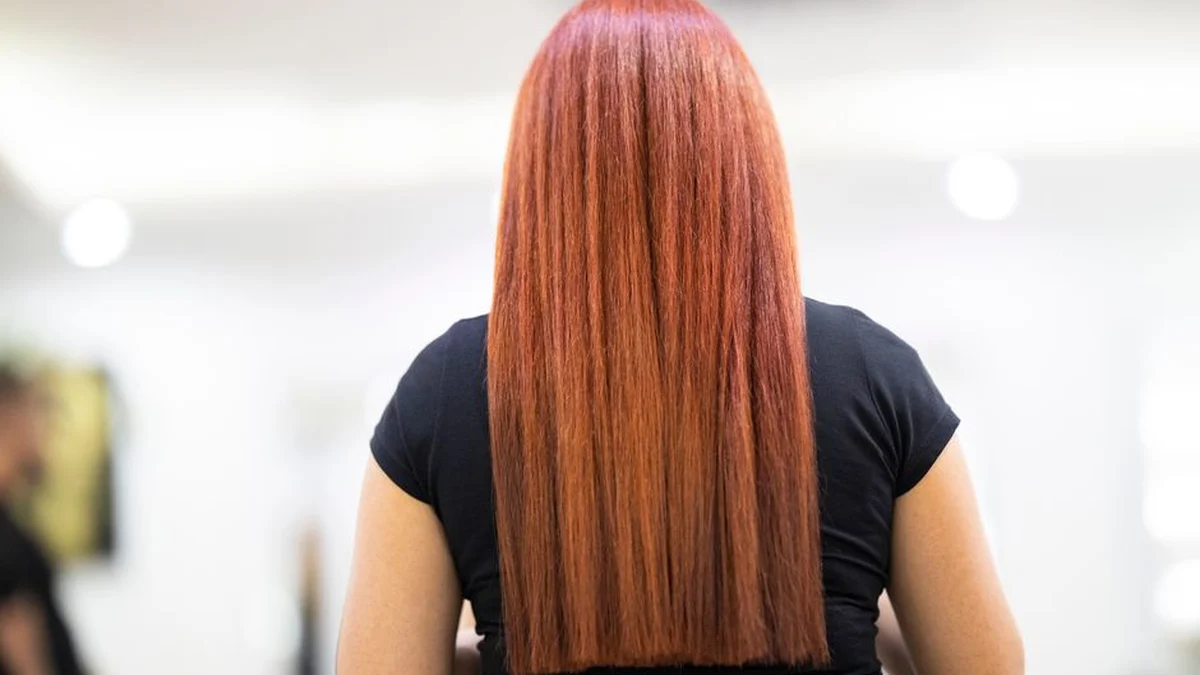
Most people arrive at this decision the same way. Forty minutes with a dryer every morning, a losing fight with the weather, and eventually somebody in a salon says the words “smoothing treatment” and it sounds like the end of the problem.
It can be. Three to five months of hair that behaves, mornings that take ten minutes instead of forty, and a walk to work that no longer undoes everything.
It is also two to three hours in a chair, somewhere between one and three hundred pounds, and a set of questions about what is in the bottle that the industry has been arguing about for fifteen years. Two of those questions changed this year, and one of them changed six weeks ago.
Here is what you need to know before you book, rather than after.
Three different things, sold under one name
“Smoothing” covers treatments that work in completely different ways, and knowing which one you are being offered is the first thing to sort out.
Keratin smoothing. Protein is deposited onto the hair and the cuticle is sealed flat, then locked in with a flat iron. It is a surface treatment. It reduces frizz and drying time and loosens the curl pattern rather than straightening it. Lasts three to five months.
Acid smoothing, sometimes sold as a progressive brush or a Brazilian-style treatment. Alpha hydroxy acids, usually glyoxylic or glycolic, temporarily realign the disulphide bonds and flatten the cuticle. The finish is glossier and more laminated than keratin. Lasts around three months, or roughly six washes. This is the category marketed as formaldehyde-free, and there is more on it below.
Bond builders. These are not smoothing treatments at all. They work on broken disulphide bonds inside the strand, and they repair rather than restructure. They are frequently sold alongside smoothing services and frequently confused with them. If someone offers you a bond builder as an alternative to smoothing, they are offering you a different thing, and it will not smooth your hair.
There is a fourth category, alkaline relaxers, which are permanent and a separate conversation entirely.
The formaldehyde question, and what changed in July
This has followed keratin treatments around since they arrived, and the position is more nuanced than either side usually admits.
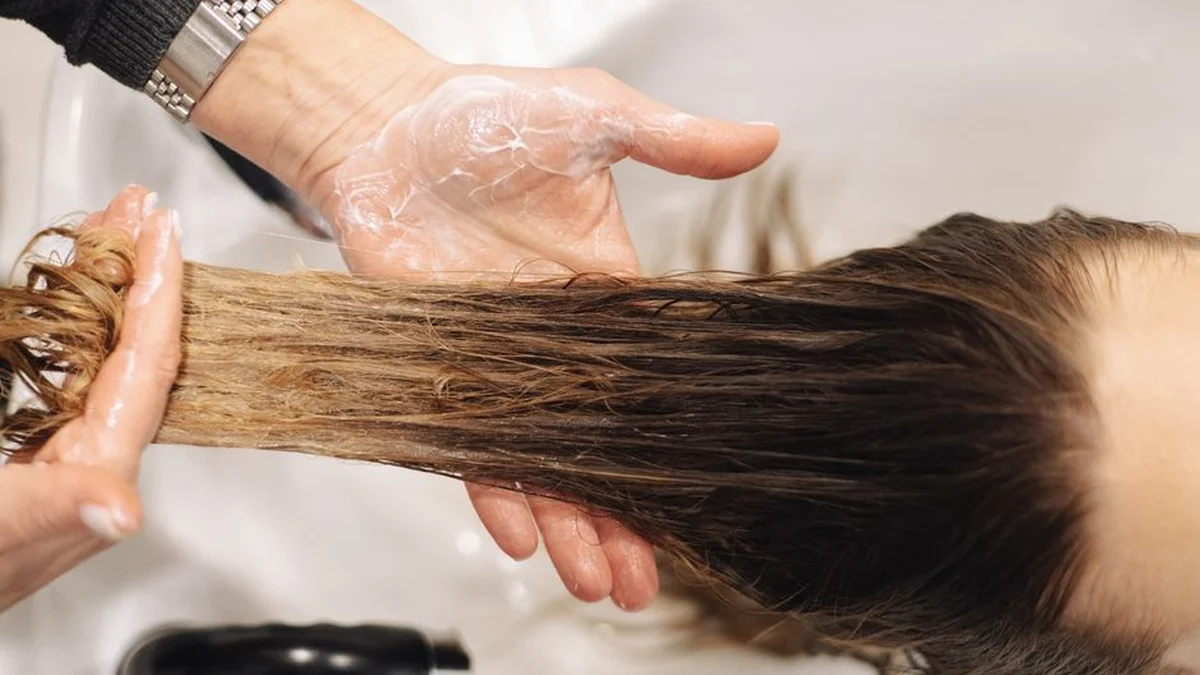
Many smoothing formulas contain methylene glycol, formalin, or a releaser such as DMDM hydantoin. On the shelf, in the bottle, these are not free formaldehyde. When heated, they release formaldehyde gas. The flat-iron step in a smoothing service runs at around 230°C.
Which is how a product can be labelled formaldehyde-free and still put formaldehyde into the air of the room you are sitting in. Both statements are true, and they are describing different moments.
The UK rule that came in on 15 July 2026
The threshold for the “releases formaldehyde” warning on a cosmetic label has been cut sharply.
It used to be 0.05%, which is 500 parts per million. It is now 0.001%, which is 10 parts per million. Products placed on the UK market from 15 July 2026 have to comply, with a transitional period for existing stock running into January 2027.
The practical effect for you is straightforward. Products that said nothing before may now carry the warning. That is a labelling change, not a change in the formula, and it means you can now read a bottle and get a much more honest answer than you could in June.
Who is actually most exposed
Worth saying, because it rarely gets said. Workplace air monitoring in salons has found formaldehyde levels during these treatments exceeding occupational short-term exposure limits. Those measurements come from US workplace safety monitoring, and the limits are US limits, so treat the figures as indicative rather than as UK enforcement.
The principle travels, though. You might have this done three times a year. Your stylist is in that room every day. Ventilation is a fair thing to ask about, and a good salon will have a clear answer.
The alternative has a problem of its own
When formaldehyde became a concern, the market moved to acid smoothing, usually built on glyoxylic acid and sold as the safe, formaldehyde-free option.
That switch has run into something serious enough that you should know about it before you book.
In October 2024, ANSES, the French national agency for food, environmental and occupational health safety, issued an alert about glyoxylic acid in hair-straightening products. It confirmed that alert in a statement in January 2025, concluding that glyoxylic acid was “very likely responsible” for cases of acute kidney failure.
One case triggered the investigation. After the alert was published, four further cases were reported through the French cosmetovigilance scheme. The reported mechanism is that the acid is absorbed through the scalp, enters the bloodstream, and forms calcium oxalate crystals that damage the kidney. Concentrations in hair products have been reported at up to 25%.
ANSES has recommended a European risk assessment with a view to restricting or banning the substance, asked companies to re-examine their products, and advised people to avoid hair-straightening products containing glyoxylic acid pending regulatory action.
Where it stands now. The European Commission ran a data call between April 2025 and April 2026, and the Scientific Committee on Consumer Safety received its mandate to assess glyoxylic acid on 4 May 2026. That assessment is under way. There is currently no restriction on its use. It is legal, it is on salon shelves, and nothing has been banned.
Five reported cases is a signal rather than an epidemic, and “very likely” is not the same as proven. But a national agency has told consumers to avoid a substance while it is assessed, and that is worth knowing before you sit in the chair rather than afterwards.
The symptoms ANSES asks people to watch for are abdominal or lower back pain, nausea and vomiting, within hours of the treatment. If any of those appear after a smoothing service, seek medical attention promptly and say what you have had done.
What it costs in Britain
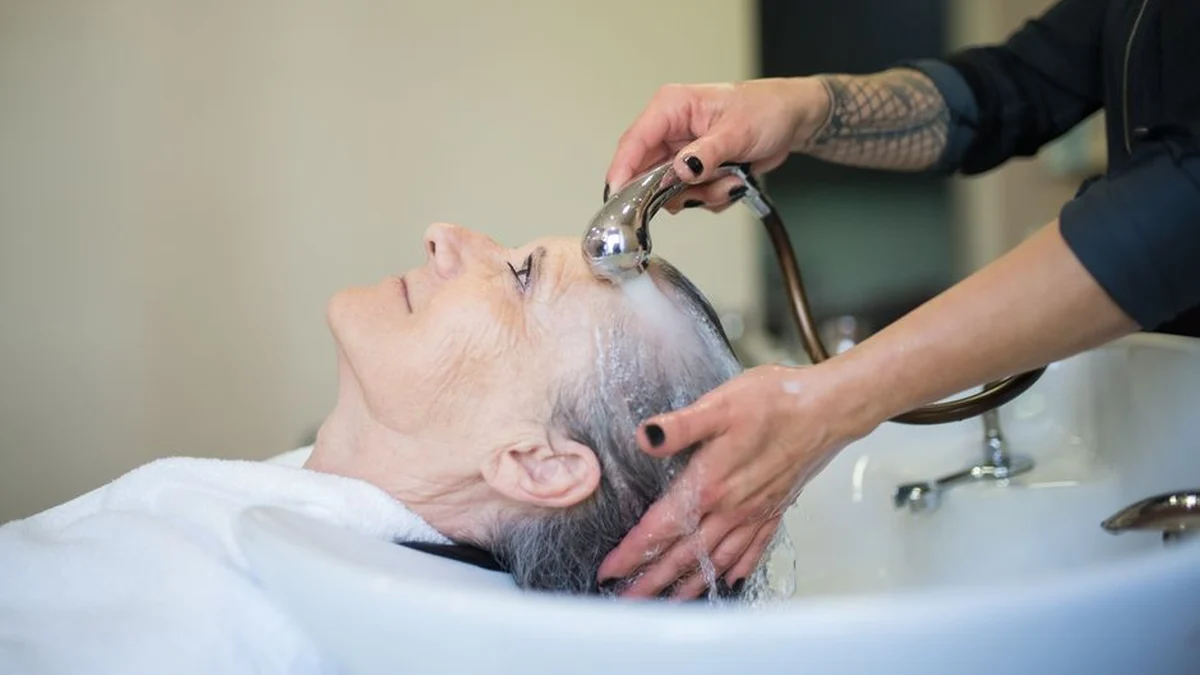
Expect £100 to £300 at most salons for a single treatment. London runs at the upper end and beyond, and Brazilian Blowout branded services sit higher again.
Long or very thick hair costs more, because it is genuinely more product and more time. Multi-session packages are quoted from around £400. Some semi-permanent systems promising three to five months are priced at £180 to £450.
Budget two to three hours in the chair, longer for thick hair.
Prices move, and salons vary enormously. Treat these as a band for sanity-checking a quote rather than as a price list.
Living with it afterwards
The maintenance is not optional, and it is the reason a lot of treatments do not last as long as promised.
Sulphate-free shampoo from then on. Sulphates strip the treatment out. This is the main one.
Chlorine and salt water shorten it noticeably. A fortnight of swimming will cost you weeks.
Some systems need 48 to 72 hours with no washing, no tying back, no clips. This varies by system, so ask specifically rather than assuming.
Hard water will shorten it too. Nobody mentions this and it follows from everything else. If you are in London, the South East or East Anglia, the mineral deposits sit on the treated hair and work against it, and the clarifying shampoo guide covers the chelating washes that deal with them without stripping.
Who should not do this
Anyone with curls they might miss. This is the regret pattern and it is consistent enough to be worth naming. Smooth the curl out, miss it within a few months, then spend two years growing the treatment off while the roots come through in your natural texture and the lengths do not match.
Before you book anything, do this test. Wet your hair. If the frizz disappears and the curls reform cleanly, you do not have a roughness problem. You have a definition problem, and it has a cheaper fix: the approach in the guide to curly hair products is about holding clumps together rather than flattening them.
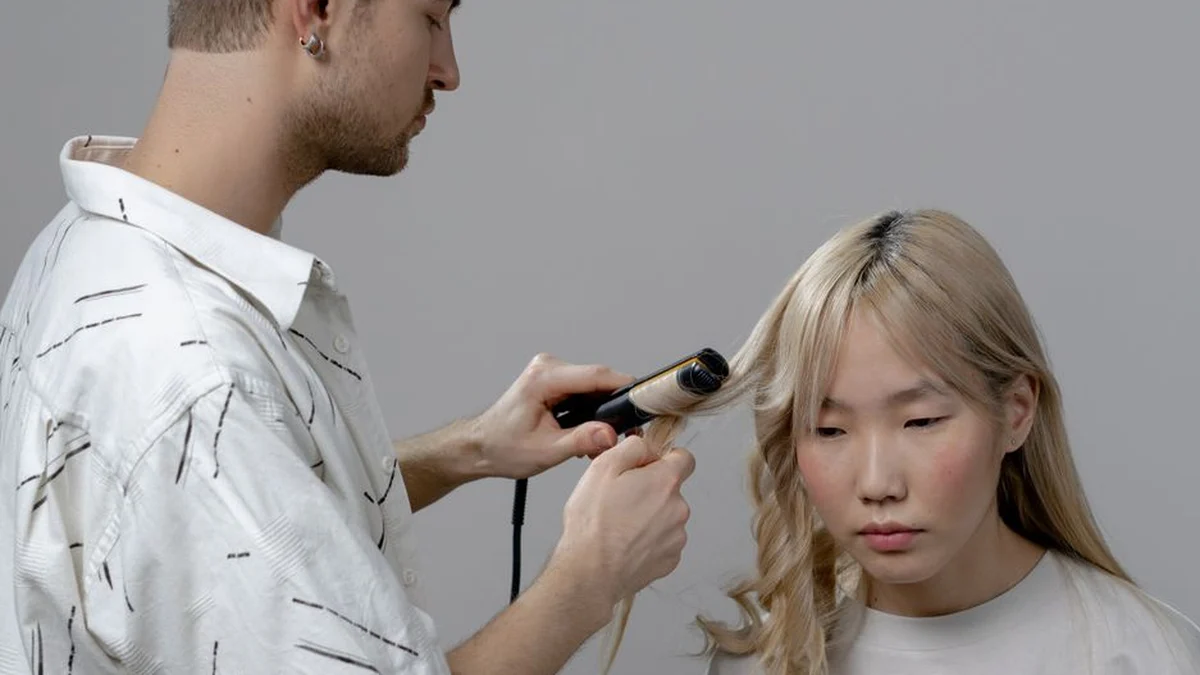
Anyone with fine hair. Smoothing can leave fine hair limp and flat, and there is no undo button.
Anyone who has not tried the cheap options. A good anti-frizz serum costs a tenth of this and handles ordinary frizz. A frizz control gel handles curls. A humidity resistant hair spray handles the bad days. If you have not worked through the guide to anti frizz hair products, work through it first.
Anyone pregnant or breastfeeding. None of the guidance available covers this properly. Given the formaldehyde question, raise it with your midwife or GP rather than with a receptionist.
Questions to ask before you commit
A good salon will answer all of these without hesitating, and how they answer tells you as much as what they say.
- Which system are you using, and what is the active chemistry? Keratin, or an acid system, and which acid.
- Does it contain glyoxylic acid? Ask directly.
- Does the product carry a formaldehyde warning on the label? Since 15 July this is a much more meaningful question than it was.
- How is the room ventilated during the service?
- What is the aftercare, specifically, and for how many hours?
- What happens to my curl pattern, and is any of it permanent?
- Can I see it on hair like mine?
If you are also colouring, the order and the interval between services matters, and the hair colour care guide covers what to raise.
What it will and will not fix
It will reduce frizz, cut drying time substantially, add shine, and make hair easier to manage. Those are real and they are why people do it.
It will not repair damage. A smoothing treatment lays something over the top of a strand or temporarily rearranges its bonds. Neither rebuilds a cuticle that heat or bleach has stripped away. If your hair is damaged, the honest work is in the curl revival products guide, and a haircut usually does more than any treatment.
It will not last if you keep straightening. Heat on treated hair shortens the result and adds to the underlying damage, and the temperature limits in the hair styling tools guide still apply afterwards. If the point was to stop using hot tools, use fewer of them.
And if what you want is smooth hair on particular days rather than every day, setting damp hair overnight for heatless curls or a soft blow-dry costs nothing, involves no chemistry, and is reversible on a Tuesday.
The short version
Three different treatments get called smoothing. Find out which one you are being sold.
Formaldehyde can be in the air even when it is not free in the bottle, because the flat-iron step releases it. Since 15 July 2026, UK labels have to declare it at ten parts per million rather than five hundred, so the label is worth reading now.
The formaldehyde-free alternative, glyoxylic acid, is under a live safety assessment following a French agency alert about acute kidney failure. Nothing is banned and the evidence is early, but ask whether it is in the product, and get medical advice if you get abdominal pain, nausea or vomiting in the hours afterwards.
And do the wet test first. If your curls come back cleanly when wet, you do not need any of this.
This article is general information and is not medical advice. If you have concerns about your hair or scalp, or about any reaction to a treatment, speak to your GP or a registered trichologist.





Comments are closed