



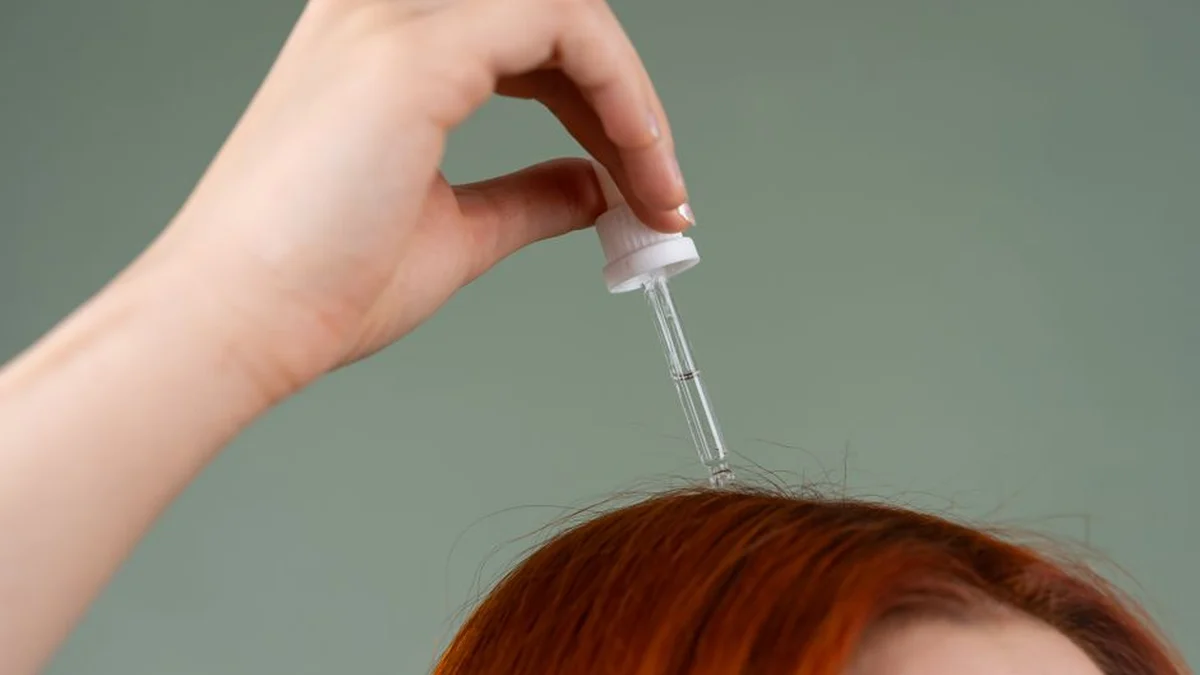
Serum is the product people most often use wrongly, and the way they get it wrong is almost always the same. Too much, in the wrong place, on the wrong day.
A pea-sized amount, warmed between the palms, worked through the mid-lengths and ends of damp hair. That is the whole technique. Most people use three or four times that, start at the crown, and then decide serum makes their hair greasy. At that dose it does.
Where serum sits in the rest of the routine is set out in the guide to anti frizz hair products. This is the detail on the bottle itself, including the one thing on the label that almost nobody knows how to read.
The job serum is doing
Frizz has two causes that happen at opposite times of year. In damp weather, water gets into the strand, it swells, and the cuticle lifts. In dry heated air, there is no water to absorb, so static builds up instead and strands repel each other into flyaways.
Most anti-frizz products only deal with one of those. Serum is the exception, and it is worth knowing why.
The film a serum leaves behind does two separate jobs at once. It repels water, which stops the humid-weather swelling. And it cuts friction and dissipates electrical charge, which stops the winter static.
That makes serum the one product in the cupboard that earns its place in July and in January. Nothing else in an anti-frizz routine can say that.
What is actually in the bottle
Most serums are built on one of three things, and the ingredients list tells you which.
Silicones. Dimethicone and its relatives. These form a genuinely excellent barrier: smooth, water-repellent, light-reflecting. A serum can be anywhere from forty to eighty-five per cent silicone, which is why a small bottle goes a long way.
Oils. Argan, marula, squalane, camellia. These penetrate the strand to varying degrees rather than sitting purely on top, and they suit people who would rather avoid silicone. They are less effective as a humidity barrier, because oil repels water well but does not form the continuous film silicone does. Heavier oils weigh fine hair down noticeably.
Polymer blends. Newer formulas use film-formers that behave a bit like silicone without the build-up. They tend to cost more and they are often the best performers on fine hair.
Reading the label properly
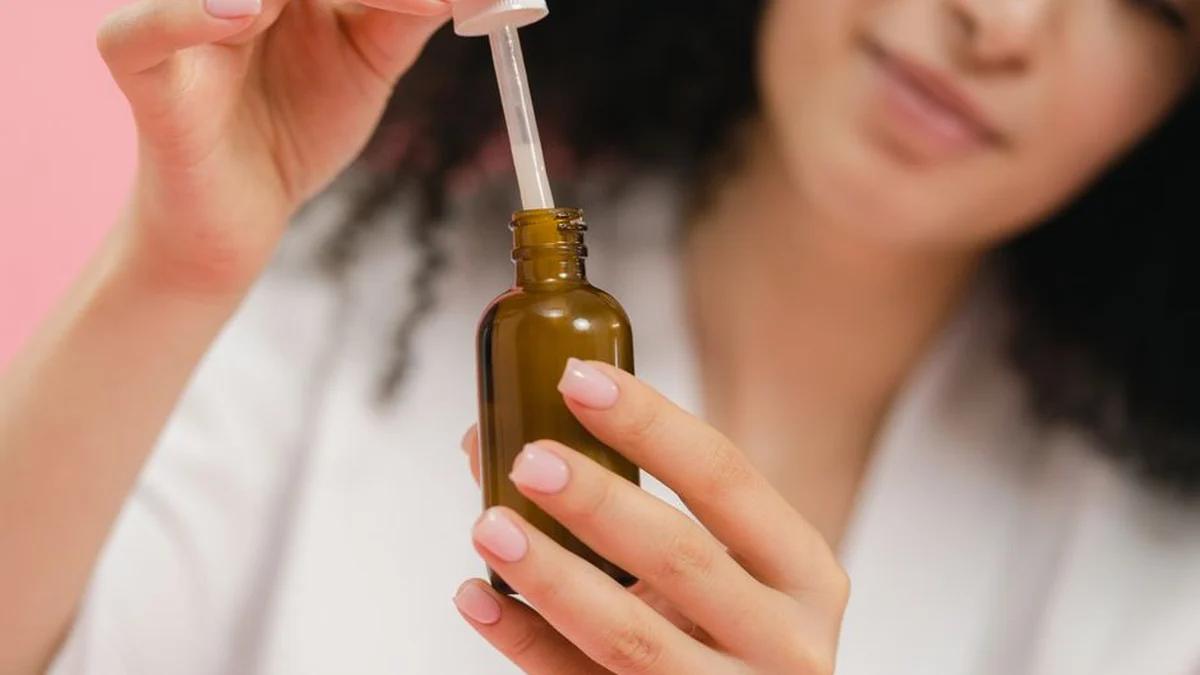
This is the part worth learning, because it will change what you buy.
The internet treats silicone as a yes-or-no question. Scan the label, spot anything ending in -cone, put it back. That advice is too blunt, because there are three classes of silicone and they behave completely differently.
Water-soluble. These have PEG- or PPG- in front of the name. PEG-12 Dimethicone, PEG-7 Amodimethicone, PPG-3 Dimethicone. They rinse out with an ordinary sulphate-free wash, leave nothing behind, and never need clarifying. If you have been avoiding these, you have been avoiding a conditioning ingredient for no reason.
Volatile. These start with cyclo-. Cyclomethicone, cyclopentasiloxane. They evaporate within minutes of going on. They are in most serums to help the product spread, and they are gone before you have finished drying your hair. Build-up is not a consideration.
Non-water-soluble. The plain names with no prefix. Dimethicone, dimethiconol, amodimethicone. These are the ones that accumulate, and these are the ones the warnings are actually about.
So the rule is: look at the prefix before you look at the ending. A great many silicone-free purchases are being made about ingredients that either rinse out or evaporate.
One clever exception
Plain amodimethicone carries a slight positive charge, and damaged sections of hair carry a negative one. So it binds preferentially to the damaged parts of the strand and largely skips the healthy parts. It goes where it is needed rather than coating everything evenly, which is a rather elegant piece of chemistry hiding in an ordinary conditioner.
Build-up, and how quickly it actually happens
Each application leaves a film of roughly a tenth to three-tenths of a micron. Thin. The problem is that it is cumulative, and it eventually blocks water and product from getting in.
How fast that happens depends on your porosity, and the answer is the opposite of what most people assume.
Low-porosity hair shows coating after three or four washes. The cuticle already lies flat, so nothing penetrates and everything stays on the surface. If your hair takes ages to get wet in the shower and products seem to sit on top, you are in this group, and you will need to clarify every two or three weeks.
High-porosity hair goes eight to twelve washes before it becomes noticeable, and every four to six weeks is enough.
To remove it: a clarifying shampoo with a proper surfactant, on dry or damp hair, worked through for a good minute and a half, then a deep conditioner afterwards because clarifying strips by design. The clarifying shampoo guide covers which type to reach for.
The build-up that is not silicone at all
Here is something that catches out a lot of people in Britain.
Across London, the South East and East Anglia the water is hard, and hard water leaves calcium and magnesium on the hair. That feels exactly like silicone build-up: coated, dull, water beading rather than soaking in, products no longer absorbing.
Plenty of people diagnose that as silicone, switch to a silicone-free routine, and find nothing improves. It does not improve because the deposit was limescale. Ordinary clarifying shampoo does not shift minerals either. You need a chelating wash, which means EDTA or phytic acid on the label.
If you have gone silicone-free and your hair still feels coated, this is very likely why.
Is any of it bad for your hair?
No, and it is worth saying plainly because the internet is unhelpful on this.
Dimethicone is chemically inert. It sits on the hair shaft, not on the follicle. It does not cause hair loss, it is not absorbed, and it has no toxicity concerns at cosmetic concentrations. It also measurably reduces breakage when you comb through, because it cuts the friction that snaps hair.
Build-up is a nuisance, not a health problem. It is entirely reversible with one wash. The panic is about an inconvenience dressed up as something more serious.
Matching serum to your hair
Fine hair. A very light silicone or polymer serum, on the bottom third only. Half a pea. Fine hair shows grease within hours and the only recovery is washing.
Medium hair. Most standard serums work. Mid-lengths and ends, pea-sized.
Thick or coarse hair. Richer oil-based serums, and you can use noticeably more. Up to a ten-pence-piece amount for very dense hair.
Curly hair. Serum is mostly an ending, used after the gel cast has dried, as the thing you scrunch the cast out with. A single drop on the palms softens the crunch without collapsing the definition. Where that fits is in the guide to curly hair products.
Bleached or damaged hair. Serums with a little protein or a bond-repairing ingredient do more than pure oils, because the strand needs structural help rather than just a coating.
Wet or dry?
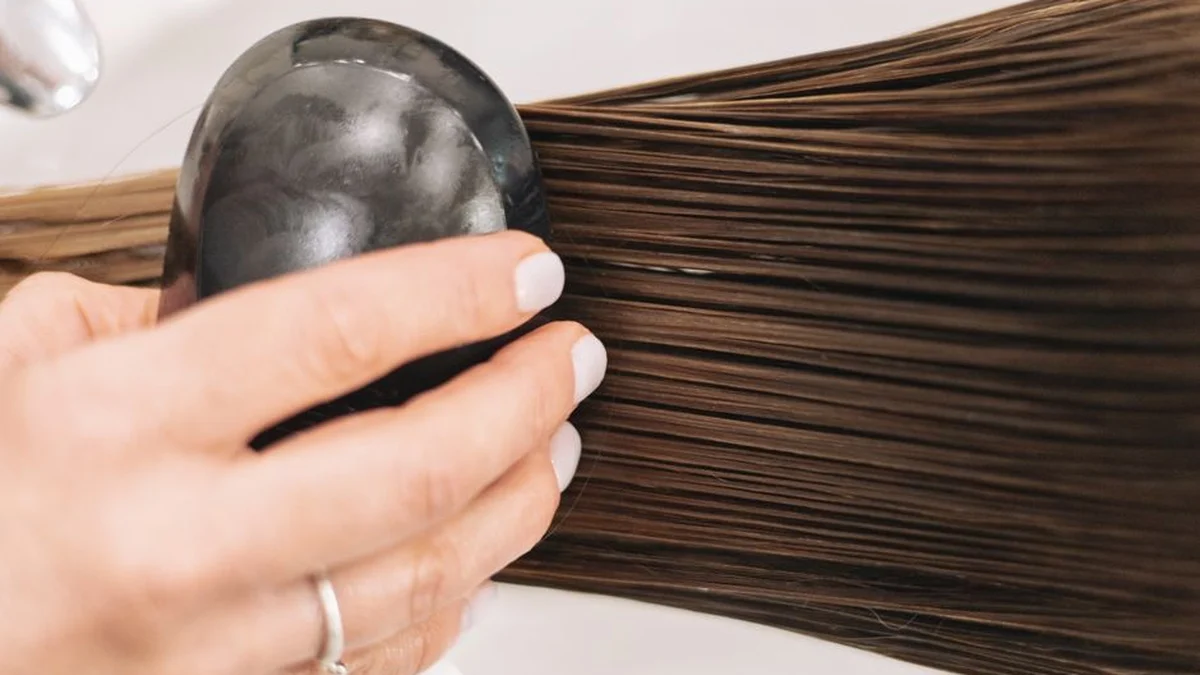
Both, and they are not the same job.
On damp hair, serum acts as a heat protectant and a sealing layer. The cuticle is still slightly raised from the water, so the product coats it more evenly. This is the more effective application and the one most people skip.
On dry hair, serum smooths flyaways and adds shine. Use significantly less. A smear on the palms, then run your hands lightly over the surface. Any more and it looks wet rather than shiny.
Never apply serum to the scalp or roots. There is no frizz there to solve and it will look unwashed within the hour.
And do not rinse it out. This sounds obvious and it is a common enough mistake that manufacturers list it. Serum is a leave-in.
If you used too much
If the hair is still damp, rinse the section under the shower without shampoo, squeeze the water out and start again with less. If it has already dried, a dry shampoo at the roots will absorb some of it, but honestly the day is what it is. Note the amount and use half next time.
Why yours might not be working
Your hair is dry, not just frizzy. Serum seals; it does not hydrate. Sealing a dehydrated strand traps the dryness in. Fix the moisture first with conditioner and a mask, then seal.
You have build-up. Weeks of non-soluble silicone with no clarifying wash leaves a coating that no amount of fresh serum improves. Clarify and start again.
You are using it instead of hold. On textured or curly hair, smoothing alone does not stop strands separating. You need something that holds the shape, and a frizz control gel does that job with serum layered afterwards.
The humidity is beating it. On genuinely muggy days a surface seal is not enough on its own. A humidity resistant hair spray over the top is the finishing layer that holds up.
You are using it as heat protection at too high a temperature. Many serums do offer heat protection, and that protection has a ceiling. The limits worth respecting are in the hair styling tools guide.

Serum, oil, cream: what is the difference?
Serum is a sealant. Thin, spreadable, sits on the surface, adds shine, blocks moisture. Small amounts.
Hair oil overlaps considerably but tends to be heavier and slower to absorb. Some oils, coconut in particular, actually penetrate the cortex, which is why a pre-shampoo coconut oil treatment behaves quite differently from a finishing oil.
Leave-in cream is a moisturiser. It adds water and softening agents to the strand. It goes on first and serum goes over it.
They are not interchangeable, and using serum where you needed cream is one of the commoner reasons hair feels smooth on the surface and brittle underneath. If that describes yours, the curl revival products guide covers how to tell.
If the frizz never lets up
Some hair is frizzy because of texture and weather, and a good serum handles it.
Some hair is frizzy because the cuticle has been structurally damaged by years of heat or bleach, and no topical product fixes that. It manages it.
If you are in the second group and it genuinely bothers you, a salon hair smoothing treatment is worth understanding properly before you dismiss it. And if your hair is curly rather than damaged, the answer was never smoothing in the first place.
The short version
Use less than you think. Mid-lengths and ends, never the roots. Damp hair for the real benefit, dry hair only for touch-ups.
Read the prefix before the ending: PEG rinses out, cyclo evaporates, and only the plain names build up. Clarify every two to three weeks if your hair is low porosity, every four to six if it is high.
And if you have gone silicone-free and your hair still feels coated, check your water before you change your shampoo again.








Comments are closed