



Nobody questions exfoliating their face. Do it to your scalp and half the people you mention it to will look at you as though you’ve suggested sanding your own head.
But the scalp is skin with the same shedding cycle as everywhere else, and it has more oil glands than most of the body plus a daily coating of styling product. Dead cells, sebum, product residue and — in most of England — hard water minerals accumulate around the follicle openings. Ordinary shampoo doesn’t fully clear that.
Exfoliation is one of four steps in a complete scalp care routine, and it’s the one that produces the most immediate noticeable difference.
Physical or chemical
Physical scrubs
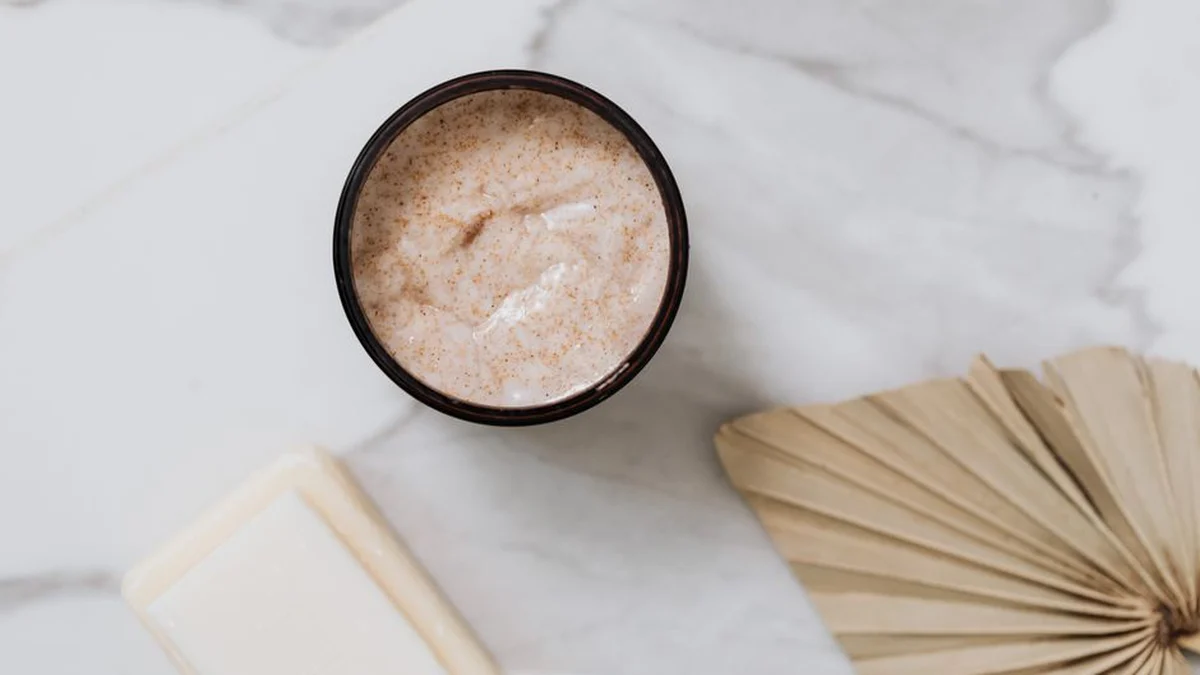
Contain granules — sugar, salt, sand, jojoba beads, crushed shells — suspended in a cleansing base. You massage them in and the friction lifts build-up mechanically.
Good for: oily scalps, heavy product users, an immediate satisfying clean.
Watch out for: irritation on sensitive scalps, and salt-based scrubs on colour-treated hair, which can accelerate fade.
Chemical exfoliants
Use acids to dissolve the bonds holding dead cells together. Salicylic acid is oil-soluble, so it gets into the follicle itself — the most useful for congested or flaky scalps. Glycolic and lactic acid work on the surface.
Good for: sensitive scalps, flaking, anyone with fine hair that gets tangled by physical scrubbing.
Watch out for: overuse, which irritates. Start fortnightly.
Enzyme exfoliants
The gentlest option, using fruit enzymes to break down dead cells with no friction and no acid. Good for very sensitive scalps and slower to show results.
How often
Less than you’d exfoliate your face, and this is the number people get wrong.
Oily scalp: once a week.
Normal: every one to two weeks.
Dry: every two to three weeks, gently.
Sensitive: every three to four weeks, chemical or enzyme only.
Curly or coily hair: every two to three weeks — physical scrubs tangle textured hair badly, so a chemical exfoliant is usually the better route.
Over-exfoliating produces exactly the symptoms it was meant to solve: irritation, redness, tightness, and a rebound increase in oil production as the scalp tries to repair its barrier. If your scalp got oilier after you started scrubbing weekly, that’s why.
How to actually use one
On wet hair, before shampoo. Some people shampoo first to remove surface grease and then scrub, which works equally well.
Part your hair into sections — four or five — so the product reaches the scalp rather than sitting on the hair. This is the step that gets skipped and it’s the difference between exfoliating your scalp and exfoliating your hair, which is not a thing you want to do.
Apply directly to the parting. Massage with your fingertips in small circles for two to three minutes. Never with your nails, which cause micro-tears and make everything worse.
Rinse thoroughly, then shampoo as normal. Condition the lengths only.
Total time: about five extra minutes.
What changes
Immediately: the scalp feels genuinely clean, roots look less flat, and any itching from build-up usually eases.
Over a few weeks: shampoo works better because it isn’t fighting through a layer of residue. Leave-on treatments absorb properly. Hair often looks fuller at the root, because product isn’t weighing down the base of each strand.
What it won’t do: regrow hair. Exfoliation supports a healthy environment for growth, and a congested scalp is not a good one, but no scrub reverses hair loss. Products implying otherwise are overselling.
Making your own
Reasonable, cheap, and easy to get slightly wrong.
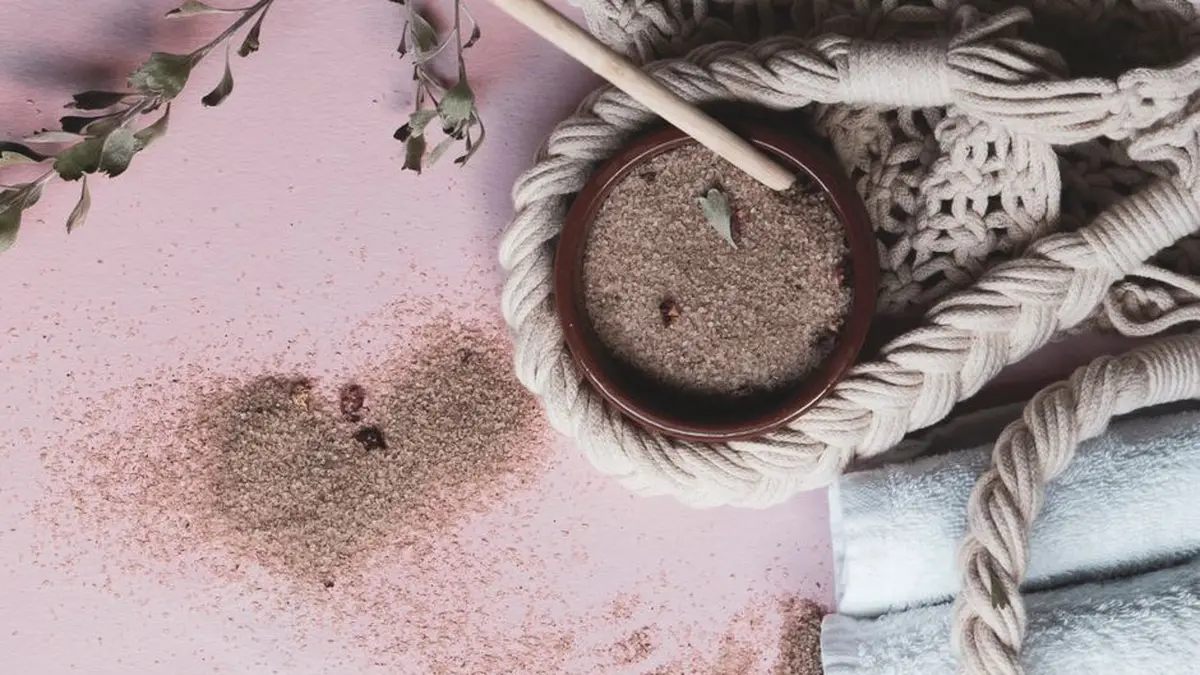
Two tablespoons of fine brown sugar mixed into your usual shampoo works well and dissolves as you massage, which limits how much friction you can accidentally apply.
Avoid coarse sea salt, which is too abrasive and will fade colour-treated hair. Avoid bicarbonate of soda, which is far too alkaline for the scalp’s natural pH and damages the barrier — despite appearing in a great many online recipes.
Avoid coffee grounds, which are sharp-edged and don’t dissolve.
Who shouldn’t use one
Anyone with an active scalp condition — psoriasis, eczema, seborrhoeic dermatitis in a flare. Exfoliating inflamed skin makes it considerably worse. Treat the condition first, with a medicated anti dandruff shampoo where appropriate.
Anyone with open sores, cuts, or a sunburnt scalp.
Anyone with very fragile or heavily bleached hair, where the mechanical action risks breakage.
Anyone experiencing active hair shedding, until you know what’s causing it.
Scrub, clarifying shampoo or both?
Different tools for overlapping problems.
A scrub targets the scalp specifically — dead skin and follicle congestion.
A clarifying shampoo targets the whole head, removing silicones, styling product and mineral deposits from the hair as well as the scalp.
Most people benefit from both on different schedules: a scrub weekly or fortnightly, a clarifying wash monthly. Doing both on the same day is over-cleansing and will leave your scalp tight.
After either, follow with a leave-on treatment if you use one — a scalp serum absorbs far better into a freshly exfoliated scalp, which is the ideal time to apply it.
If it isn’t helping
Give it four to six weeks. If flaking, itching or irritation persists beyond that despite consistent, correct use, the problem probably isn’t build-up.
Persistent flaking with redness usually means seborrhoeic dermatitis, which needs an antifungal rather than an exfoliant. Persistent itching with no visible cause can be a reaction to a fragrance or preservative in something you’re using.
And if there’s pain, pustules, oozing, or hair coming out in noticeable quantity, stop treating it cosmetically and see a GP or pharmacist.







Comments are closed