



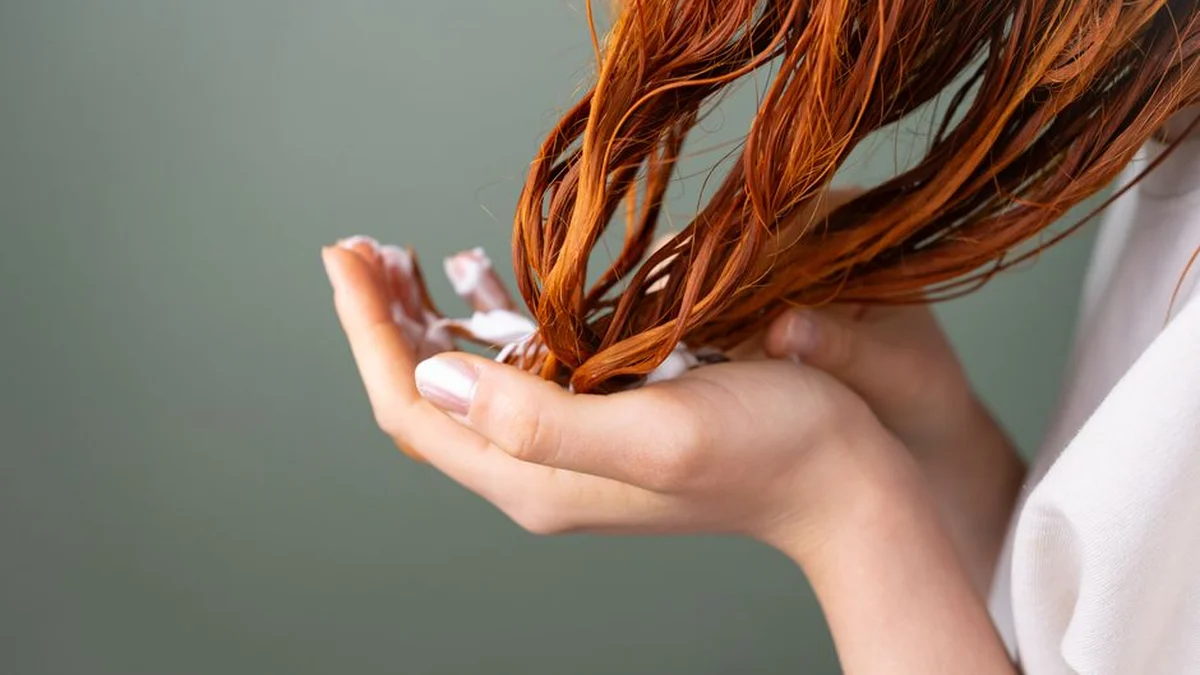
There is a particular kind of frustration that comes from a routine that used to work.
Nothing has changed. Same bottles, same order, same technique you have been doing for two years. And yet the curls have gone limp, or straw-like, or they have stopped forming at all. You stand there on a Sunday morning with wet hair and no idea which part of it broke.
The instinct at that point is to buy something. The better move is to work out which of three things has actually gone wrong, because the fixes contradict each other, and the treatment for one makes another worse. The routine those products sit inside is covered in the guide to curly hair products. This is the diagnostic.
Before you test anything, clarify
This comes first, and it is not optional.
Build-up mimics every condition below. Coated hair feels rough, which reads as one problem. It also behaves limply, which reads as the opposite one. Any test you run on a strand wrapped in silicone or mineral deposit will give you an answer, and the answer will be wrong.
So wash it properly clean before you diagnose anything. And in most of southern and eastern England, that means more than a clarifying shampoo.
Ordinary clarifying shampoo removes product residue. It does not shift the calcium and magnesium that hard water leaves behind. For that you need a chelating wash, which means looking for EDTA or phytic acid on the label. Across London, the South East and East Anglia this is the difference between a clean baseline and a false reading, and the clarifying shampoo guide covers which is which.
The stretch test
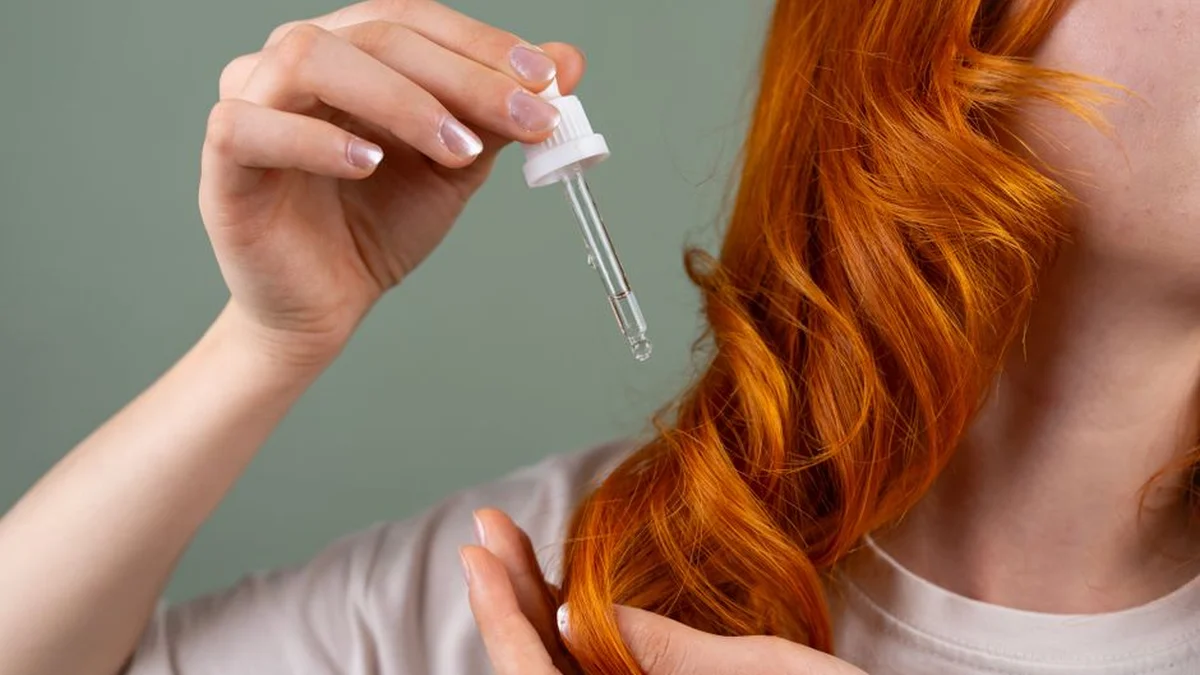
Wash your hair, towel it lightly, and take one strand while it is still damp. Hold it between two fingers, pull it gently until it stops giving, then let go.
It stretches a little and springs back. Balanced. Your problem is build-up or damage, not chemistry.
It stretches a long way and stays stretched, or feels soft and gummy. Too much moisture, not enough protein. There is no structure in there to hold a curl.
It snaps almost at once, with barely any give. Too much protein, not enough moisture. The strand has gone rigid.
Do it on several strands from different parts of your head. Hair is rarely uniform, and the ends are usually telling a different story from the roots.
Damp, not dry, and here is why
You will find this test described on dry hair. Do not do it that way.
Wet hair stretches considerably further before it breaks than dry hair does. That is normal and it applies to perfectly healthy hair. Run the test on a dry strand and it will snap early, you will read that as protein overload, and you will strip protein out of a routine that actually needed it.
Damp is the only state where the result means anything.
Problem one: build-up
The most common cause by a distance, and the easiest to fix.
Silicones, heavy butters, styling polymers and hard-water minerals accumulate on the strand over weeks. The signs are consistent. Hair feels coated or waxy when dry. Water beads on it in the shower rather than soaking in. Products stop absorbing. The curl pattern looks stretched and dull.
People almost never spot this one, because it happens slowly enough that each week feels like the last. What they notice is that the routine “stopped working”, which is true, but not for the reason they assume.
The fix. A clarifying wash, worked into the scalp and the lengths, left for a minute, followed by a deep conditioner, because clarifying is stripping by design. For mineral build-up, a chelating wash. Once a month is plenty for most people.
If your scalp has also been complaining, the scalp care routine guide covers how build-up and scalp health feed into each other.
Problem two: too much moisture, not enough protein
Common in anyone who has spent a year being told protein is harsh and moisture is the answer to everything.
The signs: limp curls with no spring, hair that feels lovely and soft but weak, that over-stretching in the wet test, and a curl pattern that looks looser than it used to.
There is a mechanism behind this that almost nobody mentions, and it is worth understanding because it changes what you do about it.
Hygral fatigue
Hair swells when it takes on water and contracts again as it dries. Do that gently and occasionally and nothing much happens. Do it repeatedly, with long soaks and heavy conditioning and hour-long masks, and the cuticle takes a physical beating from the cycling itself.
High-porosity hair is the most vulnerable, which is the cruel part, because that is exactly the hair type that feels like it needs endless moisture.
This explains a few things that otherwise look contradictory. It is why an hour with conditioner on is not better than ten minutes. It is why going to bed with soaking hair is a bad habit beyond what it does to your scalp. And it is why the fix for over-moisturised hair involves less water rather than more, which feels wrong until you know what is happening.
The fix, in this order:
- Clarify first, as above.
- Stretch the time between washes.
- Stop the hydration techniques for now. No squish-to-condish, no wet plopping, no leaving conditioner on while you get on with other things.
- Take the leave-in out for a fortnight.
- Add a protein treatment, then follow it with a moisturising conditioner in the same wash.
- Dry the hair properly, by diffusing rather than leaving it damp for hours.
Step three will feel like going backwards, because those techniques are exactly what the rest of this site recommends. They are the right techniques for hair in balance. During a correction phase they are the problem, and you put them back once the elasticity has returned.
Expect the improvement within one or two washes. If it has not come, you diagnosed the wrong thing.
Problem three: too much protein, not enough moisture
The signs: rough, straw-like hair that snaps rather than stretches, constant tangling, dullness, flyaways everywhere, and frizz that no product touches.
Worth knowing that this gets diagnosed far more often than it happens. Rough, dry-feeling hair is also what build-up feels like, and what plain dryness feels like, and both of those are commoner. Do the wet test before you conclude anything.
When it is real, the cause is usually stacking. A protein shampoo, a protein conditioner and a protein leave-in in the same routine is the standard route in. The ingredients to recognise on a label are hydrolysed keratin, collagen, silk, wheat, quinoa, soy and casein. One protein product at a time is the rule.
The fix. Clarify, then deep condition with a protein-free mask for twenty minutes, ideally with gentle heat from a shower cap and a warm towel. Move to a sulphate-free shampoo or a co-wash. Bring the hydration techniques back. Choose protein-free stylers while you recover. Weekly until the hair feels pliable again, then fortnightly.
Getting protein right when you do need it
Every four to six weeks suits most people. Weekly is for hair that has been badly damaged, and it is a recovery schedule rather than a routine.
Follow it with moisture in the same wash, every single time. Protein on its own is how people end up creating the opposite problem and then blaming protein for it.
If your hair is fine, rinse the treatment out rather than leaving it in. Leave-in protein is what makes fine hair feel like straw.
Bond builders are a different category and worth separating. They work on the disulphide bonds inside the strand rather than depositing protein on the outside, which makes them the better choice after bleaching. If you colour, the hair colour care guide covers where they fit in a routine.
What no product will fix
Here is where most articles go quiet, because there is nothing to sell at this point.
Heat damage and bleach damage loosen the curl pattern permanently. The disulphide bonds that decide curl shape have been broken and reformed in a straighter configuration, and they stay there. No conditioner, no protein treatment and no bond builder brings the original pattern back.
Bond builders do improve strength, feel and elasticity, and that is a real benefit worth paying for. But a section that has gone straight from damage stays straight until it grows out. Brands describing four-minute molecular repair are describing a genuine improvement in condition, not a reversal.
For a sense of the honest timescale: someone recovering from four years of daily straightening without heat protectant spent a full year on sulphate-free products, weekly masks, monthly bond treatments and protein every six weeks, and still described herself as having a long way to go. That is what recovery actually looks like.
The test that tells you which you are dealing with. If the affected hair is all at the ends while the roots curl normally, that is damage. If the whole length behaves the same way, it is chemistry, and the diagnostic above applies.
Cutting off badly damaged ends does more for how your hair looks than a year of treatments will. It is not the answer anyone wants and it is usually the right one. If your frizz turns out to be damage rather than texture, it is also worth understanding what a salon hair smoothing treatment does and does not do before you either dismiss it or book one.
Rebuilding the routine
Once you have clarified and corrected the balance, put products back one at a time. Not all at once.
This is the part people skip and it is the part that matters. If you reintroduce five things in one wash day and something goes wrong again in three weeks, you have learned nothing and you are back where you started.
Start with cleanser and conditioner for a week. Add the styler next, a curl defining cream for coarse or dry hair, a curl enhancing mousse for fine hair. Add refreshing and overnight protection last.
Keep a note of what you changed and when. It sounds fussy and it saves months.
While you are rebuilding, take the heat out where you can. Swapping some of your hot-tool days for heatless curls costs you nothing and stops you adding to the damage you are trying to recover from.
How often to do any of this
A clarifying wash monthly, or every three weeks if you are in a hard-water area and using rich creams.
A protein treatment every four to six weeks if your hair is coloured or heat-styled, less often if it is neither.
A deep conditioner weekly through winter, fortnightly in summer.
Beyond that, the best revival product is a routine that stops causing the problem. Less heat, gentler cleansing, and stretching washes with a curl refreshing spray rather than washing every other day.
The short version
Clarify before you diagnose, because build-up makes every test meaningless. Then do the stretch test on damp hair, never dry.
Mushy and over-stretchy means protein. Snapping means moisture. Coated means you did not clarify properly the first time.
Put products back one at a time, give each change two wash days, and accept that damaged ends are a haircut rather than a treatment.






Comments are closed