




Hair loss is one of the few areas of beauty where the gap between what’s sold and what’s proven is genuinely enormous. There’s an entire industry built on the fact that people losing their hair will try almost anything, and that the hair growth cycle is slow enough that nobody can tell what worked for six months.
So this is a deliberately unglamorous guide. What has evidence, what doesn’t, and — most importantly — why the first step isn’t a product at all.
Start with diagnosis, not treatment
This is the single most useful thing on this page, and it’s the step almost everyone skips.
“Hair loss” is a symptom, not a condition, and the causes are completely different from each other. Treating the wrong one wastes months.
Androgenetic alopecia (pattern hair loss). Gradual, follows a predictable pattern — receding temples and crown in men, a widening parting and diffuse thinning in women. Genetic and hormonal. The most common cause by a wide margin.
Telogen effluvium. Sudden, diffuse shedding across the whole head, typically two to three months after a trigger: illness, surgery, childbirth, severe stress, crash dieting, or stopping the pill. Usually self-resolving within six to nine months once the trigger has passed.
Alopecia areata. Distinct round patches of complete loss. Autoimmune. Needs a GP, not a shampoo.
Nutritional deficiency. Low ferritin (iron stores) is a very common contributor, particularly in menstruating women. Vitamin D and B12 deficiency also feature.
Thyroid dysfunction. Both underactive and overactive thyroid cause hair loss, and both are straightforward to test for and treat.
Traction alopecia. Caused by tension — tight ponytails, braids, extensions. Reversible early, permanent if left. Worth knowing if you wear hair extensions and wigs regularly.
Scarring alopecias. Less common, permanent, and time-critical. Any hair loss with pain, burning, itching, redness or visible scalp changes needs a dermatologist quickly.

Get the blood tests
Before spending anything on products, see a GP and ask for: full blood count, ferritin, thyroid function, and vitamin D. In some cases also B12 and, for women with other symptoms, hormonal tests.
Ferritin is the one to press on. Many labs report anything above about 15 µg/L as “normal”, but there’s a body of dermatological opinion that hair growth needs considerably more than that — figures around 30 to 70 µg/L are commonly cited as the useful threshold. If your result comes back “normal” but low, it’s worth a specific conversation rather than accepting the flag.
This is free on the NHS and it’s the highest-value thing you can do. A treatable deficiency found in month one saves a year of expensive guessing.
Treatments with real evidence
Minoxidil
The best-evidenced topical treatment, available over the counter in the UK (2% and 5%). It works for androgenetic alopecia by extending the growth phase of the hair cycle.
What to expect: an initial increase in shedding in the first four to eight weeks, which is normal and alarming and causes many people to stop. Visible improvement takes three to six months. It must be used continuously — stop, and gains reverse within a few months.
Roughly speaking, it works well for some, modestly for many, and not at all for a minority.
Finasteride
An oral prescription medication for male pattern hair loss, with substantial evidence. Not licensed for women of childbearing potential and not to be handled during pregnancy. Side effects, including sexual side effects, occur in a minority and should be discussed with a prescriber rather than a website.
Spironolactone
Prescribed off-label for female pattern hair loss in some cases. Requires medical supervision and contraception, as it’s harmful in pregnancy.
Low-level laser therapy
Caps and combs using red light. Modest but real evidence for androgenetic alopecia. Expensive, slow, and requires consistency.
Microneedling
Several studies suggest microneedling combined with minoxidil outperforms minoxidil alone. Done properly — in clinic, or with strict hygiene and appropriate needle depth at home — this is one of the better-supported adjuncts.
Treatments with weaker or unclear evidence
Platelet-rich plasma (PRP). Your own blood, spun down and injected into the scalp. Some encouraging studies, no standardised protocol, and expensive — typically £300–£600 per session in the UK with several sessions needed.
Rosemary oil. One trial found it comparable to 2% minoxidil at six months. A single study with limitations, not the settled science the internet has made of it. Cheap and low-risk, so a reasonable thing to try, but don’t build a strategy on it.
Caffeine and peptide serums. Plausible mechanisms, modest evidence. See the guide to hair regrowth serum for how to read those labels.
Supplements. Only genuinely useful if you’re deficient — the detail is in hair growth supplements, including one important safety point about biotin and blood tests.
Cosmetic options that work immediately
These don’t grow hair. They make thinning hair look considerably better today, which for a lot of people matters as much as the long game.
Volumising products, root sprays, and scalp-coloured fibres reduce the contrast between scalp and hair, which is what actually reads as “thin”. The range is covered in hair thickening products.
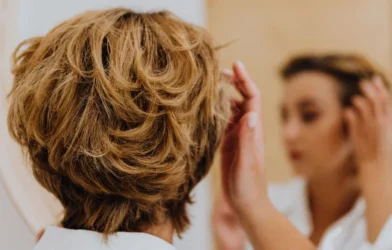
A good cut does more than most products. Shorter, layered styles create the appearance of density; long, one-length hair emphasises thinness.
Toppers, extensions and wigs are a legitimate answer rather than a defeat, and worth knowing about early rather than as a last resort.

Protecting what you have
Whatever the cause, some things help across the board.
Stop tight styles. Traction alopecia is entirely preventable and, once scarred, permanent.
Reduce heat and chemical processing, which cause breakage — which looks like hair loss but is a different problem with a different fix.
Look after the scalp. Hair grows out of skin, and inflamed or congested skin is a poor growing environment. The scalp care routine guide covers the basics.
Eat enough protein and enough calories. Hair is one of the first things the body deprioritises under nutritional stress, which is why crash dieting so reliably causes shedding three months later.
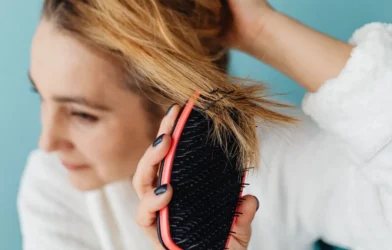
Handle wet hair gently. It’s at its most fragile then, and aggressive brushing causes real breakage.
Realistic timelines
The hair growth cycle is slow, and every honest answer here is measured in months.
Telogen effluvium: shedding stops within six to nine months of the trigger resolving; regrowth visible after that.
Minoxidil: three months before anything, six months before a fair assessment, twelve months for full effect.
Correcting an iron deficiency: three to six months.
Any product promising results in four weeks is describing something other than hair growth.
Women specifically
Female hair loss is under-recognised, frequently dismissed, and the causes differ from men’s in important ways — the fuller picture is in hair loss treatment for women. If you’re a woman who’s been told your hair loss is “just stress” without any blood tests, ask again.
When to see a GP urgently
Sudden or rapid loss. Patchy, well-defined bald spots. Any pain, burning, itching, redness, scaling or visible scalp change. Loss alongside other symptoms — fatigue, weight change, irregular periods. Hair loss in a child. Anything that’s been getting worse for more than three months.
Scarring alopecias in particular are time-critical: the follicles that are lost don’t come back, so early treatment protects what’s left.
This article is general information, not medical advice. Hair loss is often a symptom of a treatable underlying condition. Please see a GP for diagnosis before starting any treatment, and discuss prescription medications with a qualified prescriber.






Comments are closed