



There’s a legal reason hair serum packaging reads the way it does, and once you know it, the whole category becomes much easier to navigate.
If a product makes a genuine medical claim — that it treats hair loss — it must be licensed as a medicine, with trials to support it. That’s an expensive, slow process. So cosmetic products carefully avoid the claim while gesturing at it: “supports the appearance of fuller hair”, “helps reduce the look of thinning”, “for hair that appears denser”.
Every one of those phrases is a legal signal that the product has not demonstrated it grows hair. Learning to spot them saves a lot of money.
The wider context, including which treatments do have evidence, is in the hair growth treatment guide.
Licensed medicine versus cosmetic serum
Minoxidil is a licensed medicine in the UK, available over the counter as a topical solution or foam. It has substantial trial evidence for androgenetic alopecia. It can say it treats hair loss because it has been through the process required to say so.
Everything else on the shelf is a cosmetic. That doesn’t automatically mean it’s useless — some ingredients have real research behind them — but it does mean the manufacturer has not had to demonstrate efficacy to anyone.
The tell is always in the verb. “Treats” and “regrows” are medical claims. “Supports”, “helps”, “appears”, “look of” are cosmetic hedges.
The actives, ranked by evidence
Minoxidil — strong evidence
Extends the hair’s growth phase. Works for pattern hair loss in a meaningful proportion of users. Requires continuous use — stopping reverses gains within months. Causes an initial shedding phase at four to eight weeks that makes many people quit before it works.
Rosemary oil — one interesting study
A trial comparing rosemary oil to 2% minoxidil over six months found comparable results in men with androgenetic alopecia. That’s a genuinely interesting finding and it’s why the ingredient went viral.
The caveats matter though: a single study, modest size, and not replicated at scale. It’s cheap and low-risk, so trying it is reasonable. Treating it as equivalent to minoxidil is going further than the evidence supports.
Caffeine — laboratory evidence, limited human data
Lab studies show caffeine can counteract testosterone’s suppressive effect on hair follicles. Whether enough caffeine penetrates from a topical product in real conditions, at meaningful concentrations, is much less clear. Widely used, modestly supported.
Peptides — plausible, early
Copper peptides and various signalling peptides have mechanisms that make sense and some small studies. Promising rather than proven, and typically expensive.
Redensyl, Capixyl, Procapil and similar — supplier data only
These are branded ingredient complexes. The studies supporting them are generally conducted or commissioned by the ingredient supplier, on small numbers, and rarely independently replicated. Not nothing. Not the same as independent evidence.
Ketoconazole — indirect benefit
Primarily an antifungal, and some evidence suggests it may help in androgenetic alopecia, possibly via anti-inflammatory effects. Reasonable as an adjunct, particularly if you also have scalp flaking — see anti dandruff shampoo.
Saw palmetto, biotin topically, essential oil blends — weak
Limited or absent evidence for topical application.
Red flags on packaging
Before and after photos with different lighting, different hairstyles, or different camera angles. Wet hair in one and dry in the other is a classic.
“Clinically proven” without naming the study, the sample size, or where it was published.
Results promised in four weeks. The hair growth cycle makes that impossible — any visible change that fast is cosmetic coating, not growth.
“Proprietary blend” with no concentrations listed. If an active works at 5% and the product contains 0.1%, the label still gets to name it.
Testimonials instead of data.
Claims to work for all types of hair loss. Alopecia areata, scarring alopecia, telogen effluvium and pattern loss have entirely different mechanisms. Nothing addresses all of them.
How to use one properly
Whatever you choose, application determines whether it does anything.
Apply to a clean scalp. Product sitting on top of weeks of build-up absorbs poorly — reset with a clarifying shampoo monthly.
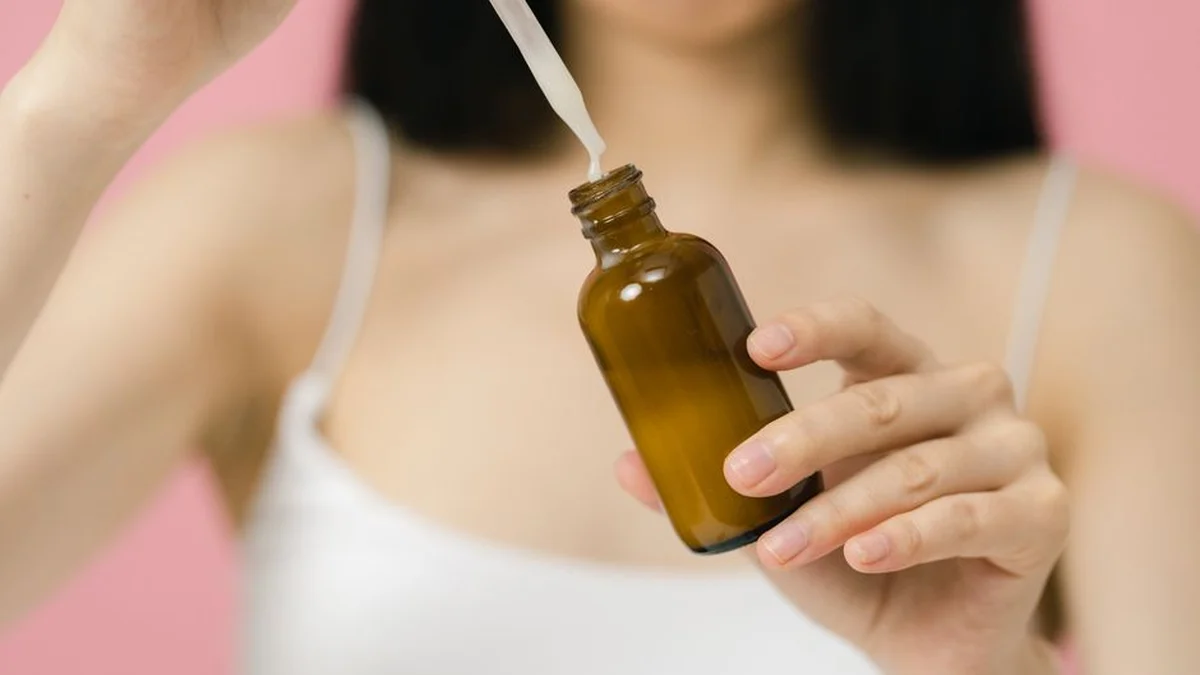
Part the hair into sections and apply directly to the scalp, not the hair. This is the most common error and it wastes most of the product.
Massage in for a minute.
Be consistent. Daily, or whatever the product specifies, for at least six months. Intermittent use produces nothing.
Take monthly photos in the same light, same parting, same angle. Your memory of your own hair is unreliable, and photos are the only way to know whether anything changed.
The shedding phase
Worth flagging because it derails so many people. Minoxidil and some other treatments cause increased shedding in the first four to eight weeks, as follicles are pushed out of the resting phase to begin a new growth cycle.
It looks like the product is making things worse. It generally isn’t. If you’re going to try minoxidil, know this in advance and plan to push through it.
What to do instead of guessing
Get diagnosed first. Different causes need different treatments, and a serum aimed at pattern hair loss does nothing for iron deficiency or telogen effluvium.
If it is pattern hair loss, minoxidil is the evidence-based starting point and it costs less than most cosmetic serums.
Consider adding microneedling, which several studies suggest improves minoxidil’s results.
Look after the scalp — the environment matters, and the scalp care routine guide covers the basics.
And use cosmetic products for what they’re genuinely good at, which is immediate appearance. Fibres and volumisers in hair thickening products deliver a visible result today, which no serum will.
For women navigating this, the diagnostic route matters especially — see hair loss treatment for women for what to ask for.
This article is general information, not medical advice. Please see a GP for diagnosis before starting treatment, and discuss any medicine with a pharmacist or prescriber — including whether it is suitable if you are pregnant, breastfeeding, or taking other medication.



Comments are closed