



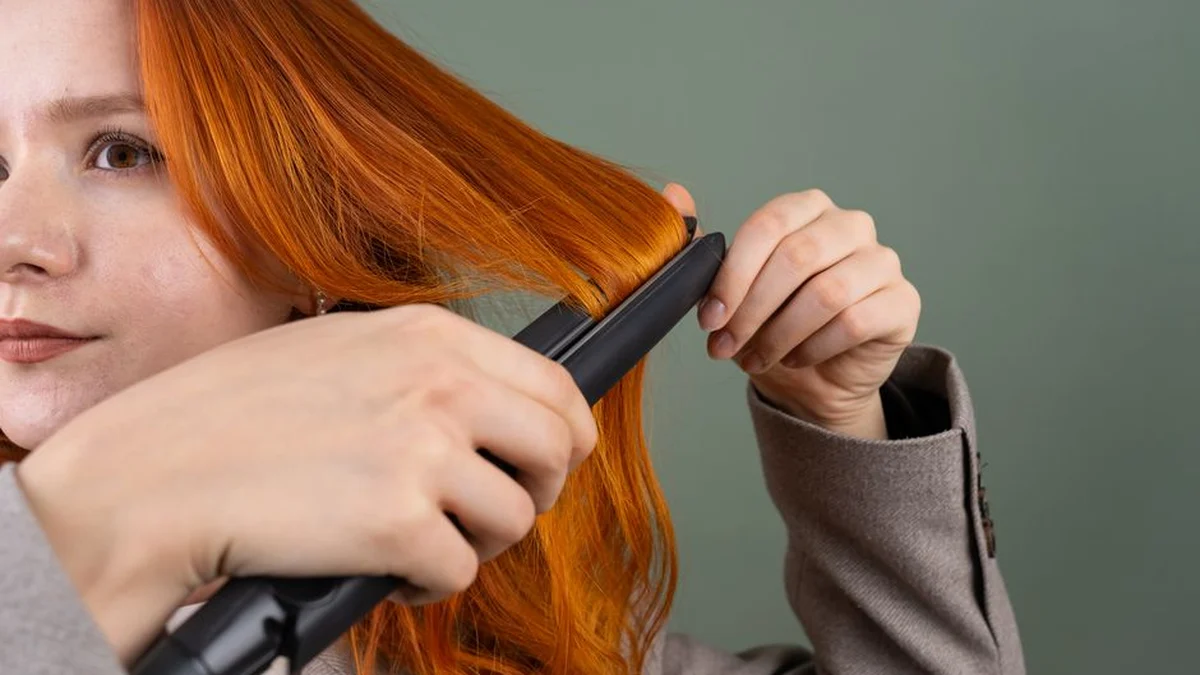
The question is almost never “which is better”. It is “I can afford one of these, and I want it to cover most of what I do”.
That version has a clear answer, and then it has a caveat that most guides skip because it complicates the sale.
The straight answer
Buy the straightener.
A flat iron can curl. A curling iron cannot straighten. That asymmetry settles it if you are buying one tool, and it is why most people who own a single hot tool own a straightener.
The caveat: a flat iron curls adequately. A wand curls better. The twist technique takes real practice, the shape it produces is different, and on some hair it produces creases rather than curls until you have done it thirty or forty times.
So: flat iron first, because it covers both jobs from day one. A wand second, later, if curls turn out to be the thing you actually do. Almost nobody needs both immediately, and the money is better spent on one good tool with an accurate thermostat than two cheap ones, for reasons the hair styling tools guide sets out.
Curling with a straightener, properly
Take a small section, an inch or so wide. Clamp it near the root, not at the scalp.
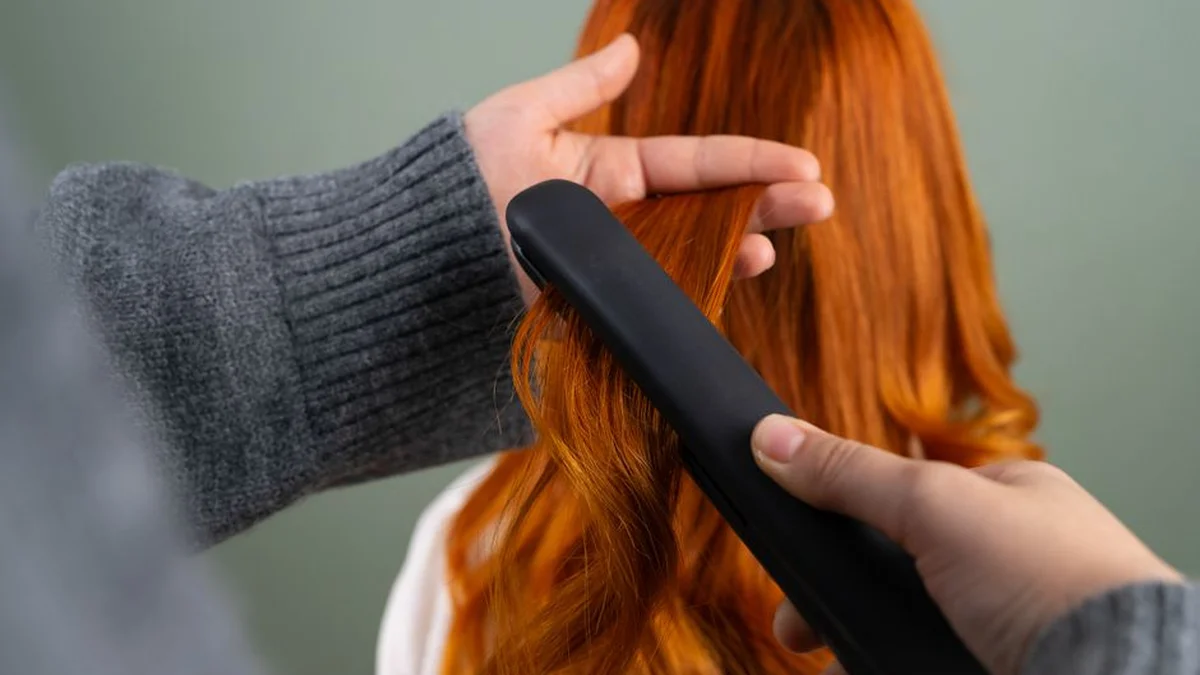
Rotate the iron a half turn so the hair wraps over the outside of the plate, then glide down the length while holding that rotation.
Two rules, and every failure comes from breaking one of them.
Never stop moving. If you pause, you get a crease. That is the only thing that causes a crease. People blame the tool and it is always the pause.
Keep the sections small. Too much hair slips out of the plates halfway down and you finish with a kink rather than a curl.
There is a genuine advantage here that gets overlooked. The plates smooth the hair while they curl it, so a flat-iron curl comes out glossier and frizzes less than the same curl from a wand. Heat is applied evenly to both sides of the section, which also tends to make the curl hold longer.
The trade-off hiding inside the versatility argument
Here is what nobody mentions when they tell you a straightener does everything.
Plate width pulls in two directions. Wide plates straighten long, thick hair quickly, because each pass covers more ground. Narrow plates curl far better, because you can rotate them without the section escaping.
So the tool that is best at straightening your hair may be clumsy at curling it, and vice versa. If curling matters to you, a one-inch plate is the compromise. If you have long thick hair and mainly straighten, get the wider plate and accept that curling will be fiddly.
That is the honest version of “a straightener does both”.
Clamp or no clamp, and why it matters more than you would think
A curling iron has a clamp. A wand does not. That sounds like a convenience difference and it is actually a damage difference.
A clamp applies pressure as well as heat. On thick or coarse hair that is fine and often helpful. On fine hair it is a problem: the clamp leaves a visible kink at the point where it gripped, and the compression is a second damage mechanism stacked on top of the heat.
A wand wraps the hair against the barrel with no compression at all. No clamp mark, and the curl tends to hold longer, apparently because the hair has not been squashed flat before being asked to hold a round shape.
The cost of a wand is that you hold the ends yourself. A heat-proof glove is not an accessory, it is required equipment. And the ends come out less defined, which is either the look you wanted or the thing you dislike about it.
So the fine-hair recommendation inverts the general advice. A clamp iron is easier to use, and a wand is gentler on fine hair. If your strands are fine and you curl often, the harder tool is the kinder one.
Barrel size, in millimetres as well as inches
Most of the advice online is written in inches and most tools sold here are labelled in millimetres, which makes the standard chart quietly useless to a British buyer. Both, then:
- 10mm (3/8″): tight spiral curls. Short, fine hair.
- 13mm (1/2″): ringlets on long hair, beach waves on short. Chin length, or naturally curly.
- 16mm (5/8″): tight curls. Medium to long.
- 19mm (3/4″): vintage, textured curls. Shoulder length.
- 25mm (1″): loose waves through to full curls. Works on everything. Buy this one if you are buying one.
- 32mm (1¼”): loose curls and waves. Suits most hair.
- 38mm (1½”): big, voluminous curls. Shoulder length and longer.
- 44mm (1¾”): big loose waves. Any length.
- 50mm (2″): relaxed waves and a blow-dry look. Medium to long, straighter hair.
The gaps between these are smaller than they look and the difference in result is not. A quarter of an inch, six millimetres, visibly changes the curl. If you are between two sizes, the smaller one gives you more options, because a tight curl can be brushed out into a wave and a loose wave cannot be tightened.
Which finish do you actually want?
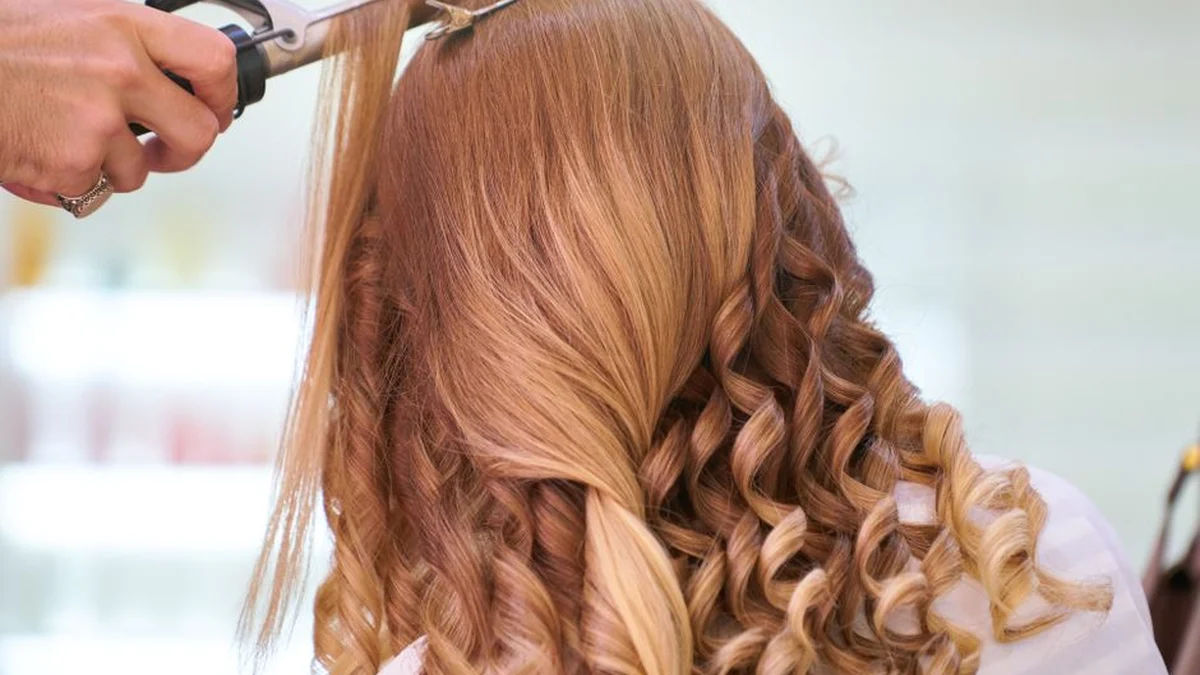
Curling iron with a clamp. Uniform, polished, structured. Defined ends. The look for an occasion, or for anyone who wants their curls to match each other.
Wand. Softer, looser, deliberately undone. Undefined ends. The look people mean when they say beachy.
Flat iron. Somewhere between the two, glossier than either, and the shape depends entirely on how fast you glide and how far you rotate.
None of these is better. They are three different results, and knowing which one you are chasing saves you buying the wrong tool twice.
The rules that apply to both
Everything in the hair styling tools guide applies here, and two points matter more when you are curling than when you are straightening.
Contact time. Curling means holding hair against hot metal for several seconds by definition. At 180°C the heat is through the cuticle in a second or two and into the cortex within five. Wrap, count to about five, release. Holding it for fifteen because you are not sure does real damage.
Temperature. Under 180°C. Above 200°C the damage stops being reversible. If your hair is coloured or bleached, drop it another twenty degrees, because treated hair takes thermal damage faster at the same setting, as the hair colour care guide explains.
Dry hair only. Water inside the strand boils under a hot plate and cracks the fibre from the inside. This applies to curling as much as straightening.
Protectant every time. It measurably reduces damage, and it does not license a higher setting. The detail is in heat protectant spray.
Let the curl cool before you touch it. The shape sets as it cools, exactly as it does with heatless curls. Drop each curl into your palm and hold it for a few seconds, or pin it up and release the lot at the end. This single habit is the difference between curls that last the evening and curls that drop in an hour.
Cheaper and gentler alternatives
If curls are the main event, two tools do it with less heat than either of these.
Hot rollers run at a lower temperature, and the hair cools in the shape rather than being dragged through a hot clamp. They also give root volume that no iron produces.
Heatless curls use no heat at all, and the set usually outlasts an iron because the bonds re-form slowly overnight.
And if you want texture rather than curl, a hair crimper is a different tool for a different job.
If your hair is naturally curly
Neither of these is your primary tool, and reaching for a straightener to control frizz is solving the wrong problem.
Frizz on curly hair is usually clumps that have come apart rather than strands that are rough, and heat does not stick clumps back together. Definition does, and the whole approach is in the guide to curly hair products.
A dryer with a diffuser is the heat tool worth owning for curls. The best blow dryer guide covers what to look for.
Finishing
Whichever tool you used, the last step is the same. A drop of anti-frizz serum warmed between the palms and smoothed over the surface, once the hair is completely cool. Not before, or you will drop the curl you just set.
The short version
Buying one? The straightener, because it does both jobs. Learn the twist, keep the sections small, and never stop moving.
Buying for curls specifically? A 25mm barrel covers almost everything. A clamp for polished, a wand for undone, and a wand if your hair is fine, because a clamp will kink it.
Whichever you use: dry hair, protectant, under 180°C, five seconds, and let it cool before you touch it.



Comments are closed