



Hot rollers went out of fashion around the same time as the fax machine, and for roughly the same reason: something newer arrived that seemed more convenient. Curling wands were faster to learn, took up less space, and didn’t require standing around with your head in a set of plastic cylinders.
What got lost in the switch was volume. A curling iron curls the length of the hair. Rollers set the hair from the root outwards, holding it away from the scalp while it cools — and that root lift is something no wand replicates. It’s the reason they’ve quietly come back, and the reason they earn their place among your hair styling tools.
Why they work differently
All heat styling relies on the same principle: break the hydrogen bonds inside the strand with heat or water, hold the hair in a new shape, let it cool, and the bonds reset in that shape.
The critical phase is the cooling, not the heating. With a curling iron, you heat a section and then release it warm — the shape sets while the hair is falling and being handled, which is why iron curls drop within hours.
With rollers, the hair cools completely while still wrapped, under tension, held away from the scalp. The bonds set in exactly the position you put them in. That’s why roller sets last longer and give more lift.
It also means rollers are gentler. The heat is lower, the exposure is shorter, and there’s no direct contact between hot metal and the hair shaft.
The types
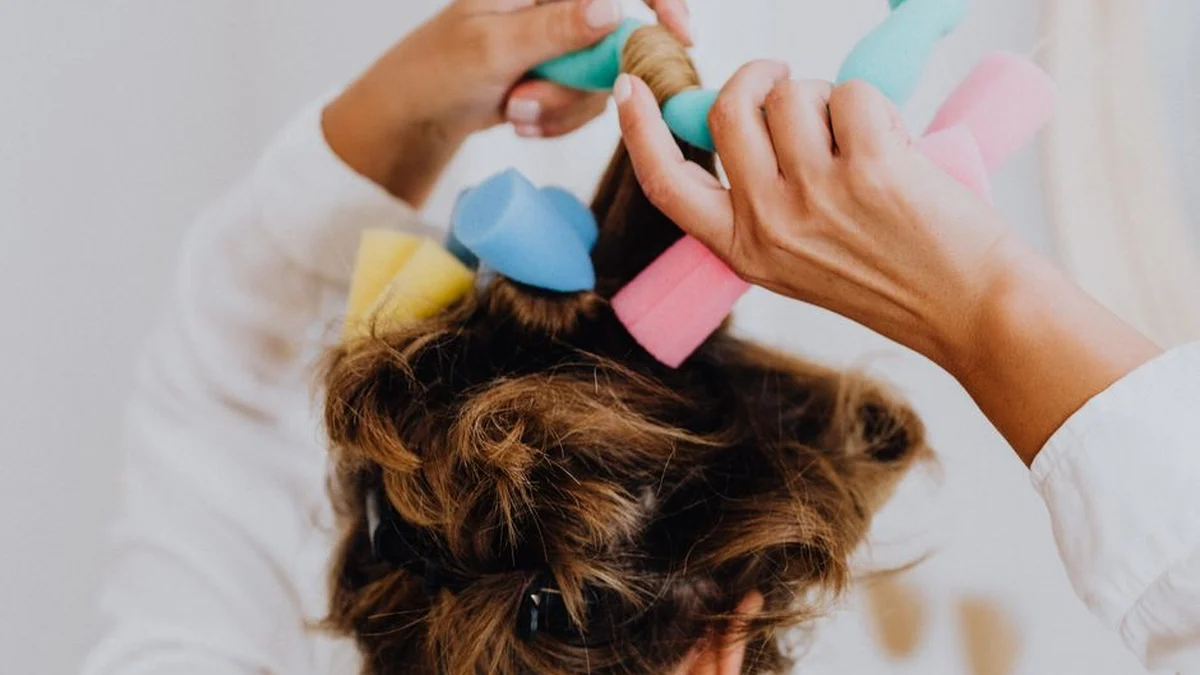
Ceramic rollers heat evenly, hold heat well, and are the best general option. Look for velvet-flocked ones, which grip hair without the snagging you get from bare plastic.
Wax-core rollers — the traditional kind — contain a wax that melts as it heats and releases heat slowly as it cools. They hold temperature longer than anything else, which gives a stronger set.
Steam rollers add moisture along with heat. Excellent for dry or coarse hair, and gentler than dry heat, though they take longer to set up.
Ionic rollers reduce frizz and static during the set. Useful for frizz-prone hair.
Sizes matter as much as type. Large rollers, 4cm and above, give volume and a soft bend rather than a curl. Medium, 2.5–3.5cm, give classic bouncy waves. Small, under 2.5cm, give defined curls. Most sets include a mix, and most people use the large ones far more than they expect.
Setting them properly
Start with completely dry hair. A light mist of setting spray or a texturising product helps the set hold, but the hair itself must be dry.
Heat the rollers while you section. Most sets take ten to fifteen minutes to come up to temperature.
Section width matters: take sections no wider than the roller itself, and no thicker than about a centimetre. Too much hair on a roller and the middle never heats through.
Comb the section smooth, hold it at a right angle to the scalp — straight out, not down — and roll from the ends towards the roots. That right angle is what creates root lift. Roll with the hair falling downwards and you’ll get curl but no volume, which is the mistake that makes people conclude rollers don’t work.
Secure with the clip or pin provided, sitting flat rather than digging in, which prevents dents.
Then leave them until they are completely, unambiguously cool. Fifteen to twenty minutes minimum. This is not the step to rush, and rushing it is why most home sets disappoint.
Taking them out
Start at the bottom and work upwards. Unroll rather than pulling — dragging a roller out of a set curl unravels the shape you just spent twenty minutes creating.
Let the curls sit for a few minutes before touching them.
Then shape with your fingers, or brush through gently with a soft bristle brush for a smoother, more classic look. Brushing loosens the curl into a wave, which is usually what people want.
Finish with a light hairspray, held at a distance. Heavy spraying flattens the volume you just built.
What they’re best at
Volume on fine hair. The single best use. Fine hair holds a roller set far better than it holds an iron curl.
Blow-dry style bounce. Large rollers on smooth hair give the salon-blow-dry look without a round brush and thirty minutes of arm ache.
Getting ready while doing something else. Rollers in, make breakfast, rollers out. Twenty minutes of the process is entirely hands-free, which is not true of any iron.
Reducing heat exposure. Lower temperature, shorter contact, no plates. If you’re trying to cut down on heat damage but still want shape, this is the compromise that works.
What they’re not good at
Tight, defined ringlets — a small-barrel wand does that better.
Very short hair, which doesn’t wrap around a roller enough times to set.
Speed, if you count the heating time. The active time is short; the total time isn’t.
Common problems
The curl drops immediately. The rollers came out warm. They must be completely cool.
Dents and creases. The clip was digging into the hair. Reposition so it sits flat, or use pins instead.
No volume, only curl. The sections weren’t held at a right angle to the scalp when rolling.
Uneven results. Sections were different sizes. Consistency matters more than precision.
Making it last
A roller set typically holds for two days on most hair, longer on hair that isn’t freshly washed. Day-old hair sets better than clean hair, which has less grip.
Sleep on a silk pillowcase with the hair loosely gathered on top of your head and you’ll wake up with most of it intact.
For anyone whose hair has been through years of daily straightening, swapping two of those days for a roller set is one of the easier reductions in heat exposure to make — and the piece on heat protectant spray covers what to do on the days you do still reach for an iron.
If it’s texture rather than volume you’re after, a hair crimper or waver does a different job. And if you’re weighing up which single tool to own, the flat iron vs curling iron comparison is the place to start — rollers are usually a second purchase, bought once you know what your styling routine is actually missing.





Comments are closed