



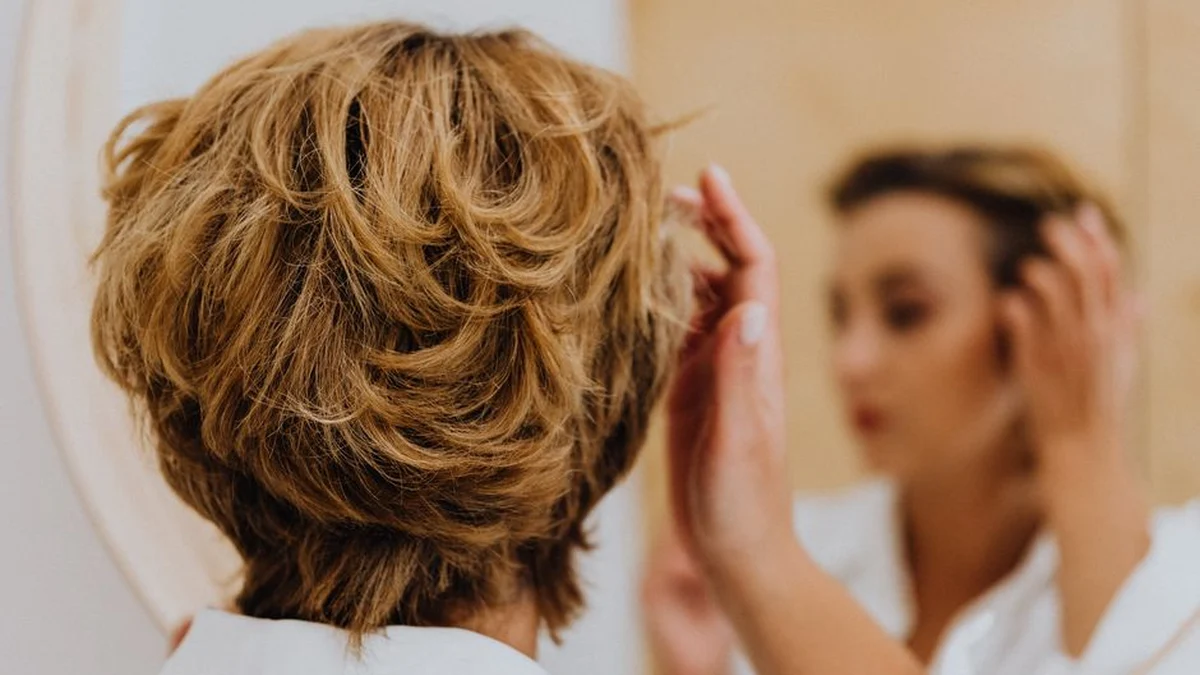
The experience women describe most often isn’t the hair loss itself. It’s the appointment. You go to the GP, you say your hair is falling out, and you’re told it’s probably stress, or hormones, or just one of those things — and you leave with no tests and no plan.
That happens a lot, and it shouldn’t, because female hair loss frequently has an identifiable and treatable cause. This article is partly about the causes and treatments, and partly about how to have that conversation more productively.
Why it’s different in women
Male pattern hair loss follows a recognisable map — temples, then crown. Female pattern loss is diffuse: the parting widens, overall density drops, and the hairline usually stays intact. It’s less visible to other people and often more distressing because of that, since the person experiencing it can see it long before anyone else can.
Women also have a wider range of causes. Hormonal fluctuations around pregnancy, postpartum, contraception changes and menopause all affect hair. Iron deficiency is far more common in menstruating women. Thyroid conditions are several times more common in women than men. And the treatments licensed for men are largely not available to women.
The main causes
Female pattern hair loss (androgenetic alopecia). Gradual widening of the parting and diffuse thinning at the crown. Genetic and hormone-related. Often becomes noticeable around menopause. The most common cause overall.
Telogen effluvium. Sudden, dramatic shedding across the whole head, typically two to three months after a trigger — childbirth, illness, surgery, severe stress, rapid weight loss, or stopping hormonal contraception. Frightening to experience, and usually self-limiting: shedding stops within six to nine months of the trigger resolving.
Postpartum shedding is a specific and extremely common version of this. It peaks around three to four months after birth and generally resolves by twelve months. It is normal, though nobody warns you about it.
Iron deficiency. Very common, easily tested, easily treated, and routinely missed.
Thyroid dysfunction. Both under- and overactive thyroid cause hair loss.
PCOS and other hormonal conditions. Often alongside irregular periods, acne or unwanted facial hair.
Alopecia areata. Distinct round patches. Autoimmune. Needs a GP.
Traction alopecia. From tight styles, weaves and extensions. Reversible early; permanent once the follicle scars. Relevant to anyone regularly wearing hair extensions and wigs.
Medication side effects. Including some contraceptives, antidepressants, beta blockers and blood thinners. Worth reviewing with a GP rather than stopping anything yourself.
The blood tests to ask for
Go in with a list. It changes the conversation.
Ferritin — iron stores. Ask for the actual number, not just whether it’s flagged. Many labs mark anything above roughly 15 µg/L as normal, but dermatological practice often looks for considerably higher levels — figures around 30 to 70 µg/L are commonly cited as the threshold for supporting hair growth. A “normal” 18 may still be part of your problem.
Full blood count — anaemia.
Thyroid function (TSH, and ideally free T4).
Vitamin D — widespread deficiency in the UK, particularly in winter and in people with darker skin.
Vitamin B12.
Hormonal tests if you have irregular periods or other symptoms suggesting PCOS.
These are standard tests. Asking for them by name, and explaining that hair loss is a recognised symptom of each, tends to produce a different response than “my hair is falling out”.
Treatments with evidence
Minoxidil
The best-evidenced topical option and available over the counter in the UK. Formulations for women are typically 2%, though 5% foam is also used.
Expect increased shedding in the first four to eight weeks — this is normal and is the point at which most people stop. Give it six months before judging. It must be continued indefinitely; stopping reverses the gains.
Not for use in pregnancy or while breastfeeding.
Spironolactone
Prescribed off-label for female pattern hair loss. It blocks androgen effects at the follicle. Requires a prescription, monitoring, and effective contraception, as it can cause harm in pregnancy.
Treating the underlying cause
Correcting iron deficiency, treating a thyroid condition, or managing PCOS often resolves the hair loss without anything topical at all. This is why diagnosis matters more than product choice.
Low-level laser therapy
Modest evidence, slow, expensive. A reasonable adjunct rather than a primary treatment.
Microneedling
Some evidence that it improves minoxidil’s effectiveness when combined. Best done in a clinical setting.
What doesn’t have strong evidence
Biotin supplements, unless you’re actually deficient — which is rare. Worth reading the safety note in hair growth supplements, because biotin interferes with several common blood tests including thyroid tests.
Most “hair growth” shampoos, which are in contact with the scalp for two minutes and then rinsed off.
Collagen supplements, for hair specifically.
Expensive serums with proprietary blends and no published trials. The realistic view is in hair regrowth serum.
Getting taken seriously
A few things that help.
Take photos over time — same lighting, same parting, monthly. Objective evidence changes a conversation considerably.
Note when it started and what happened two to three months before that. Telogen effluvium has a delay built in, so the trigger is usually the thing that happened the season before.
Collect the shed hair for a day if you can and describe the volume. “About this much, daily, for four months” is more useful than “a lot”.
Ask directly for the blood tests by name.
Ask for a dermatology referral if there’s no clear cause. In the UK, waiting lists are long, so ask early rather than after six months of trying things.
And if you’re dismissed without tests, it is reasonable to ask to see a different GP. This is a recognised medical symptom, not a cosmetic complaint.
While you’re waiting
Treatment takes months to show. Meanwhile, cosmetic options help a great deal with how you feel day to day, and there’s no reason to wait — scalp-concealing fibres, root sprays and volumising products are covered in hair thickening products.
Look after the scalp with a sensible scalp care routine. Stop tight styles. Reduce heat. Handle wet hair gently.
And be honest with yourself about the emotional side. Hair loss affects self-esteem, mood and confidence substantially, and that’s a normal response rather than vanity. If it’s affecting your daily life, that’s worth mentioning to your GP too — it’s part of the clinical picture.
See a GP sooner rather than later if
The loss is sudden or rapid. There are distinct patches. There’s pain, burning, itching, redness or scaling. There are other symptoms — fatigue, weight change, irregular periods, changes to skin or nails. Or it’s been getting worse for more than three months.
Scarring alopecias are time-critical, because lost follicles don’t return. Early assessment protects what’s still there.
This article is general information, not medical advice. Hair loss in women is frequently a symptom of a treatable underlying condition. Please see a GP for proper diagnosis, and discuss any prescription treatment with a qualified prescriber — particularly if you are pregnant, breastfeeding, or planning a pregnancy.







Comments are closed