



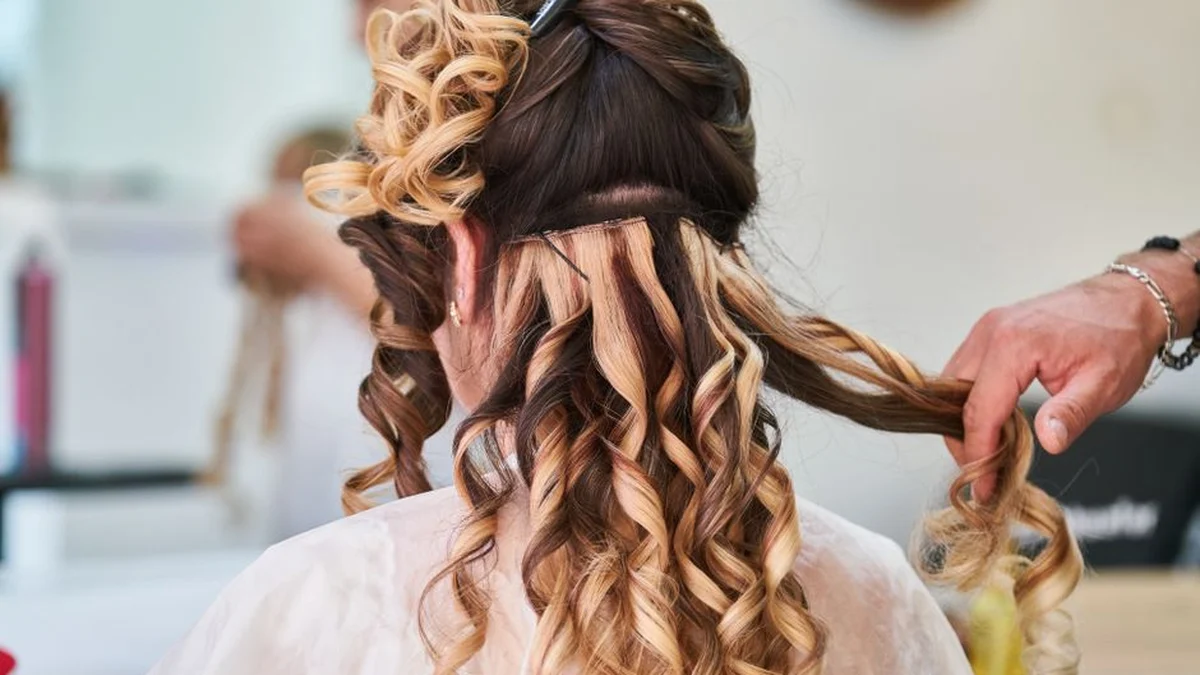
Extensions have a reputation problem in Britain, and it comes from a specific era — the mid-2000s, when badly applied bonded extensions left a generation of people with visibly damaged hair and thinning temples.
The methods have improved considerably since. The risks haven’t disappeared, and the single most important thing on this page is the section on traction alopecia, which is permanent if you ignore it.
Used properly, though, extensions and wigs solve problems nothing else does: length that your hair won’t grow to, density that genetics didn’t give you, and — for people dealing with hair loss — the option of looking exactly how you want to while you deal with the underlying issue.
The methods, honestly compared
Clip-ins
Wefts with small pressure clips, applied and removed daily. Zero commitment, zero chemical process.
Cost: £40–£300 depending on hair quality.
Wear: a few hours at a time.
Damage risk: lowest of all methods, provided you don’t clip the same spot every day.
Best for: occasional use, events, anyone testing whether they like extensions at all.
The full detail is in clip in hair extensions.
Tape-ins
Thin wefts sandwiched either side of a section of your own hair with medical-grade adhesive tape. Sit flat, feel comfortable, and are relatively quick to apply.
Cost: £250–£600 fitted.
Wear: 6–8 weeks, then repositioned.
Damage risk: low to moderate, mostly at removal if done badly.
Best for: fine hair, where bulkier methods show. Covered in tape in hair extensions.
Micro-rings and nano-rings
Individual strands attached with small metal rings clamped onto sections of your own hair. No heat, no glue.
Cost: £300–£800.
Wear: 3–4 months with maintenance every 8–10 weeks.
Damage risk: moderate. Rings clamped too tightly cause breakage and tension.
Keratin bonds (fusion)
Strands attached with keratin adhesive melted with heat. Long-lasting and natural-looking when done well.
Cost: £400–£1,000.
Wear: 3–5 months.
Damage risk: higher. Heat and adhesive, and removal requires a solvent.
Weaves and sew-ins
Hair braided into cornrows, wefts sewn onto the braids. Long-established, particularly in Afro-textured hair care.
Wear: 6–8 weeks.
Damage risk: depends almost entirely on braid tension. Too tight is the leading cause of traction alopecia.
Halo extensions
A single weft on an invisible wire that sits on the head like a headband. No attachment to your hair at all.
Damage risk: essentially zero.
Best for: anyone with fragile hair, or anyone recovering from previous extension damage.
Wigs and toppers
Full wigs replace all your hair; toppers cover the crown and parting while your own hair shows underneath.
Toppers in particular are under-considered. For diffuse thinning at the parting — the most common presentation of female hair loss — a topper is often a better and cheaper answer than any extension method.
The types are compared in human hair vs synthetic wigs, and application in lace front wigs.

Traction alopecia — read this part
This is the risk that matters, and it’s the one salons underplay.
Traction alopecia is hair loss caused by sustained tension on the follicle. Constant pulling inflames the follicle, and over months to years it scars. Once scarred, the hair does not come back. No treatment reverses it.
Early warning signs: tenderness or headache after fitting; small bumps or pustules around the attachment points; thinning at the hairline, temples or wherever the weight sits; short broken hairs around the front; and visible widening of the parting.
If your extensions hurt, they are too tight. Not “settling in”. Too tight. Go back and have them loosened or removed. Pain is not part of a correct fitting, and the industry’s normalisation of it has cost a great many people their hairlines.
Prevention: take breaks of at least six to eight weeks between installations. Don’t go straight from one set to the next indefinitely. Avoid heavy extensions on fine hair. Never sleep in tight styles. And take them out at the first sign of tenderness.
If you’re already experiencing thinning, get the cause assessed before adding tension to it — the hair loss treatment for women guide covers the diagnostic route.
Choosing hair quality
Remy human hair has all cuticles aligned in the same direction, so it tangles far less and lasts much longer. This is what you want, and it’s the main thing worth paying for.
Non-Remy human hair has been collected with cuticles in mixed directions, then usually acid-stripped and silicone-coated. It looks good initially and then mats. Cheaper for a reason.
Synthetic holds a style permanently, costs far less, and can’t usually be heat-styled or recoloured. Modern heat-resistant synthetics have narrowed the gap considerably.
Ethical sourcing is worth asking about. The human hair supply chain is opaque, and the honest answer is that most retailers cannot tell you with certainty where their hair came from. Suppliers who can document sourcing charge more, and that’s the trade-off.
Matching and blending
Match in daylight, never in a shop’s lighting. Match to your mid-lengths and ends rather than your roots, since that’s where the extensions will sit.
Most extensions look obvious because of the cut, not the colour. Unblended extensions have blunt ends and no layers — always get them cut in by a stylist once fitted. This single step does more for a natural result than anything else.
A slight colour blend, with a couple of lighter pieces, reads more naturally than a single flat shade.
Caring for them
Sulphate-free shampoo, always. Extension hair has no oil supply of its own, so it dries out faster than your own hair and can’t repair itself.
Wash gently, downwards, without piling hair on top of your head.
Never sleep with wet extensions. Plait loosely before bed.
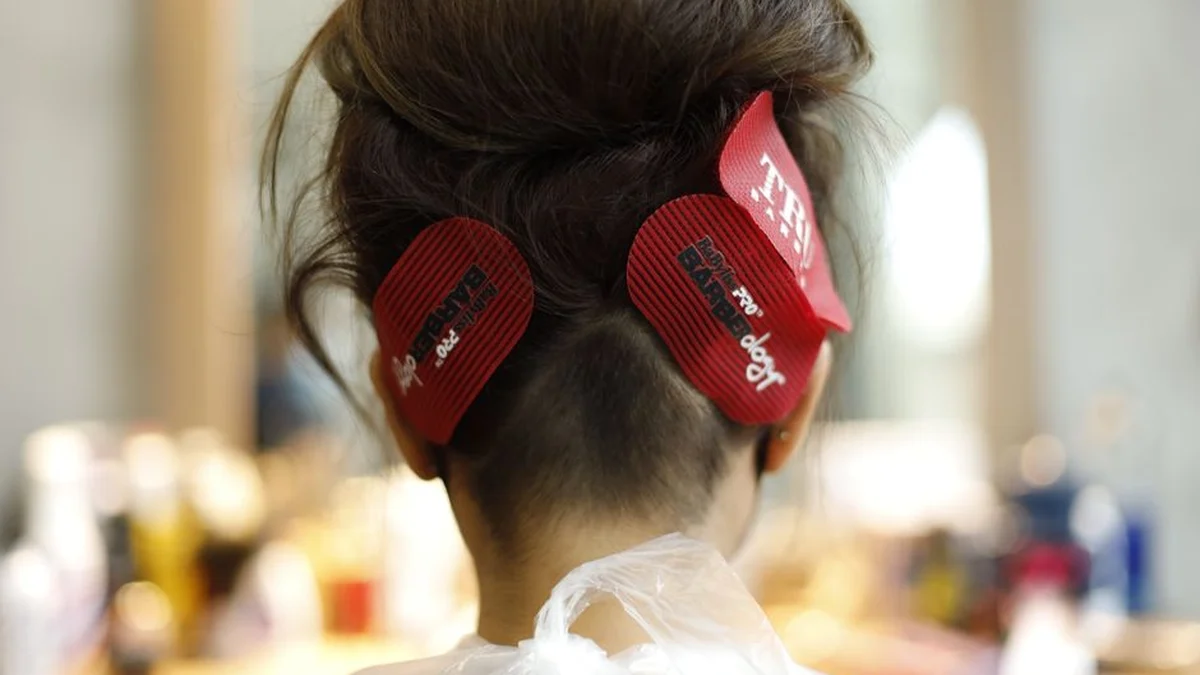
Detangle daily with a loop brush, starting at the ends.
Keep heat low and always use a heat protectant spray — extension hair is more fragile than your own.
Keep oils and conditioners away from the attachment points, which loosens bonds and tape.
Wig-specific care is covered in wig care, and it’s different enough to be worth reading separately.
Who each option suits
Occasional length for events: clip-ins or a halo.
Fine hair wanting permanent length: tape-ins or nano-rings.
Thick hair wanting significant length: keratin bonds or micro-rings.
Thinning at the parting: a topper, not extensions.
Medical hair loss: wigs or toppers — extensions need existing hair to attach to, and adding tension to compromised hair is the wrong move.
Previous extension damage: halo or clip-ins only, and take a proper break.
Questions to ask before booking
Is my hair strong enough for this method? A good technician will say no when the answer is no.
What’s the removal process and cost?
What happens if I have a reaction or they feel too tight?
Can I see photos of your work on hair like mine?
Where does the hair come from?
And if a salon is dismissive about any of that, particularly the tension question, go somewhere else. There are plenty of technicians who take it seriously.







Comments are closed