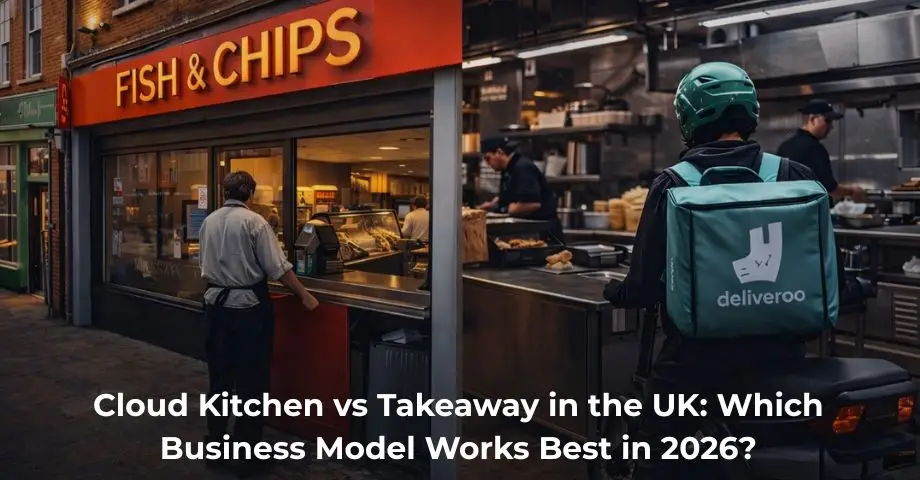
If you’ve wandered down a British high street recently, you’ll have noticed something slightly odd.
Some of the old fixtures are still there — the fish and chip shop that’s been dishing up battered cod since before the internet was a thing, the curry house where the owner knows your order better than you do. But alongside them sits a new kind of food business: brands you’ve probably never seen in real life, yet somehow recognise instantly from your phone.
Ten or fifteen years ago, starting a food business in the UK followed a fairly predictable script. You found a shop, signed a lease that made your stomach flip, spent a small fortune fitting out a kitchen, and crossed your fingers that enough locals fancied your food.
That path hasn’t disappeared. But it no longer tells the whole story.
Rents have climbed across most UK towns and cities. Energy bills have made more than a few business owners wince. Hiring reliable staff can feel like trying to book a decent builder in August — possible, but rarely straightforward.
At the same time, delivery platforms have gone from “nice extra” to “absolute necessity.” Deliveroo, Uber Eats, and Just Eat didn’t just enter the market — they reshaped it. Food delivery in the UK is now a multi-billion-pound industry, with millions of households ordering at least once a week. That isn’t just an impressive number; it’s a signal that how we eat has genuinely changed.
This is the backdrop to the cloud kitchen vs takeaway in the UK debate.
It isn’t a flashy trend or a bit of consultant jargon. It’s a real, practical question for anyone thinking about entering the food industry today: Which model actually works in Britain right now?
Whether you’re starting from scratch, or you already run a takeaway and are wondering if you should pivot, this decision matters more than ever. The question is no longer, “Should I open a food business?” but rather, “Which model suits me, my budget, and my tolerance for risk?”
How Britain’s Eating Habits Shifted (Without Many of Us Noticing)
Not that long ago, takeaway was a Friday-night treat — maybe a kebab after a few pints, or a curry when you couldn’t be bothered to cook.
Now? It’s just another Tuesday.
Hybrid working means more people are at home. Fuel costs are up. Public transport isn’t cheap. And frankly, sometimes it’s easier to tap a few buttons on your phone than to get dressed, drive somewhere, and stand in a queue.
Two big changes came from this shift.
First, location stopped being everything.
You used to need a prime high-street spot to survive. If people couldn’t see you, you didn’t exist. Now, a kitchen tucked away on an industrial estate can be doing hundreds of orders a night if it performs well on delivery platforms. Meanwhile, a beautifully designed takeaway on a quiet street can struggle if it doesn’t show up prominently in the apps.
In plain English: your shop window matters less than your position in a digital menu.
Second, convenience started to beat loyalty.
Years ago, most people had “their” local takeaway. They stuck with it. These days, many customers will switch based on delivery time, discounts, ratings, or free delivery offers. Loyalty hasn’t vanished, but it’s definitely more fragile.
These shifts created space for a new type of business: the delivery-only kitchen, often called a dark kitchen UK or virtual restaurant UK.
What a Cloud Kitchen Actually Is

Image source: pinterest.com
A cloud kitchen is, at its core, a restaurant without a restaurant.
No dining room. No tables. Usually no walk-in counter. In many cases, you could walk past the building every day and have no idea it exists.
Instead, orders come in digitally via third-party platforms, food is prepared in a commercial kitchen, and delivery riders collect and drop it off.
In the UK, cloud kitchens typically operate from:
- Shared commercial kitchen hubs
- Industrial estates
- Converted warehouses
- Purpose-built delivery centres
Some operators run a single brand. Others run multiple virtual brands from the same kitchen — perhaps a burger brand, a curry brand, and a dessert brand, all listed separately on the apps. To the customer, they look like different restaurants. In reality, they’re often coming from the same kitchen.
On paper, the cloud kitchen business model looks appealing. Lower rent than a high-street shop. No front-of-house staff. No dining area to maintain. No fancy décor. You can focus almost entirely on cooking, speed, and efficiency.
But — and there’s always a “but” in business — the trade-off is platform dependency. Your visibility, pricing, and sometimes even your success are shaped by algorithms you don’t control. One week your phone is pinging non-stop. The next, a small ranking change and it goes suspiciously quiet. That uncertainty is the price many cloud kitchen owners pay.
What a Takeaway Still Means in the UK

Image source: pinterest.com
If cloud kitchens are the new kids on the block, takeaways are the old guard — and they’re not going anywhere.
A takeaway is what most of us grew up with: a physical shop, a counter where you can walk in, and that familiar smell of chips or curry drifting onto the pavement. Many takeaways now offer delivery, but delivery is an add-on, not the foundation of the business.
Typical UK takeaways include fish and chip shops, Indian and Bangladeshi takeaways, pizza and kebab shops, and Chinese or Thai takeaways.
Unlike cloud kitchens, takeaways rely heavily on location, footfall, and local reputation. This local loyalty is clear in guides like the Top 5 Briton Ferry Chinese Takeaways, where repeat walk-in and community business often outweigh online orders in long-standing shops.
And despite rising costs, they still make sense for three very practical reasons.
First, walk-in customers are gold. Every person who collects their food in person saves the business a chunk of delivery commission. Over a year, that difference can be huge.
Second, local reputation builds resilience. A takeaway that’s been in the same neighbourhood for years can survive slow periods that might sink a brand-new cloud kitchen.
Third, trust works differently offline. If your local chippy gets your order slightly wrong once, you’ll probably let it slide. If a random virtual brand does it, you might just leave a bad review and move on.
That said, modern takeaways aren’t purely old-school anymore. Many now rely heavily on delivery platforms too, which blurs the line between traditional and digital business models.
Startup Costs: Where the Two Models Really Diverge
This is where the debate gets serious.
Cloud Kitchen Setup Cost UK — The Reality
A cloud kitchen setup cost UK typically includes:
- Kitchen rental or shared space fees
- Cooking equipment and storage
- Packaging and branding
- Photography and onboarding for delivery platforms
Because these kitchens are usually off the high street, rent is significantly lower than a traditional takeaway. For first-time founders testing an idea, this lower barrier to entry can make sense. You can experiment without risking your life savings.
But here’s the crucial point: lower startup cost does not mean lower risk. It simply means the risk appears later — mainly in platform dependency and variable costs.
Cost to Start a Takeaway UK — The Traditional Route
The cost to start a takeaway UK is usually much higher because you need a visible, customer-facing premises from day one.
Common costs include:
- Rent deposits and advance payments
- Shop refurbishment and ventilation systems
- Signage and compliance upgrades
- Business rates and utilities
In busy areas, suitable takeaway units can be scarce, pushing prices up even further. It’s expensive, no question — but a physical shopfront becomes part of your brand and your long-term asset, not just a monthly bill.
Running Costs and Profit Margins: Where the Myths Fall Apart
Startup costs get all the attention, but they’re a one-off. What decides survival is what happens month after month.
Cloud Kitchen Profit Margin UK — Looks Great on Paper
Cloud kitchens generally have lower fixed property costs but higher variable costs. Ongoing pressures include:
- Delivery platform commissions (often 20–35%)
- Paid promotions to stay visible
- Packaging expenses
- Reliance on consistent high order volume
When orders are flowing, margins can look fantastic. When things slow down, they can shrink alarmingly fast. The worst part? Many of these factors are outside your control. A small algorithm change, more competition, or a shift in customer behaviour can hit your revenue almost overnight.
In simple terms: cloud kitchens reward scale but punish inconsistency.
Takeaway Profit Margin UK — Steadier, Not Flashy
Takeaways face higher fixed costs — rent, energy, and staff wages — that must be paid whether you’re busy or not. But they also benefit from walk-in and collection customers, direct phone orders, and repeat local business.
Every collected order avoids platform fees, giving takeaways a cushion that cloud kitchens rarely have. Profits may grow slower, but they’re often steadier and more predictable.
Who Really Owns the Customer?
This is one of the most important differences — and it’s often overlooked.
Cloud kitchens operate inside ecosystems controlled by third-party platforms. That means limited access to customer data, dependence on platform rules and fees, and greater difficulty building long-term brand loyalty. A cloud kitchen can be busy and still feel fragile because it doesn’t fully control its own demand.
Takeaways, by contrast, keep more control over their customers through name recognition, direct ordering habits, and word-of-mouth reputation. That local control creates resilience that’s much harder to replicate in a delivery-only model.
Risk: The Real Difference Between the Two Models
The core difference isn’t simply “online versus offline.” It’s about where the risk sits.
- Cloud kitchens: lower property risk, higher platform risk
- Takeaways: higher fixed costs, but diversified revenue sources
Neither model is inherently better. Both can fail. Both can succeed. The difference lies in how well the model fits the person running it.
Compliance and Licensing in the UK (The Bit You Can’t Ignore)
UK food law doesn’t care whether you run a cloud kitchen or a takeaway. To the council, you’re just another food business that must meet the same standards.
Every food business must comply with:
- Local council food business registration
- Food Standards Agency (FSA) hygiene inspections
- Allergen labelling requirements
- Health and safety regulations
Cloud kitchens in shared premises often face extra scrutiny around responsibility, food safety systems, and shared space compliance. Getting this wrong can lead to enforcement action quickly — so compliance isn’t just paperwork, it’s survival.
Which Model Suits Different People?
For First-Time Entrepreneurs
If your capital is limited and you’re comfortable with digital-first operations, a cloud kitchen can be a sensible entry point — but only if you’re prepared for platform dependency, constant performance monitoring, and fluctuating demand.
If that sounds exhausting, a takeaway might actually suit you better, even if it costs more to start. A takeaway gives you something tangible: a real place, real customers, and more control over your destiny.
For Immigrants and Family-Run Businesses
In many cases, takeaways align better with immigrant entrepreneurs and family-led businesses in the UK. Family members can share the workload, local communities often support longstanding businesses, and collection orders provide more stable revenue than app-only sales.
Cloud kitchens can still work, but they require stronger digital skills, marketing knowledge, and comfort with technology-driven operations.
For Experienced Operators or Investors
If you already understand food costs, marketing, and logistics, cloud kitchens can be a smart, scalable option. Running multiple virtual brands from one kitchen can be highly profitable — if done properly.
Takeaways, on the other hand, reward patience and long-term commitment. They may not grow as fast, but they often last longer.
The real mistake isn’t choosing cloud kitchen or takeaway. The mistake is choosing a model that doesn’t match your skills, personality, or expectations.
The Question Most People Ask Too Late
Most aspiring food entrepreneurs ask the wrong question at the start.
They ask:
“Which is more profitable in the UK — a cloud kitchen or a takeaway?”
A better question is:
“Where do I want my risk to sit?”
Do you want your risk tied to rent, business rates, and fixed costs? Or to delivery platforms, algorithms, and visibility?
Cloud kitchens concentrate risk in volume and app performance. Takeaways spread risk across property, reputation, and community. Neither removes risk — they simply move it around.
So… Which Actually Works Better in the UK Today?
The cloud kitchen vs takeaway in the UK debate is often framed as new versus old, modern versus traditional. That framing misses the point.
Both models exist because Britain’s food economy has become more complex, not simpler. Rising costs, changing habits, and fierce competition mean there is no “safe” option anymore.
What works better depends on you.
If you have limited capital, are tech-savvy, and don’t mind living and dying by the apps, a cloud kitchen can make sense.
If you value stability, local relationships, and long-term presence, a takeaway is often the stronger choice.
Cloud kitchens reward speed, efficiency, and constant adjustment.
Takeaways reward consistency, trust, and community.
Choosing wisely means understanding yourself as much as understanding the market.
FAQs — Cloud Kitchens vs Takeaways in the UK
Q1. Is a cloud kitchen cheaper than a takeaway in the UK?
Usually yes at the start, but ongoing delivery platform costs can make it more expensive over time.
Q2. Are cloud kitchens legal in the UK?
Yes — as long as they are registered with the local council and meet Food Standards Agency requirements.
Q3. Which model is safer for beginners?
Neither is “safe” — cloud kitchens suit digital-first operators, while takeaways suit those who prefer stability.
Q4. Can a takeaway use delivery apps successfully?
Yes. Many do, and often more sustainably than delivery-only businesses.
Q5. Why do cloud kitchens fail in the UK?
Mostly due to platform dependency, rising commissions, and lack of brand loyalty.
Q6. Why do some takeaways struggle despite high demand?
High fixed costs — rent, energy, and staffing — can squeeze profits even when sales are strong.
Q7. What is the biggest risk of running a cloud kitchen in the UK?
Not owning the customer relationship — platforms control visibility and demand.
Q8. What licences do I need for a takeaway in the UK?
Food business registration, FSA compliance, and local council inspections.
Q9. How much does it cost to start a cloud kitchen in the UK?
Typically lower than a takeaway — but costs vary depending on location, equipment, and platform fees.
Q10. What is a dark kitchen UK?
A delivery-only kitchen with no customer-facing premises.
Q11. What is a virtual restaurant UK?
A brand that exists mainly on delivery apps, often operating from a shared kitchen.
Q12. Ultimately, which model works better in the UK today?
Neither universally — the right choice depends on your budget, skills, and risk tolerance.