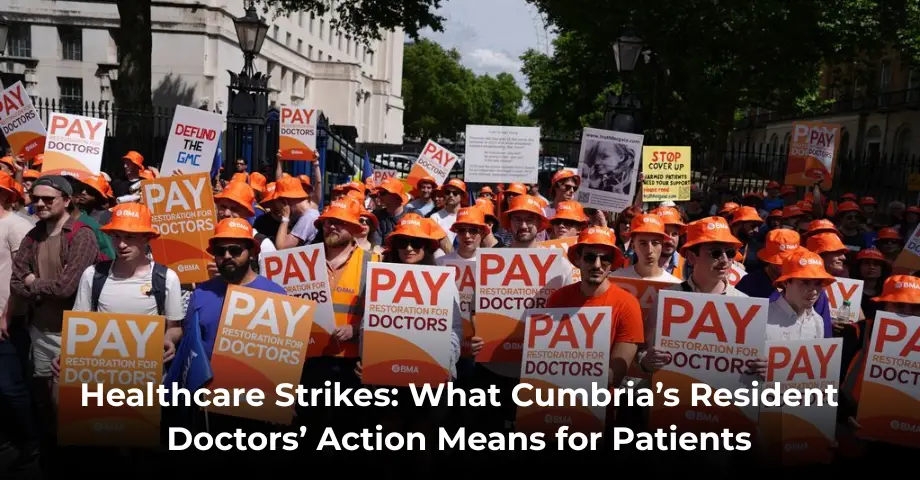
It’s the kind of December week many people in Cumbria already approach with a bit of caution. Winter bugs are doing the rounds, hospital appointments feel harder to come by, and A&E waiting rooms are rarely quiet for long. Against that backdrop, resident doctors across the county have now begun five days of industrial action — a move that NHS leaders warn will bring noticeable disruption for patients.
If you’re trying to make sense of what’s happening, why it’s happening, and how it might affect you or someone you care for, you’re certainly not alone. Here’s what we know, what’s uncertain, and what health officials are asking the public to keep in mind.
When is the strike happening?

Image source: pinterest.com
According to the British Medical Association (BMA), the industrial action began at 7am on Wednesday 17 December 2025 and is scheduled to run until 7am on Monday 22 December 2025.
This resident doctors strike UK-wide is taking place across NHS hospitals in England, including several key sites in Cumbria. Local NHS organisations have confirmed they are operating under special contingency plans for the duration of the strike.
While emergency services will remain open throughout, health leaders have been clear that routine services are likely to be affected.
Which hospitals in Cumbria are affected?
The strike involves resident doctors — formerly known as junior doctors — working in NHS hospitals across Cumbria. This includes hospitals run by North Cumbria Integrated Care NHS Foundation Trust, such as:
-
West Cumberland Hospital in Whitehaven
-
Cumberland Infirmary in Carlisle
Resident doctors make up a substantial part of the hospital workforce. They are often the clinicians patients see first on wards, in emergency departments, and during overnight shifts. When they withdraw their labour, even with emergency cover in place, the impact can be felt quickly.
This is why NHS leaders are warning of disruption, rather than pretending services will continue as normal.
Why are resident doctors taking industrial action?
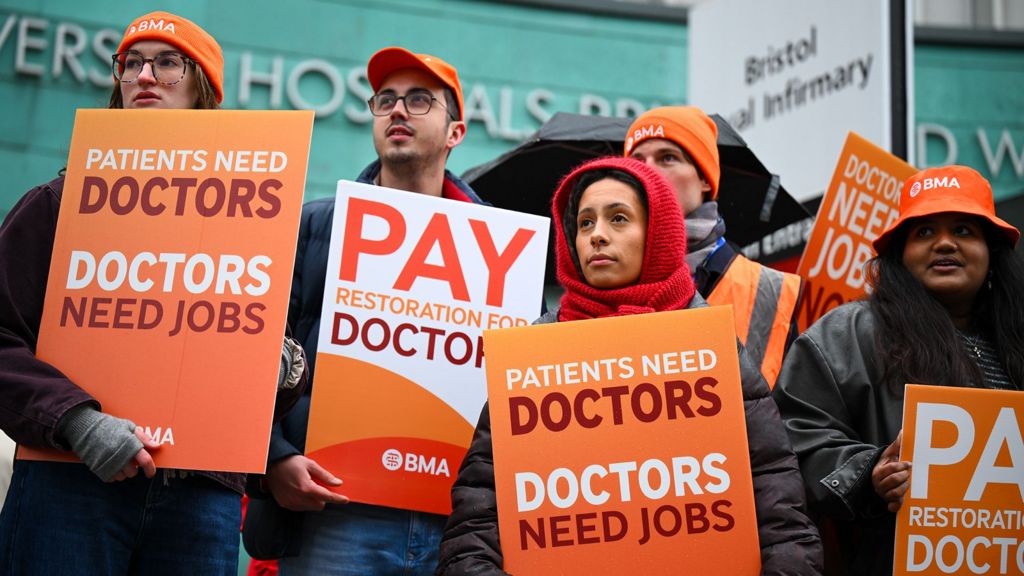
Image source: bbc.com
Let’s be honest — doctors don’t strike on a whim. Many of them are acutely uncomfortable about the effect industrial action can have on patients, particularly during winter.
The BMA, which is organising this resident doctor industrial action, says the dispute centres on pay, training opportunities, and working conditions.
According to statements from the BMA, resident doctors’ pay has been eroded in real terms over a number of years. While the government has pointed to previous pay awards, the union argues these have not kept pace with inflation or the rising cost of living.
Earlier this month, the government offered more specialist training posts and changes to career pathways. However, there was no additional pay increase included for this year, which proved to be the key sticking point.
In a ballot announced by the BMA on 15 December, the union said around 83 per cent of voting members supported continuing strike action after rejecting the offer.
As reported in national media coverage, many doctors feel that while expanded training places sound positive, they don’t address the immediate financial pressures that are pushing some colleagues to leave the NHS altogether.
How will this NHS strike affect patients?
This is the question most people are asking — and understandably so.
Local NHS leaders in Cumbria have stressed that urgent and life-threatening care will continue throughout the strike. Senior doctors are covering emergency services, and hospitals are prioritising the most serious cases.
That said, the NHS hospital disruption strike is expected to cause:
-
Delays to some non-urgent appointments and procedures
-
Longer waiting times in emergency departments and urgent care
-
Reduced capacity for routine services, as staff are redeployed to protect critical care
If you have a hospital appointment during the strike period, the advice from NHS trusts is clear: continue to attend unless you are contacted directly to say otherwise. Not all services are being cancelled, and hospitals are keen to avoid unnecessary missed appointments.
Still, it’s fair to say that for patients waiting longer than usual — especially those who are already unwell — the experience may feel frustrating and worrying.
Winter pressures add another layer of strain
Now here’s where things get particularly complicated.
This NHS strike in Cumbria is happening at a time of high winter pressure. NHS bodies across the North West have reported rising flu cases and increased circulation of respiratory viruses, alongside the usual seasonal surge in demand.
Even without industrial action, winter is one of the toughest periods for hospitals. Beds fill quickly, staff sickness increases, and patient flow becomes harder to manage.
NHS leaders have acknowledged that the timing of the strike makes planning more difficult. With fewer resident doctors on shift and demand already high, hospitals have less flexibility to absorb pressure.
For patients — particularly older residents or those with long-term conditions — that reality can feel unsettling. It’s okay to admit that this isn’t an easy situation for anyone involved.
What are patients being asked to do?
Health officials in Cumbria and across the wider region are asking the public for cooperation during the strike period.
According to local NHS guidance, patients are being asked to:
-
Only use 999 or attend A&E for genuine, life-threatening emergencies
-
Use alternative services for non-urgent issues, including:
-
GP practices
-
Community pharmacists
-
NHS 111 (online or by phone)
-
Urgent treatment centres, where appropriate
-
-
Attend planned appointments unless contacted about a change
It’s important to be clear here: this is not about discouraging people from seeking care when they need it. NHS leaders are simply trying to ensure that emergency services remain available for those in immediate danger, particularly while staffing levels are reduced.
A dispute years in the making
For many people, this latest action feels like part of a familiar cycle. Resident doctor strikes have taken place intermittently since 2023, reflecting deeper tensions around NHS funding, workforce planning, and post-pandemic pressures.
Doctors point to rising workloads, rota gaps, and burnout, alongside pay that hasn’t kept pace with living costs. The government, meanwhile, argues that public finances are under strain and that previous settlements should be taken into account.
Public opinion is mixed. Some people strongly support doctors’ demands, seeing them as essential to retaining staff in the NHS. Others worry — quite reasonably — about the impact of strikes on patients, particularly during periods of peak demand.
Both views exist side by side, and neither is hard to understand.
Could there be more strikes?
The BMA has warned that if progress isn’t made on pay and training, further industrial action could extend into 2026. That doesn’t mean additional strikes are inevitable, but it does suggest this dispute is far from resolved.
For now, NHS organisations in Cumbria are focused on managing the current five-day period safely, maintaining emergency care, and minimising disruption wherever possible.
The human reality behind the headlines
It’s easy to reduce stories like this to dates, percentages, and official statements. But behind the headlines are real people on all sides.
Doctors balancing financial stress with professional duty. Hospital staff covering extra shifts to keep services running. Patients checking appointment letters and hoping winter illnesses don’t take a serious turn at the wrong moment.
If you’re feeling anxious, frustrated, or simply worn down by yet another NHS disruption, that reaction is completely understandable.
This strike will end on Monday morning. What happens next — whether tensions ease or escalate — will shape the months ahead for Cumbria’s hospitals and the people who rely on them.
For now, staying informed, using NHS services wisely, and showing patience where possible may not solve the bigger issues — but they can help the system, and the people working within it, get through a difficult week.
To get more news and update check Briton News UK section.
Read about Cumbria Police Paraglider Search Carlisle.
Sources
-
British Medical Association (BMA) — bma.org.uk
-
NHS England — england.nhs.uk
-
North Cumbria Integrated Care NHS Foundation Trust — ncic.nhs.uk
-
Lancashire and South Cumbria Integrated Care Board — lancashireandsouthcumbria.icb.nhs.uk
-
Department of Health and Social Care (Health Media Blog) — healthmedia.blog.gov.uk
-
BBC News — bbc.co.uk/news
FAQ
1. When are resident doctors striking in Cumbria hospitals?
Resident doctors in Cumbria are taking industrial action from 7am on Wednesday 17 December until 7am on Monday 22 December 2025, according to the British Medical Association.
2. Will NHS appointments be cancelled due to the doctor strike?
Some non-urgent appointments and procedures may be delayed, but not all services are cancelled. Patients are advised to attend appointments unless contacted directly by their hospital or NHS trust.
3. How will resident doctors’ strike affect emergency care in Cumbria?
Emergency and life-threatening care will continue throughout the strike. Senior doctors are covering emergency services, and hospitals are prioritising critical cases.
4. What is the cause of the NHS resident doctor strikes?
The strike is primarily over pay, training opportunities, and working conditions. The British Medical Association says doctors’ pay has fallen in real terms and workloads have increased.
5. How long will the NHS resident doctors strike last in December 2025?
The planned industrial action lasts five days, running from 17 to 22 December 2025, unless talks lead to changes.
6. Why are resident doctors in Cumbria striking?
Resident doctors say long-term pay erosion, limited training progression, and challenging working conditions have made the dispute unavoidable, particularly during ongoing NHS staffing pressures.
7. Who is affected by the resident doctors strike in Cumbrian hospitals?
Patients using NHS hospitals in Cumbria — including West Cumberland Hospital and Cumberland Infirmary, Carlisle — may experience delays to routine services.
8. What NHS services are disrupted by the strike?
Services most affected include non-urgent operations, outpatient clinics, and routine hospital care. Emergency services remain operational.
9. Will emergency care be impacted by the doctors’ strike?
Emergency care will remain available, but waiting times in A&E and urgent care may be longer as hospitals operate with reduced staffing.
10. What is the British Medical Association’s role in the NHS strike?
The British Medical Association (BMA) represents resident doctors and organised the strike following a ballot in which a large majority voted to continue industrial action.