



You are running late, the iron is on 180, and the section you just did has still got a kink in it. So you turn the dial up.
Everybody does it. It works, in the sense that the kink goes. What you have actually bought is a small amount of time this morning at the cost of something you will not notice for about four months, when the ends start behaving differently and you cannot work out why.
Almost everything worth knowing about styling tools comes back to that dial. The plate material, the brand, the price, the marketing on the box: all of it matters less than the number you set and how long you hold it there.
What heat is doing, degree by degree
Hair holds its shape through hydrogen bonds. Heat breaks them, and they re-form as the hair cools. That is not damage. That is the entire mechanism of styling.
The question is how far up the scale you go, because the ladder is steeper than most people realise.
- 120°C. Hydrogen bonds begin to break. Fully reversible. This is where styling starts working.
- 120 to 150°C. The reshaping zone. Bonds re-form on cooling and nothing is lost.
- 150°C. The cuticle starts to degrade. Small, cumulative, invisible for a while.
- 175 to 180°C. The ceiling most of the research settles on for a tool.
- 200°C. The cortex starts taking damage. This is the line where it stops being cosmetic.
- 230°C. Keratin denatures irreversibly. The protein’s structure is destroyed and does not come back.
Hair is not alive. Skin repairs itself; hair cannot. Whatever happens above 200°C is permanent until that length grows out and you cut it off.
Time on the plate counts as much as the number
This is the part nobody puts on the box. At 180°C, the cuticle reaches the temperature of the iron within one to two seconds. Within three to five seconds, the heat has gone through the cuticle and into the cortex, where the structural protein lives.
So a slow, lingering pass at 180°C can do more harm than a brisk one at 200°C. Speed of movement is a setting too, and it is free.
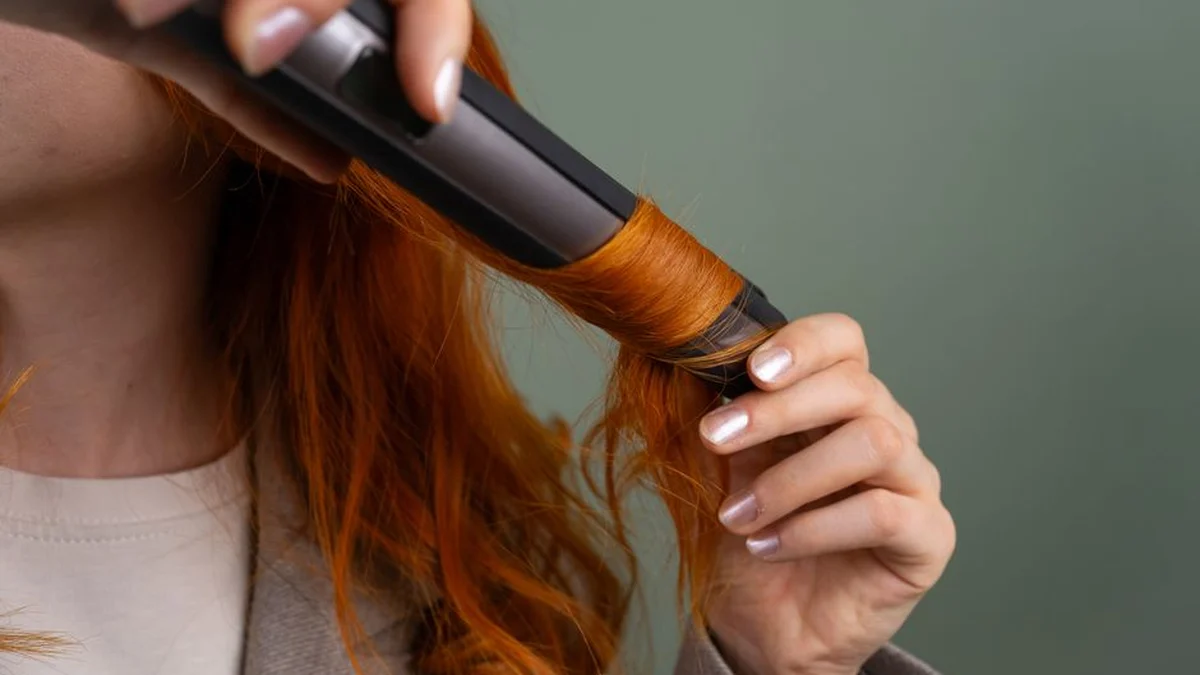
The practical version: smaller sections, one confident pass, keep moving. Four hesitant passes over the same piece of hair is the actual damage, not the dial.
The temperature chart that goes too far
Search for what temperature to use and you will find the same table everywhere, usually in Fahrenheit. Converted, it says:
- Fine, damaged or colour-treated hair: 120 to 150°C
- Normal to medium: 150 to 193°C
- Thick or coarse: 193 to 232°C
The first two are sensible. The third one walks straight through the 200°C cortex line and finishes at 232°C, which is past the point where keratin denatures for good.
That chart is written to get a result in one pass. It is not written for hair that has to last another five years.
If you have thick hair, you are allowed to make that trade. Plenty of people do and their hair looks excellent. Just make it deliberately: 220°C is a choice about speed, and two slower passes at 180°C usually get to the same place with the damage left on the table.
Never on damp hair, and here is the reason
This one deserves its own section because the mechanism is worse than “it is not good for it”.
If there is still water inside the strand when a hot plate closes on it, that water turns to steam. The steam forms bubbles inside the fibre. The cuticle and the cortex then contract at different rates as things cool, and the fibre cracks.
It is called bubble hair, it is visible under a microscope as a row of voids along the shaft, and it happens between 175°C and 215°C. Which is to say, at the setting almost everyone uses.
Three things follow.
Dry it properly first. Not nearly dry. Dry.
Be sceptical of wet-to-dry straighteners. They are sold on convenience and they are doing exactly the thing described above, with rapid evaporation stress on top.
Stop finishing a rushed blow-dry with the iron. Getting to ninety per cent and letting the straighteners take care of the rest is the everyday version of this mistake, and it is the one most people are making.
Plate materials, minus the marketing
Three words appear on every box and only two of them are materials.
Ceramic. Heats evenly with fewer hot spots. Gentler, slower, more forgiving. The right choice for fine, damaged or coloured hair.
Titanium. Heats faster and hotter and holds its temperature when a thick section pulls heat out of it. Gets through dense, coarse hair in fewer passes, which is a genuine damage advantage if the alternative is four passes with ceramic.
Tourmaline. Not a plate. It is a mineral infused into ceramic or titanium to increase negative-ion output. If a listing says “tourmaline plates”, it means a tourmaline-infused coating over one of the other two.
And ionic is not a feature. Every ceramic iron emits negative ions when it is hot. Tourmaline and titanium raise the output somewhat. A box shouting about ionic technology is telling you something that is true of almost every iron on the shelf.
What actually matters when you are buying
In order:
An adjustable thermostat that is accurate. A tool with three settings called low, medium and high is asking you to guess, and cheap tools frequently run hotter than the dial claims. A numbered display is worth paying for.
Even heat across the plate. Hot spots mean you cook one part of a section to fix another.
Plate width matched to your hair. Narrow plates for short hair and fringe work, wider plates for length. Using narrow plates on long thick hair means far more passes.
Fast temperature recovery. Cheap irons drop 20 or 30 degrees when they meet a thick section and take a while to climb back, so you end up going over the same piece again. Recovery speed is the specification nobody lists and everybody feels.
Notice that none of those is the brand.
Heat protectant is not optional
There is peer-reviewed work on this. Cosmetic pretreatments measurably reduce thermal damage during flat ironing. It is one of the few claims in hair care that has actual published evidence behind it.
The limit is equally clear. A protectant is a shield, not immunity. It buys you a margin of a few degrees and a bit of time. It does not make 230°C safe, and it will not undo anything.
Apply it to damp hair before drying, not to dry hair immediately before the iron, and let it dry fully. How much and which type is in the heat protectant spray guide.
If your hair is coloured, your ceiling is lower
Chemically treated hair, whether coloured, bleached or relaxed, has a cuticle that is already lifted and thinned. Research on thermally induced changes in treated hair is consistent: it takes damage faster and worse at the same temperature as virgin hair.
So the numbers above are not universal. If you lighten, drop your working temperature by twenty degrees and add a pass rather than adding heat. The hair colour care guide covers what else changes.
If you are not sure whether your hair is already damaged, the diagnostic in the curl revival products guide will tell you.
Choosing between the tools
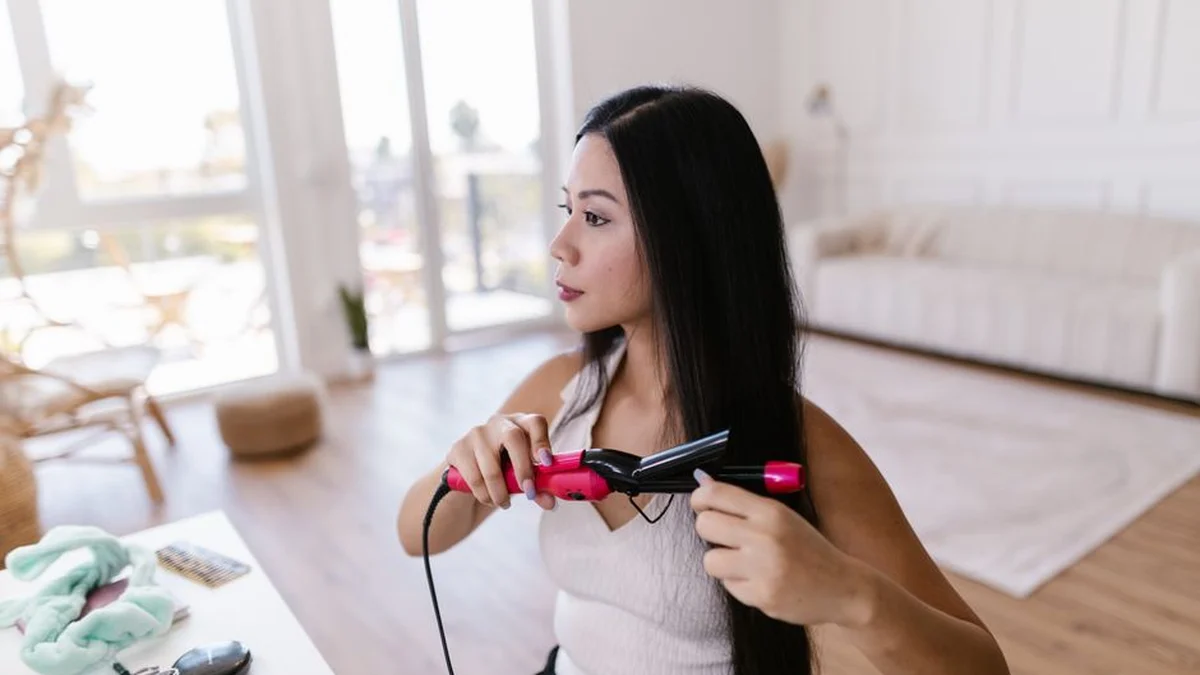
Straightener or curling iron? A straightener can do both jobs if you learn to curl with it, which is why most people only need one. The full comparison, including which suits which hair type, is in flat iron vs curling iron.
Dryer. The single most-used tool in most bathrooms, and the one people spend least time choosing. Motor type matters more than wattage, and the attachments matter more than either. See best blow dryer.
Crimper or waver. Texture rather than curl, and the root-volume trick most people do not know about. In hair crimper.
Hot rollers. Quietly the gentlest heat tool of the lot, because the heat is lower and the hair cools in the shape rather than being pulled through a hot clamp. Volume that tongs cannot match. In hot rollers.
Or none of them. Setting damp hair overnight for heatless curls costs nothing and does no damage at all, and the set usually lasts longer than a curling iron’s because the bonds re-form slowly.
Curly hair is a different problem
If your hair is curly and you are reaching for an iron to control frizz, the tool is the wrong solution to the problem.
Frizz on curly hair is usually clumps that have separated rather than strands that are rough, and heat does not fix separation. Definition does, and the whole approach is in the guide to curly hair products.
A diffuser is the exception and the one heat attachment worth owning for curls. Low speed, medium heat, hovering rather than moving about.
Two British details
Humidity undoes your work. Heat styling relies on hydrogen bonds re-forming in a new shape, and damp air breaks them again. That is why a straightened style collapses on a muggy walk to the station, and it is not a failure of your iron. The layering that survives it is in the anti frizz hair products guide.
Voltage. UK tools run at 230V. A US tool bought online runs at 110V and will either underperform badly here or be destroyed by a plug adaptor, which is not the same thing as a voltage converter. Going the other way, take a dual-voltage travel tool rather than your good one.
A routine that keeps your hair
Dry it fully before any hot tool touches it.
Protectant on damp hair, then dry.
Start at 160°C and go up only if it genuinely is not working. Most people can do most hair at 180.
Small sections, one pass, keep moving.
Take two or three days a week off heat entirely. This does more for your hair over a year than any product you can buy, and it is the only intervention on this page that costs nothing.
The short version
Under 180°C is the working ceiling. Above 200°C the damage is permanent. Contact time counts as much as the dial, so move quickly and take smaller sections.
Never on damp hair, because the water inside the strand boils and cracks the fibre.
Tourmaline is a coating, not a plate, and ionic is not a feature. Buy an accurate thermostat and even heat, and spend the rest of the money on nothing.


Comments are closed