Average Salary in London vs Rest of the UK: Is the London Premium Worth It?
London's median full-time salary is £53,132, 29.9% above the UK median. But after rent, travel and council tax, typical London renters can end up worse off.

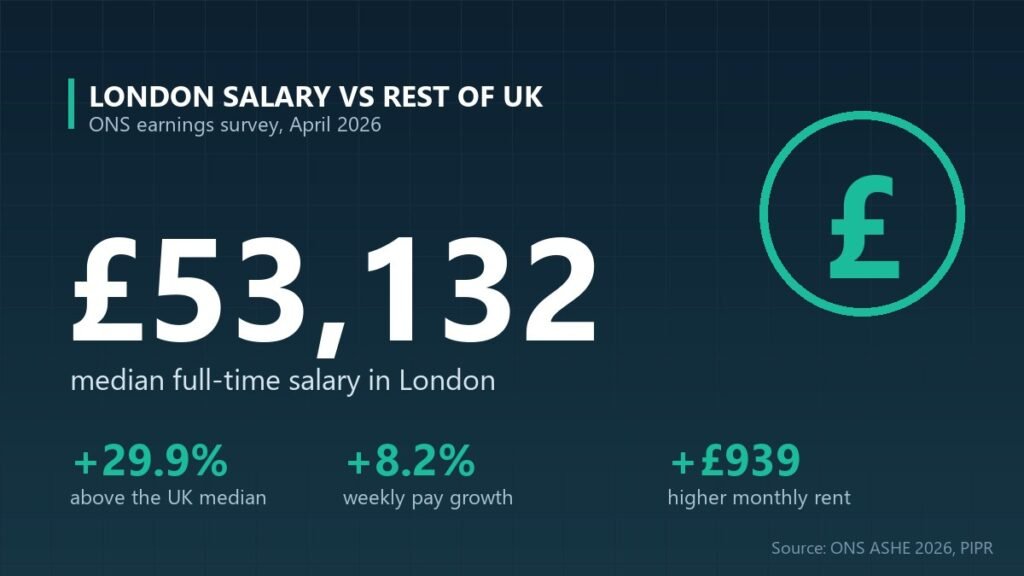
The average salary in London vs the rest of the UK is strikingly higher: the median full-time worker in the capital earned £53,132 a year in April 2026, 29.9 per cent more than the UK median of £40,911, according to the Office for National Statistics. London pay is also rising fastest, with weekly earnings up 8.2 per cent in a year. But once rent, travel and council tax are paid, the typical Londoner can end up worse off than a typical earner elsewhere. Here is the full comparison, part of our UK regions data coverage.
Key takeaways
- London median salary: £53,132 (full-time), against £40,911 for the UK, a premium of 29.9%.
- Fastest growth: London weekly pay up 8.2%, against 5.8% for the UK.
- Extra take-home: about £700 a month more than the UK median earner after tax.
- But higher costs: average London rent is £939 a month more than the UK average.
How does the average salary in London compare with the rest of the UK?
London’s median full-time salary is £11,468 a year higher than the UK figure and £16,672 higher than in the North East, the lowest-paid region. The table compares London with every other region and nation.
| Region / nation | Median full-time salary | London premium (£) | London premium (%) | Annual pay growth |
|---|---|---|---|---|
| London | £53,132 | – | – | +6.2% |
| South East | £41,664 | £11,468 | 27.5% | +3.9% |
| Scotland | £41,466 | £11,666 | 28.1% | +4.5% |
| East of England | £40,531 | £12,601 | 31.1% | +4.5% |
| South West | £39,078 | £14,054 | 36.0% | +5.0% |
| West Midlands | £38,628 | £14,504 | 37.5% | +4.3% |
| North West | £38,599 | £14,533 | 37.7% | +3.4% |
| Northern Ireland | £38,203 | £14,929 | 39.1% | +3.2% |
| Yorkshire and The Humber | £37,519 | £15,613 | 41.6% | +5.2% |
| Wales | £37,330 | £15,802 | 42.3% | +4.2% |
| East Midlands | £36,975 | £16,157 | 43.7% | +4.0% |
| North East | £36,460 | £16,672 | 45.7% | +5.9% |
| United Kingdom | £40,911 | £12,221 | 29.9% | +4.5% |
Salaries are medians for full-time employees by place of work, from the ONS Annual Survey of Hours and Earnings (April 2026, provisional). The UK figure includes London.
Is a London salary worth it after living costs?
For a typical renter, not on average. A full-time worker on London’s median salary takes home about £3,448 a month after income tax and National Insurance, roughly £700 more than a worker on the UK median of £40,911 (£2,748). But the average London rent is £2,350 a month, £939 more than the UK average of £1,411.
| Monthly cost or income | London | UK average | Difference |
|---|---|---|---|
| Take-home pay (median full-time salary) | £3,448 | £2,748 | +£700 |
| Average private rent | £2,350 | £1,411 | +£939 |
| Band D council tax (monthly) | £172 | £199 (England) | −£27 |
| Left after rent and council tax | £926 | £1,138 | −£212 |
| Zones 1 to 3 monthly Travelcard | £201.60 | – | – |
| Left after rent, council tax and travel | £724 | – | – |
On these figures, a typical London renter has about £212 a month less than a typical UK earner after rent and council tax, and over £400 less once a Zones 1 to 3 Travelcard is added. Not every Londoner pays that much: many walk, cycle or use pay-as-you-go, and costs outside London include car or rail travel too. Our analysis of cost of living vs salary across every UK region shows the same pattern nationally.
Why are London salaries so much higher?
London has the UK’s biggest concentration of high-paying industries, including finance, law, technology, media and corporate headquarters. That lifts both the median and, even more, the average: London’s mean full-time salary is £79,442, 52.5 per cent above the UK mean of £52,109, reflecting a large number of very high earners.
Employers also pay London weighting or allowances to attract staff to a costly city, particularly in the public sector, where national pay scales include higher rates for inner and outer London. And London pay is growing fastest: full-time weekly earnings rose 8.2 per cent in the year to April 2026, the biggest rise of any region.
Who benefits most from a London salary?
The London premium works best for people who already have low housing costs, such as homeowners who bought years ago, those sharing a flat, or people in high-paid professions where London salaries are far above the median. It works least well for people on middle incomes renting alone, for whom higher rent can wipe out the extra pay. Commuters who live outside London but work in it can capture London pay with lower housing costs, though rail season tickets add to the bill.
Frequently asked questions
What is the average salary in London?
The median full-time salary in London was £53,132 a year in April 2026, according to the ONS Annual Survey of Hours and Earnings. That is 29.9 per cent above the UK median of £40,911. Median full-time weekly pay in London was £1,038.10, up 8.2 per cent on 2025.
How much more do people earn in London than the rest of the UK?
Full-time workers in London earn a median of £11,468 to £16,672 a year more than in other regions, depending on the comparison. The gap is smallest with the South East (£41,664) and largest with the North East (£36,460). Against the UK median, the London premium is 29.9 per cent.
Is £50,000 a good salary in London?
A £50,000 salary is below London’s median full-time salary of £53,132, so it is slightly lower than what a typical full-time worker in the capital earns. After tax it gives take-home pay of around £3,300 a month, which can be tight if you rent alone at London’s average rent of £2,350.
Methodology and official sources
- Salaries: ONS, Employee earnings in the UK: 2026, ASHE Table 3 (2026 provisional), released 22 October 2026.
- Rents: ONS, Price Index of Private Rents, October 2026 averages.
- Council tax: MHCLG, Council Tax levels set by local authorities in England 2026 to 2027.
- Travel: Greater London Authority, Mayoral Decision MD3464 (March 2026 fare changes): Zones 1 to 3 seven-day Travelcard £52.50; monthly price calculated using TfL’s stated multiplier of 3.84.
- Take-home pay: Briton News calculation using 2026-27 income tax and employee National Insurance rates, with no pension or student loan deductions.