Cost of Living in Scotland vs England: Tax, House Prices and Bills Compared
Homes in Scotland cost about a third less than in England, rent is £457 a month cheaper and council tax is lower, but higher earners pay more income tax.

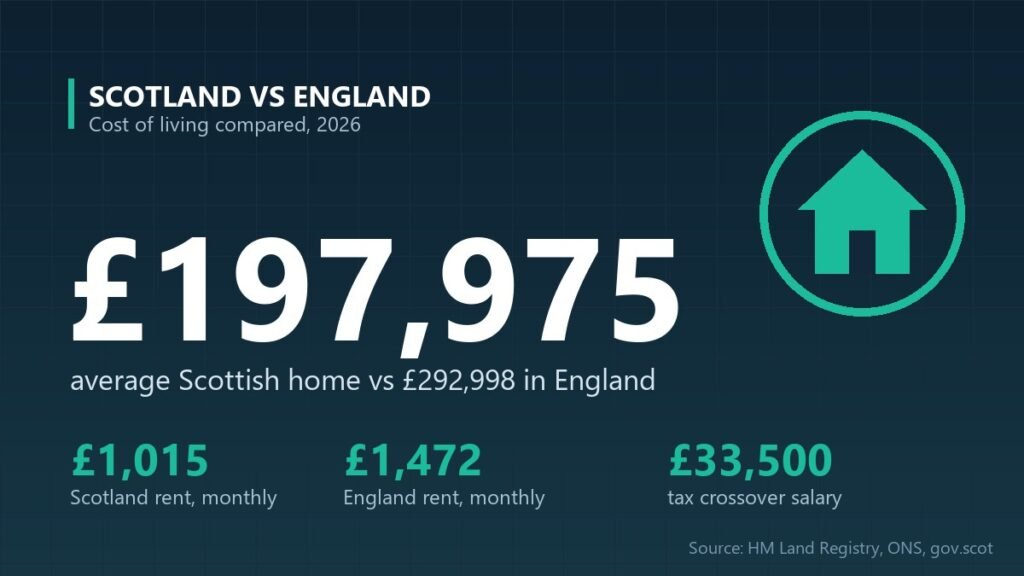
How does the cost of living in Scotland vs England compare? On the biggest household costs, Scotland is cheaper: the average house price is £197,975 against £292,998 in England, average rent is £1,015 a month against £1,472, and average Band D council tax is £1,653 against £2,392, according to official figures. Scotland’s median full-time salary of £41,466 is also above the UK median. The main trade-off is income tax, which is higher in Scotland for anyone earning above about £33,500. Here is the full side-by-side comparison, part of our UK regions data coverage.
Key takeaways
- House prices: £197,975 in Scotland vs £292,998 in England, about a third lower.
- Rent: £1,015 a month in Scotland vs £1,472 in England.
- Council tax (Band D): £1,653 in Scotland (plus £652 water and sewerage) vs £2,392 in England.
- Income tax: slightly lower in Scotland below about £33,500; higher above it, by £1,750 a year at £60,000.
Is the cost of living cheaper in Scotland than England?
Yes, for most households. Housing, which is the biggest cost for most families, is substantially cheaper in Scotland, while salaries are similar. The table compares the main official measures.
| Measure | Scotland | England | Difference |
|---|---|---|---|
| Average house price (Sep 2026) | £197,975 | £292,998 | −£95,023 (−32%) |
| House price annual change | +2.3% | +0.8% | Scotland rising faster |
| Average monthly rent (Oct 2026) | £1,015 | £1,472 | −£457 a month |
| Rent annual change | +0.7% | +4.0% | Scotland rising slower |
| Average Band D council tax 2026-27 | £1,653* | £2,392 | −£739 a year |
| Median full-time salary (Apr 2026) | £41,466 | – | UK median £40,911 |
| Average maximum broadband speed (2025) | 273 Mbit/s | 288 Mbit/s | −15 Mbit/s |
*Scottish council tax excludes water and sewerage charges, which are billed with council tax: £652.32 a year for a Band D home in 2026-27. Households in England pay their water company separately. Rents in Scotland are mainly measured on advertised new lets, so the ONS advises some caution when comparing with England.
How does income tax in Scotland compare with England?
Scotland sets its own income tax rates and bands, with six bands compared with three in England, Wales and Northern Ireland. Lower earners pay slightly less in Scotland, while those earning above about £33,500 pay more, and the gap widens with income.
| Annual salary | Income tax in England | Income tax in Scotland | Difference | Take-home in England | Take-home in Scotland |
|---|---|---|---|---|---|
| £25,000 | £2,486 | £2,446 | −£40 | £21,520 | £21,559 |
| £30,000 | £3,486 | £3,451 | −£35 | £25,120 | £25,155 |
| £40,911 (UK median) | £5,668 | £5,742 | +£74 | £32,976 | £32,901 |
| £45,000 | £6,486 | £6,882 | +£396 | £35,920 | £35,524 |
| £60,000 | £11,432 | £13,182 | +£1,750 | £45,357 | £43,607 |
| £100,000 | £27,432 | £30,732 | +£3,300 | £68,557 | £65,257 |
Take-home pay is after income tax and employee National Insurance (which is the same across the UK), with no pension or student loan deductions. Scottish 2026-27 bands: starter 19% (£12,571 to £16,537), basic 20% (to £29,526), intermediate 21% (to £43,662), higher 42% (to £75,000), advanced 45% (to £125,140) and top 48% above that.
How much cheaper is it to buy a home in Scotland?
The average Scottish home costs £95,023 less than the average English home, and the tax on buying is lower too. Scotland uses Land and Buildings Transaction Tax (LBTT) instead of Stamp Duty Land Tax. On an average-priced home:
- England, £292,998: stamp duty of £4,650 for a home mover, or £0 for a first-time buyer.
- Scotland, £197,975: LBTT of £1,060 for a home mover, or £460 for a first-time buyer.
For the same price, though, Scotland’s tax can be higher above about £325,000: on a £350,000 home, a mover would pay £8,350 LBTT in Scotland against £7,500 stamp duty in England. For a full regional picture, see our comparison of cost of living vs salary across UK regions.
Are energy bills higher in Scotland?
Electricity standing charges are mixed. Under Ofgem’s price cap for October to December 2026, Direct Debit customers in Southern Scotland pay an electricity standing charge of 61.41p a day, among the highest in Great Britain, while Northern Scotland pays 55.14p, close to the GB average of 54.83p. Electricity unit rates are 26.11p per kWh in Southern Scotland and 26.35p in Northern Scotland, against a GB average of 26.32p. Gas rates are very similar across the country. Homes in colder northern areas may also use more energy for heating, which can push up total bills.
What other costs are different in Scotland?
Several public services are free or cheaper in Scotland. NHS prescriptions are free in Scotland, as they are in Wales and Northern Ireland, while most adults in England pay a charge per item. Scottish students studying at Scottish universities do not pay tuition fees, and under-22s in Scotland can travel free on buses. These differences matter most for families with students or regular prescriptions.
Frequently asked questions
Is it cheaper to live in Scotland or England?
On official figures, Scotland is cheaper for most households. The average house price is £197,975 against £292,998 in England, average rent is £1,015 a month against £1,472, and average Band D council tax is £1,653 against £2,392, although Scottish households also pay water charges with their council tax.
Do you pay more tax in Scotland?
It depends on your income. People earning less than about £33,500 pay slightly less income tax in Scotland than in England, but higher earners pay more: £396 more a year at £45,000, £1,750 more at £60,000 and £3,300 more at £100,000, on 2026-27 rates.
Are salaries higher in Scotland or England?
Scotland’s median full-time salary was £41,466 in April 2026, above the UK median of £40,911 and the third highest of any UK region or nation, behind London (£53,132) and the South East (£41,664). It is higher than in every other English region.
Methodology and official sources
- House prices: HM Land Registry, UK House Price Index: September 2026 (published 18 November 2026).
- Rents: ONS, Price Index of Private Rents, October 2026.
- Council tax: Scottish Government, Council Tax by band 2026-27; MHCLG, Council Tax levels set by local authorities in England 2026 to 2027. Water charges: Scottish Water, Your charges explained 2026-27.
- Salaries: ONS, Annual Survey of Hours and Earnings 2026 (provisional), ASHE Table 3.
- Income tax: Scottish Government and mygov.scot rates for 2026-27; UK rates for England. Take-home and property tax figures are Briton News calculations using 2026-27 rates and bands.
- Broadband: Ofcom, Connected Nations 2025.