UK Minimum Wage and National Living Wage: Hourly Rates and Take-Home Pay
The National Living Wage is £12.71 an hour from April 2026, rising to £13.21 in April 2027. See every age rate and what it means for monthly take-home pay.

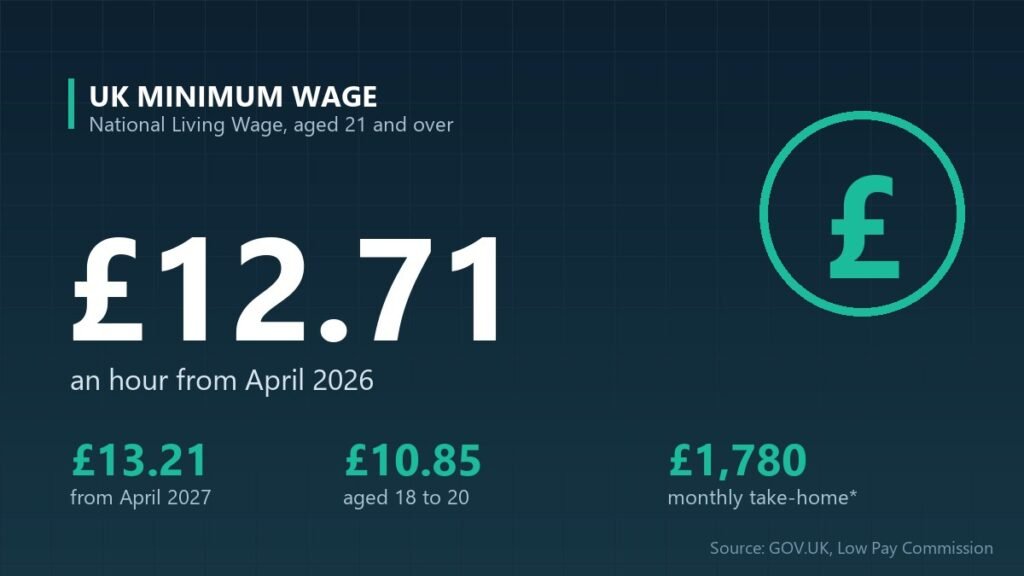
How much is the UK minimum wage per hour? From 1 April 2026, the National Living Wage for workers aged 21 and over is £12.71 an hour, up 50p (4.1 per cent), according to GOV.UK. The rate for 18 to 20 year olds is £10.85, and for 16 and 17 year olds and apprentices it is £8.00. The government has already confirmed the next rise: from 1 April 2027 the National Living Wage will be £13.21. Below we set out every rate and what it means for annual and take-home pay, part of our UK money and household finances coverage.
Key takeaways
- National Living Wage (21+): £12.71 an hour from April 2026, rising to £13.21 in April 2027.
- 18 to 20: £10.85 an hour, rising to £11.27.
- 16 to 17 and apprentices: £8.00 an hour, rising to £8.31.
- Full-time take-home: about £1,780 a month on the National Living Wage at 37.5 hours a week.
How much is the UK minimum wage per hour?
The minimum wage you are entitled to depends on your age and whether you are an apprentice. The table shows the current rates, in force since 1 April 2026, and the confirmed rates from 1 April 2027.
| Rate | From 1 April 2026 | From 1 April 2027 | Increase |
|---|---|---|---|
| National Living Wage (21 and over) | £12.71 | £13.21 | +50p (3.9%) |
| 18 to 20 | £10.85 | £11.27 | +42p (3.9%) |
| 16 to 17 | £8.00 | £8.31 | +31p (3.9%) |
| Apprentice rate | £8.00 | £8.31 | +31p (3.9%) |
| Accommodation offset | £11.10 | £11.53 | +43p (3.9%) |
The apprentice rate applies to apprentices aged under 19, and to those aged 19 or over in the first year of their apprenticeship. After that, apprentices must be paid at least the rate for their age. The accommodation offset is the maximum an employer can count towards minimum wage pay for accommodation it provides.
How much is minimum wage per year and per month?
A full-time worker on the National Living Wage working 37.5 hours a week earns £24,784.50 a year before tax, and takes home about £21,364 after income tax and National Insurance, or roughly £1,780 a month.
| Rate (37.5 hours a week) | Gross annual pay | Income tax | National Insurance | Annual take-home | Monthly take-home |
|---|---|---|---|---|---|
| 21 and over, April 2026 (£12.71) | £24,784.50 | £2,442.90 | £977.16 | £21,364.44 | £1,780.37 |
| 18 to 20, April 2026 (£10.85) | £21,157.50 | £1,717.50 | £687.00 | £18,753.00 | £1,562.75 |
| 16 to 17, April 2026 (£8.00) | £15,600.00 | £606.00 | £242.40 | £14,751.60 | £1,229.30 |
| 21 and over, April 2027 (£13.21) | £25,759.50 | £2,637.90 | £1,055.16 | £22,066.44 | £1,838.87 |
Figures assume 52 paid weeks, the standard £12,570 Personal Allowance, 20 per cent basic-rate income tax and 8 per cent employee National Insurance, with current thresholds. They exclude workplace pension contributions and student loan repayments, which would reduce take-home pay. Income tax is slightly different in Scotland. Working 40 hours a week on £12.71 gives about £1,880 a month after tax; 35 hours gives about £1,681.
Why does the minimum wage go up every year?
The government sets new rates each April after advice from the independent Low Pay Commission, which looks at wages, the economy and employment. Its target is for the National Living Wage to reach two-thirds of median earnings. For April 2027 it recommended a 3.9 per cent rise to £13.21, which it said was below its best estimate (£13.44) of the rate needed to hit that target by October 2027. The government accepted all its recommendations, announced on 28 October 2026.
The 18 to 20 year old rate rose much faster in April 2026, up 8.5 per cent, as part of plans to narrow the gap with the adult rate. For 2027 all rates rise by the same 3.9 per cent; the Low Pay Commission cited weak youth employment and vacancies in sectors such as retail and hospitality.
How does minimum wage compare with average pay?
A full-time National Living Wage salary of about £24,785 is around 61 per cent of the UK median full-time salary of £40,911. In lower-paid regions the gap is narrower: the median full-time salary in the North East is £36,460, as our guide to the average salary by UK region shows. Pay rises steeply with age and experience, as set out in our analysis of average salary by age.
What should I do if I am paid less than the minimum wage?
Paying less than the legal minimum is against the law, whatever the size of the employer. Check your payslips first, including deductions for uniforms or accommodation, which can take pay below the minimum. If you think you are underpaid, raise it with your employer and, if that does not work, contact Acas for free advice or complain to HMRC, which enforces the minimum wage and can order employers to pay arrears.
Frequently asked questions
What is the minimum wage in 2026?
From 1 April 2026, the National Living Wage for workers aged 21 and over is £12.71 an hour. The rate for 18 to 20 year olds is £10.85, and the rate for 16 and 17 year olds and apprentices is £8.00. These rates apply across the UK until 31 March 2027.
What will the minimum wage be in April 2027?
From 1 April 2027, the National Living Wage will rise to £13.21 an hour for workers aged 21 and over, an increase of 50p or 3.9 per cent. The 18 to 20 rate rises to £11.27, and the 16 to 17 and apprentice rates rise to £8.31. The government confirmed the rates on 28 October 2026.
How much is minimum wage per month after tax?
A worker aged 21 or over on £12.71 an hour, working 37.5 hours a week, earns £24,784.50 a year before tax and takes home about £1,780 a month after income tax and National Insurance. That excludes pension contributions, which most employees pay through automatic enrolment.
Methodology and official sources
- Rates: GOV.UK, National Minimum Wage and National Living Wage rates (from 1 April 2026), and Minimum wage rates for 2027, including the Low Pay Commission’s advice to government, published 28 October 2026.
- Take-home pay: Briton News calculation using the 2026-27 Personal Allowance, basic-rate income tax and employee Class 1 National Insurance for England, Wales and Northern Ireland. April 2027 figures assume current thresholds.
- Average pay comparison: ONS, Annual Survey of Hours and Earnings 2026 (provisional).
- Link: GOV.UK: National Minimum Wage and National Living Wage rates.